
Pentagon envoy tells NATO Europe to build combat power as US plans troop shift

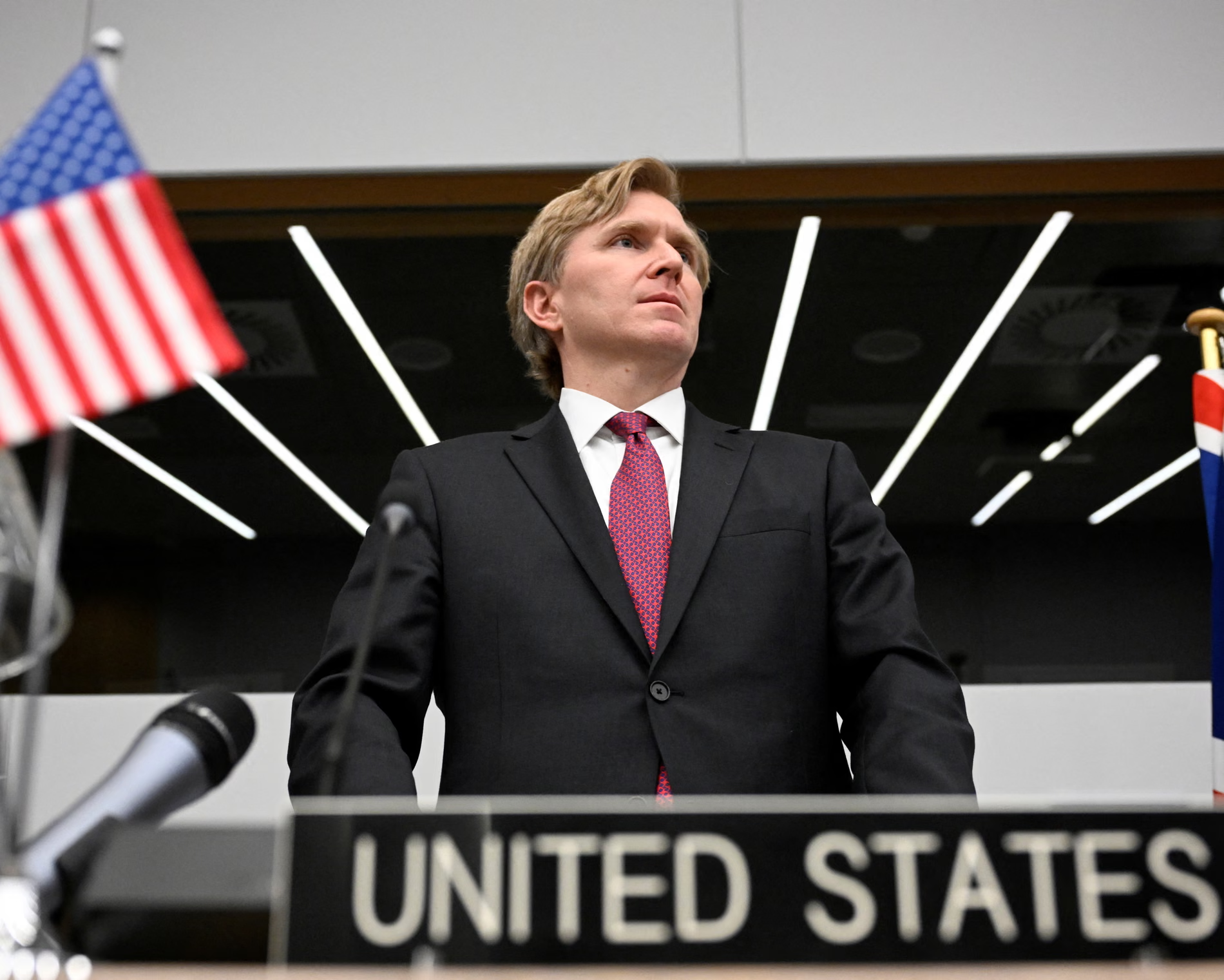
The Pentagon’s top policy official, Elbridge Colby, has told European NATO defence ministers they must take the lead in protecting the continent from Russia. Speaking in Brussels, he said Europe needs to focus less on promises and more on real military capability.
Colby also signalled a change in the US posture in Europe. He said Washington intends to reduce conventional forces on the continent, while insisting the United States remains committed to the alliance.
A blunt message in Brussels
Colby told allies they must go “beyond inputs and intentions toward outputs and capabilities”. He urged governments to prioritise “war-fighting effectiveness” and make difficult decisions on readiness, stockpiles and industrial capacity.
The remarks were delivered behind closed doors at the start of a NATO defence ministers meeting. Unusually, the Pentagon released the text soon after.
US conventional forces set to shrink in Europe
Colby said US forces in Europe, currently about 85,000 personnel, would be deployed in a “more limited and focused fashion”. He linked the shift to a wider US effort to concentrate on deterring China and on priorities closer to home.
At the same time, he said the US would continue to provide an “extended nuclear deterrent”. That term refers to Washington’s pledge to use its nuclear forces to help protect allies if needed.
Article 5 is still the foundation
Colby said the US would “do our part” under NATO’s Article 5. Article 5 is the collective defence clause that treats an attack on one ally as an attack on all.
NATO secretary general Mark Rutte also tried to steady nerves. He said the alliance can argue and still move forward, and he presented Colby’s speech as proof the US remains “anchored” in NATO.
Greenland row hangs over the meeting
The Brussels talks come after a damaging dispute last month over Greenland. US President Donald Trump demanded Denmark hand over the Arctic territory, and the White House at times did not rule out the use of force.
Colby’s visit was seen by some diplomats as an attempt to reset relations. Still, the decision to send him in place of defence secretary Pete Hegseth underlined the White House’s message that Europe must carry more of the burden.
Europe’s spending pledge meets a tougher test
European allies have already agreed to a major spending target. At the 2025 NATO summit in The Hague, allies committed to invest 5% of GDP by 2035, with at least 3.5% for core defence needs. They also agreed to submit annual plans to show a credible path to the goal.
However, Colby’s message suggested the US is less interested in headlines and more in outcomes. That means deployable forces, trained personnel, usable stockpiles and faster production lines.
Ukraine support continues in parallel
After the NATO session, Ukraine’s backers met in the Ukraine Defence Contact Group, a forum of around 50 countries. UK defence secretary John Healey said allies pledged about $35bn in military aid for this year.
The day in Brussels left two signals. Europe is being told to build credible combat power quickly, not gradually. And the US, while repeating its NATO commitments, is openly preparing to scale back its conventional footprint in Europe.