
One shock could tip the UK into a food crisis and unrest, experts warn

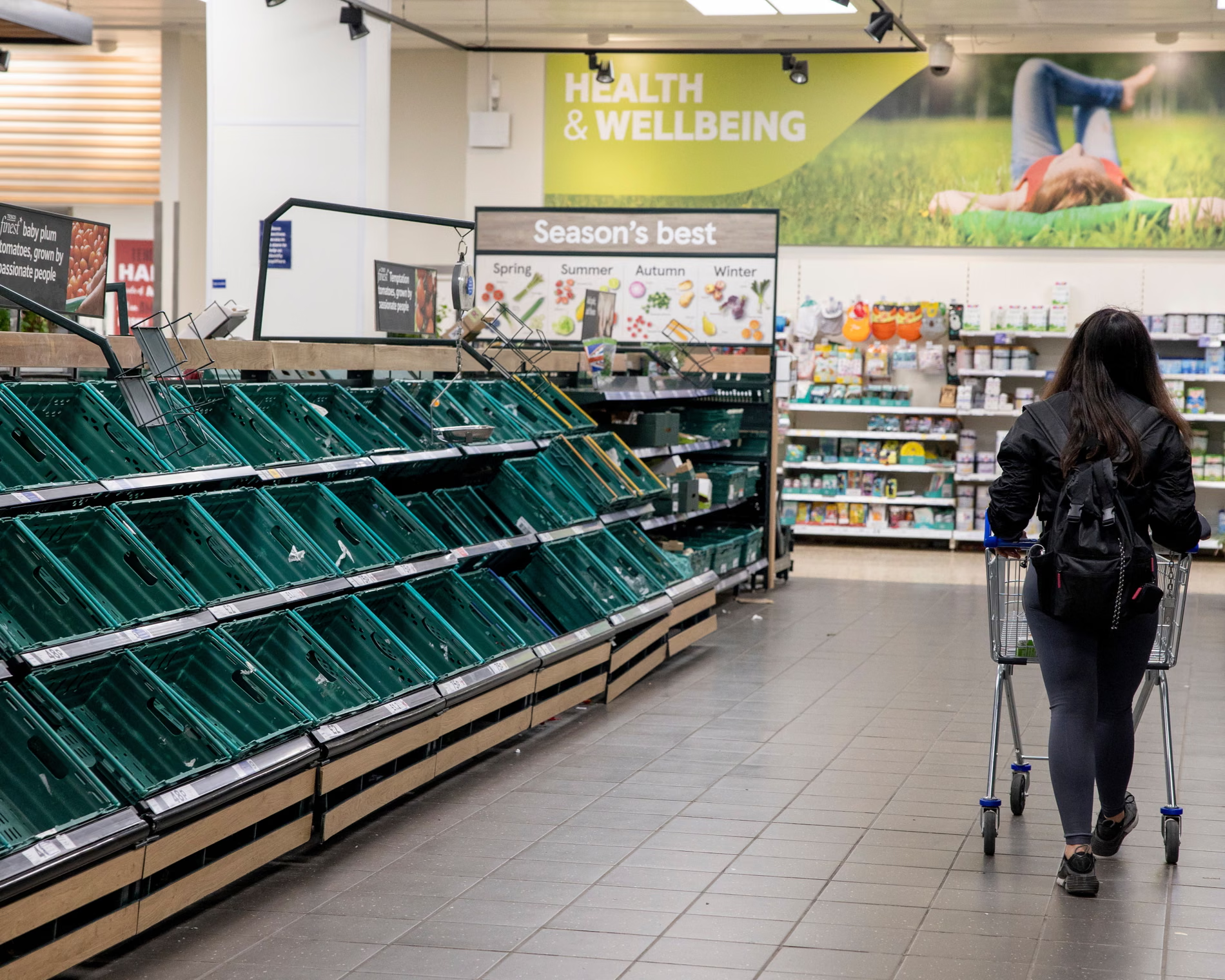
A UK food system “tinderbox” could be pushed into crisis by a single major shock such as extreme weather, a cyber-attack or war, according to a new peer-reviewed analysis that maps how disruptions could cascade into shortages, price spikes and heightened risks of public disorder.
Researchers who consulted more than 30 food-system specialists from academia, government and industry said chronic vulnerabilities have left access to food more exposed than many people assume. They cited pressures including climate change, low incomes, weak policy signals for farming and fragile just-in-time supply chains.
UK food crisis risks mapped in new peer-reviewed analysis
The analysis, published in the journal Sustainability, sets out pathways by which disruption could spread through supply chains and consumer behaviour. It warns that price shocks and concerns about food availability or safety could fuel social tension, including hidden-market sales of unsafe food and, in the worst-case scenario, civil unrest.
The researchers said the risks are amplified by the global concentration of staple production in a small number of “breadbasket” regions and by choke points in international shipping routes that can slow or block trade flows.
Extreme weather, cyber-attacks and war ranked as top shocks
After identifying chronic weaknesses, the expert group selected three shocks they considered most dangerous: severe weather events, major cyber incidents and international conflict. Any combination could reduce food availability, raise costs and strain confidence in the system, the study said.
The authors noted that elements of these shocks have already been seen in recent years, including disruption linked to Russia’s invasion of Ukraine and cyber incidents affecting major UK retailers. The study argues that increasing digitisation across food logistics and retail has expanded exposure to cybersecurity threats.
Food insecurity already affects millions of households
The warning comes as charities and researchers report persistent levels of food insecurity. The Food Foundation has reported that around one in seven households were affected at points in 2025, based on its tracker data, with higher risks among households with children, people with disabilities and those on lower incomes.
The study also stresses that social factors shape how a crisis unfolds, arguing that hunger combined with low trust in institutions can increase the likelihood of unrest.
Calls for resilience measures and coordinated planning
The analysis was led by Prof Sarah Bridle of the University of York, who said the stability of the food system should be treated as a national security issue and that resilience can reduce the chance that a shock escalates into crisis.
Prof Aled Jones of Anglia Ruskin University, part of the research group, said policymakers should take a long-term approach to preparedness.
Among the measures highlighted were stronger coordination between government and businesses, broader and more resilient domestic production and consumption patterns, and emergency support such as cash transfers for people on the lowest incomes. The study also points to regenerative approaches in farming as one way to reduce the risk of crop failure.
Government points to domestic production and stable trade routes
A UK government spokesperson said food security is a core national security concern and that Britain’s position depends on both domestic production and imports through stable trade routes. The spokesperson said the government is investing in technology to support yields and climate-resilient crops, streamlining regulation and supporting farmers.
Official figures published by the UK government show the country relies on imports for roughly 40% of its food overall, underlining the importance of resilient trade and supply chains.
Global security officials warn fragile food systems can fuel instability
The concerns echo warnings beyond the UK. Álvaro Lario, president of the International Fund for Agricultural Development, said recently that fragile food systems pose an underestimated risk to global stability, arguing that access to productive land and reliable freshwater should be treated as strategic priorities.
The UK researchers said reducing underlying vulnerabilities is urgent because future shocks cannot be ruled out, and the scale of harm depends on how robust the system is before disruption strikes.