
Police AI bias acknowledged as £115m centre plans national rollout of tools

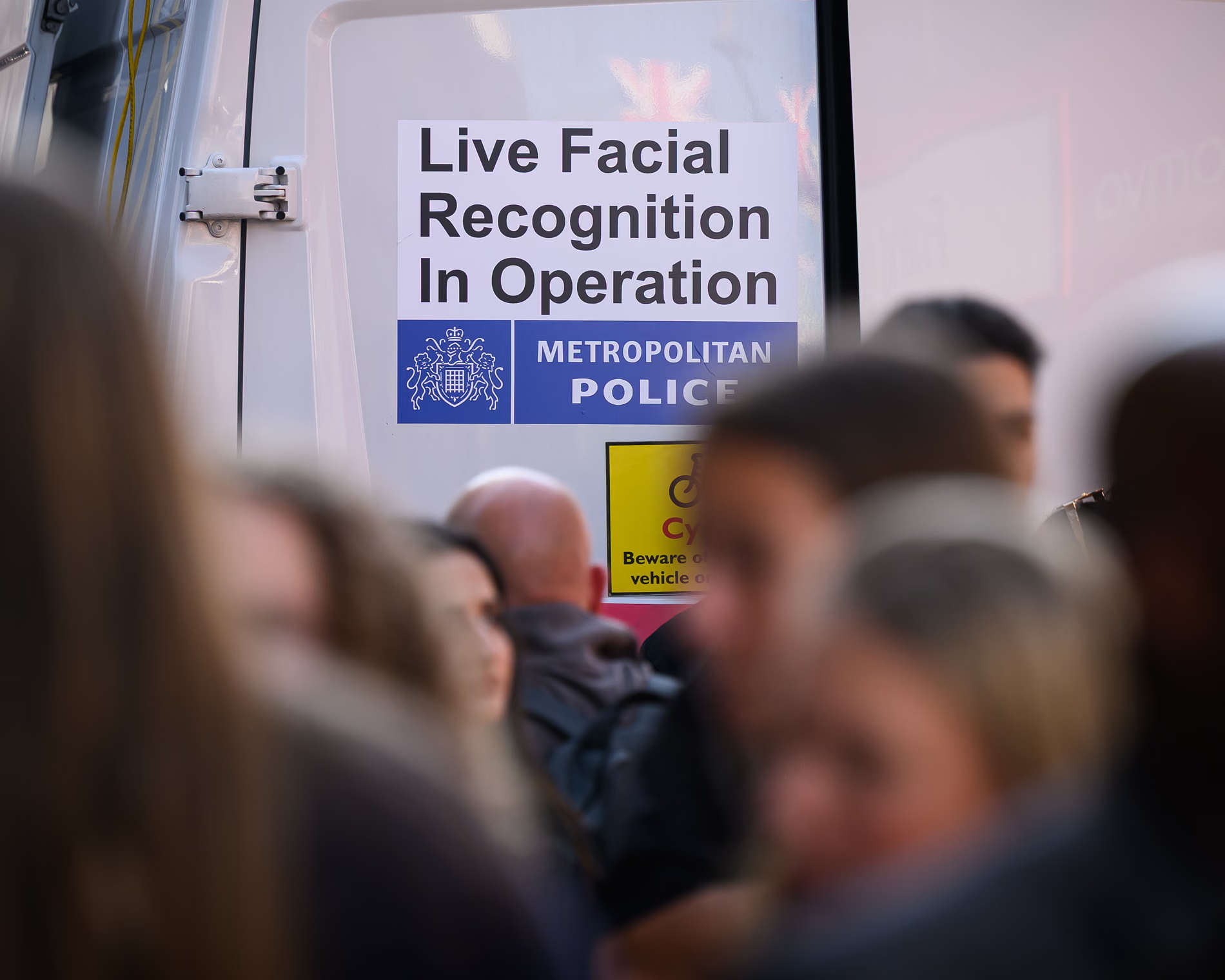
A senior UK policing lead has said artificial intelligence used to support crime fighting will contain bias, but promised steps to reduce the risks as the government moves to expand AI across forces in England and Wales.
Alex Murray, director of threat leadership at the National Crime Agency and the National Police Chiefs’ Council lead for AI, said bias must be recognised, minimised and understood before AI systems are deployed, and that officers should be trained to handle AI outputs responsibly. He made the comments in an interview with the Guardian.
Police.AI centre to standardise tools across 43 forces
A new national centre, Police.AI, is being established with £115m in Home Office funding to centralise the development, evaluation and rollout of AI tools across all 43 forces in England and Wales. The National Police Chiefs’ Council said the centre is intended to ensure robust testing, set standards for approved products and help forces avoid duplicating work.
The NPCC said Police.AI is set to launch in April and will include a public-facing registry designed to show how local forces are using AI. It is also intended to develop expertise on the criminal misuse of AI, alongside assessing products supplied by private vendors.
Facial recognition concerns revive scrutiny of bias and safeguards
Concerns about bias have been raised most sharply around facial recognition. Retrospective facial recognition compares images of suspects against databases after an offence, while live facial recognition scans faces in real time in public spaces.
Warnings over safeguards and potential racial bias have been amplified by scrutiny of algorithm performance testing and oversight. The Association of Police and Crime Commissioners has said system failures should be disclosed and that powerful tools need independent oversight before wider use.
Government push to expand AI use in policing
The expansion of AI in policing is part of broader reform plans that include rolling out AI-powered tools to automate manual processes and free up time for frontline work, according to a government white paper.
Murray said policing faced fast-moving threats and argued forces were in an “arms race” with criminals who are also adopting AI, including the use of synthetic media and other techniques that can complicate investigations.
Investigations already using AI to process digital evidence
Police leaders say AI is already speeding up complex investigations by helping analyse large volumes of digital material, including translating communications and identifying evidence relevant to suspected offences.
In one case cited publicly by police, investigators used AI to process phone data linked to cashpoint attacks and thefts, accelerating the path to guilty pleas by rapidly translating and triaging material for detectives.
The national centre is intended to support wider adoption of such tools while increasing consistency in testing, training and governance as forces expand their use of AI-enabled systems.