
Trump tariffs kick in at 10% after Supreme Court blocks earlier import taxes

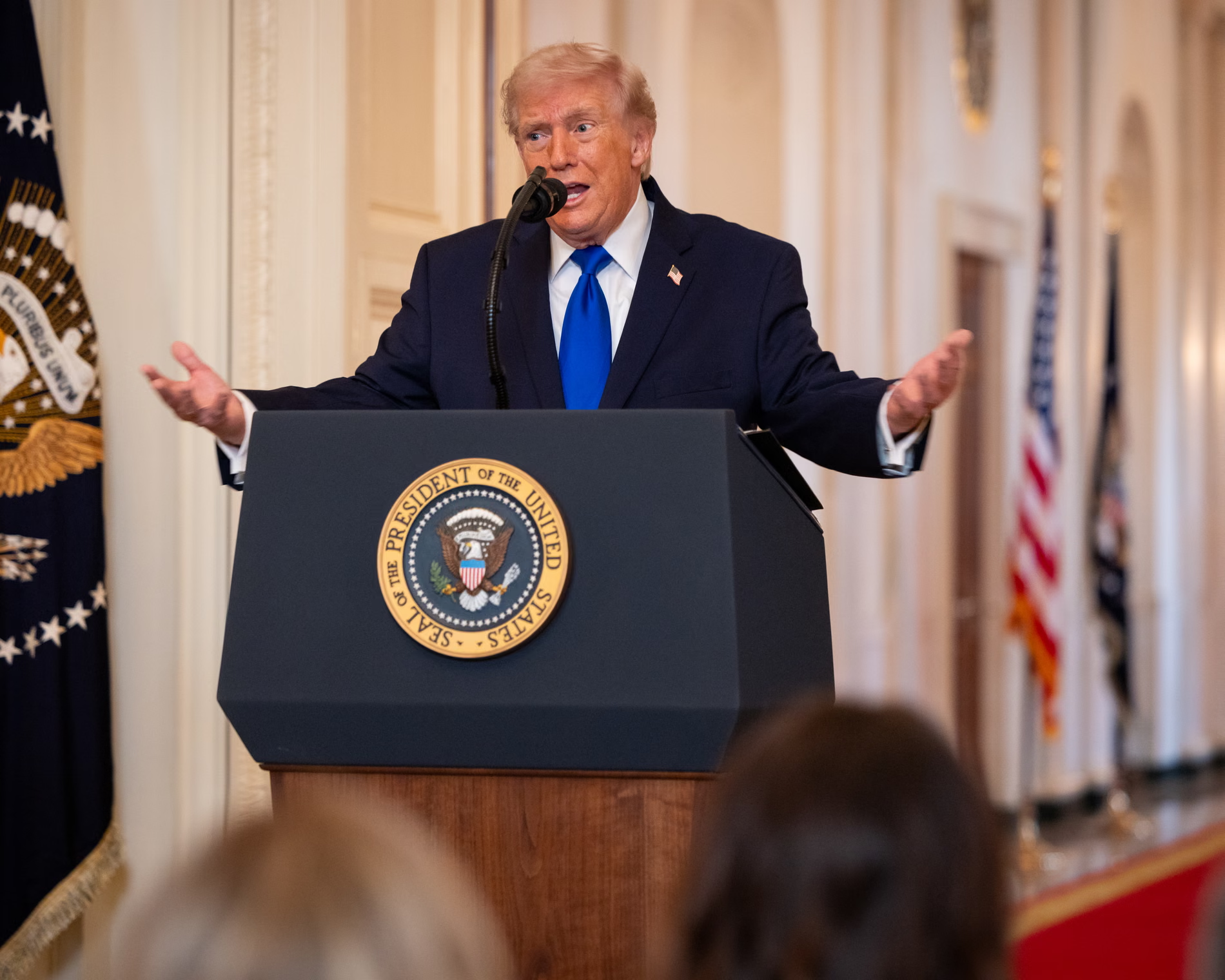
President Donald Trump’s new across-the-board US import tariff has taken effect at a rate of 10%, after the Supreme Court struck down a large part of his previous tariff programme last week.
The 10% levy began at 12:01 a.m. in Washington on Tuesday, under an executive action signed on Friday, and applies for up to 150 days under Section 122 of the Trade Act of 1974. The White House has signalled it is working on steps to raise the rate to 15%, the maximum allowed under that provision, but no formal directive to do so had taken effect by the start time.
The Supreme Court ruling on Friday invalidated many of the earlier duties Trump imposed using emergency powers, forcing the administration to switch to a different legal basis for a temporary “import surcharge”.
White House considers raising the tariff ceiling to 15%
Trump has repeatedly said he wants the temporary global tariff lifted to 15%. A White House official said the administration is working on increasing the rate, though any change would require a new formal order before US Customs and Border Protection can collect a higher levy.
Section 122 allows a temporary surcharge during what the law describes as “fundamental international payments” problems, with the tariff capped at 15% and time-limited unless Congress acts to extend it.
Trading partners warn of disruption as uncertainty returns
The new tariff has unsettled US trading partners that had sought clarity after the court ruling.
China said it opposes unilateral tariffs and will decide on any countermeasures “in due course”. Beijing has previously responded to US tariff moves with retaliatory duties on American products, including agricultural goods and energy, though some measures were later suspended after a trade truce.
In Europe, lawmakers have again postponed work on approving the EU-US trade accord agreed last year, as Brussels seeks assurances about how the new US tariff programme will interact with the deal’s terms.
In the UK, the prime minister’s spokesperson said the government did not want a trade war but that “nothing is off the table” when asked about possible retaliation.
Markets watch for spillover to growth and inflation
Financial markets were steady in early European trading as investors assessed the impact on supply chains, consumer prices and corporate earnings, and awaited direction from Wall Street as US markets opened.
The tariff move has landed amid broader economic cross-currents, with central banks watching whether fresh trade costs feed into inflation or weaken demand. Oil prices also rose to multi-month highs ahead of renewed US-Iran nuclear talks later this week, adding to uncertainty over the outlook for energy costs.
The tariff will remain at 10% unless Trump signs a further order to raise it, leaving businesses and trading partners bracing for more changes in US trade policy in the coming days.