
Rachel Reeves Mais Lecture maps out deeper EU ties, AI push and new devolution plans

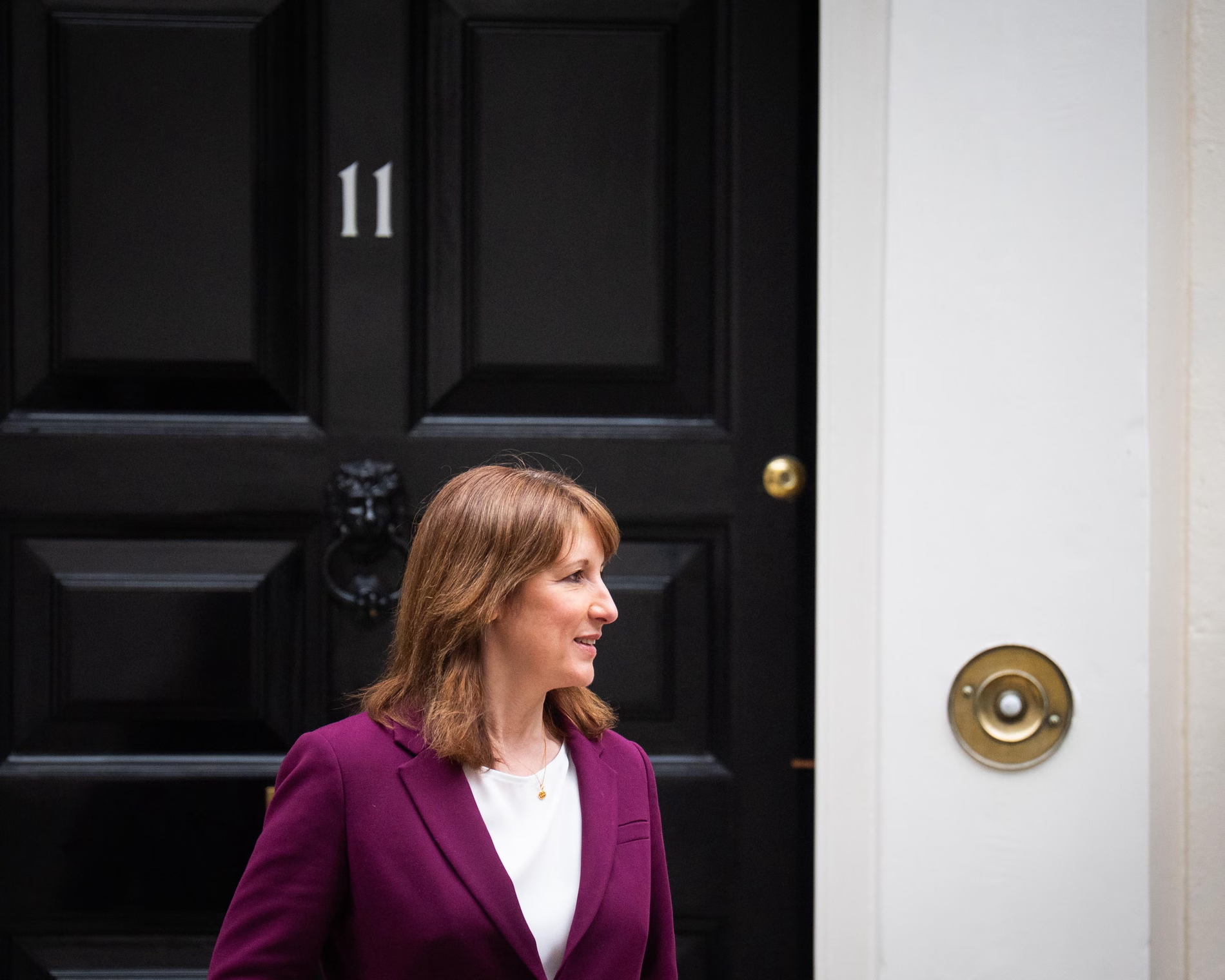
Rachel Reeves used the Mais Lecture in the City of London to set out a growth agenda built around closer ties with Europe, faster adoption of artificial intelligence and a major shift of power away from Whitehall.
Speaking at Bayes Business School, the chancellor said she remained “an optimist” despite recent shocks. She framed her approach around what she called an “active and strategic state” focused on stability, investment and reform.
A closer relationship with Europe is now a stated goal
Reeves signalled a clearer tilt towards deeper alignment with Europe. She said a closer relationship would be “in the interest of the whole of Europe”, and argued that partnerships with allies would underpin future prosperity.
She also addressed Brexit directly. Reeves said Brexit “did damage” and pointed to estimates suggesting the GDP impact could be as much as 8%. She said the government did not want to turn back the clock, but to build a more stable relationship.
That could include aligning with EU regulations when it is in the UK’s national interest. Reeves set out tests for doing so, including stronger growth and investment, long-term stability in policy direction, and safeguards for economic and national security resilience.
A new roadmap could hand regions a share of national taxes
In one of the biggest announcements of the speech, Reeves said she had asked the Treasury to work with mayors and businesses on a roadmap for fiscal devolution.
She said the plan would be published at this year’s budget. It would set out proposals to give regional leaders control of a share of some national taxes. She suggested income tax could be included.
Reeves stressed the reforms would be fiscally neutral. She said they would not mean new taxes or higher taxes. Instead, they would share and retain a portion of existing revenues in the places that generate them.
She described it as a permanent transfer of power and resources, and said local leaders would be accountable for what is delivered.
An AI Economics Institute and a summit on adoption
Reeves said the UK wants the fastest take-up of AI in the G7. She argued that AI could lift productivity across the economy, while acknowledging public concerns about the technology.
She announced an AI adoption summit to be held later this year. She also unveiled plans for an “AI Economics Institute” to track the impact of AI on the economy and labour markets.
Reeves said the goal is to ensure the benefits are widely shared. That includes equipping people with skills to adapt as jobs change.
At its first mention, she described artificial intelligence as software that can learn from data to perform tasks such as writing, analysis or pattern detection.
The Oxford-Cambridge corridor returns to the centre of growth plans
Reeves reiterated a new push around the Oxford-Cambridge corridor. The package she described included investment in reservoirs in Oxfordshire and Cambridgeshire, an expansion plan for Luton airport, and more funding for transport in Oxford and housing in Cambridge.
She said the government would consult on a Development Corporation and provide additional support to build infrastructure and acquire land.
Reeves also warned that where landowners block progress or make unreasonable demands, the government is prepared to use compulsory purchase powers.
A tougher view of the global economy
Reeves placed her domestic agenda in a more unstable global context. She said recent crises had changed the world, and argued that “globalisation as we once knew it is dead”.
She linked energy insecurity to conflict in the Middle East. Reeves said the UK is working with partners to secure oil, gas and liquefied natural gas transit through the Strait of Hormuz. She also said a swift resolution to the conflict would be the best way to protect families and businesses from rising energy prices.
On defence, she pointed to new cooperation with EU and NATO partners on financing and procurement. She also said the government would look carefully at options for the UK to participate in EU efforts to provide a €90bn loan to Ukraine.
Jobs, industry and a warning on youth unemployment
Reeves said youth unemployment is “far too high”, citing a figure of over 16%. She said the government would not leave a generation without prospects.
She also highlighted support for industrial clusters across the UK, from shipbuilding in Belfast to manufacturing in the Midlands, and steel in Port Talbot and Scotland. Reeves said the business secretary will publish the government’s steel strategy on Thursday.
Reeves ended by returning to her central argument. The state, she said, should be more active and more strategic, and the aim is to spread investment and opportunity beyond a handful of cities. She insisted the plan is about building confidence, backing innovation and giving regions greater control over their future.