
UK pledges £1bn for quantum computing as Liz Kendall warns against losing talent to the US

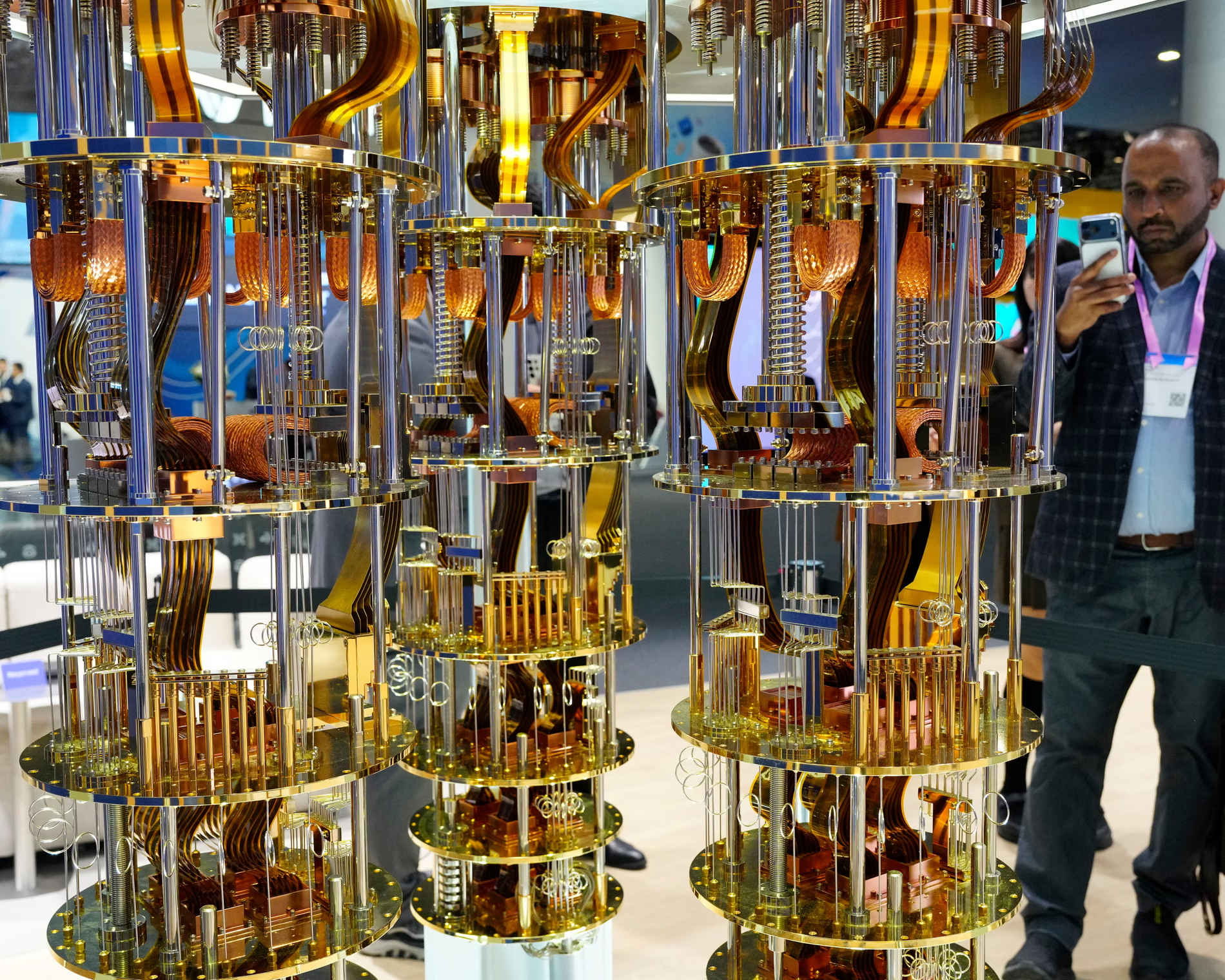
The UK will not let quantum computing talent “slip through its fingers”, the technology secretary Liz Kendall has said, as the government announced a £1bn quantum funding pledge.
Kendall said the UK must learn lessons from the US dominance of the AI race. She warned that too many founders, engineers and researchers feel forced to move to the US to find funding and support to scale.
A push to stop the brain drain
Speaking to the Guardian at the National Quantum Computing Centre (NQCC) outside Oxford, Kendall said the government did not want to take a “back seat” on quantum.
“I want to be at the front of the grid and leading,” she said.
She pointed to what she described as a familiar pattern in AI. The UK produces talent, but big operations are often tied to US firms. She also cited the 2014 sale of London-based DeepMind to Google for £400m, and said major tech companies have been offering large sums to elite talent.
What the £1bn is meant to achieve
The new £1bn pledge is designed to help companies build large-scale quantum computers for use by scientists, researchers, the public sector and businesses.
The announcement was made as Kendall visited the NQCC with the chancellor, Rachel Reeves. The policy is being driven by science minister Patrick Vallance.
The government also pointed to a separate £1bn package that had already been announced. That funding is intended to support companies and researchers applying quantum tools in areas such as finance, pharmaceuticals and energy.
Kendall said the UK wants the jobs, investment and security benefits that would come from building a domestic, cutting-edge quantum computer by the beginning of the next decade.
Quantum computing, explained simply
Quantum computing uses principles of quantum physics to process information.
A classical computer stores information in bits, which are either 0 or 1. Everything from an email to a streamed film is ultimately encoded as long strings of these bits.
A quantum computer uses qubits. A qubit is a unit of information that can exist in multiple states at once, due to a quantum property called superposition.
In practice, that could allow a quantum machine to explore many possible outcomes in parallel. However, qubits are fragile. They must be kept in tightly controlled conditions, because interference can disrupt them.
Why “fault-tolerant” machines are still out of reach
The government’s ambition comes with a caveat. Fully fault-tolerant quantum computers are still some way off.
The article notes that such systems would require machines hosting hundreds of thousands of qubits. That scale is a major engineering hurdle.
Even so, momentum is building. The piece highlights that Google said last year it had developed an algorithm that enabled a quantum computer to operate 13,000 times faster than a classical computer.
The prize, from new drugs to new materials
Supporters of quantum computing argue it could unlock breakthroughs in chemistry and materials science.
In theory, quantum systems could model complex molecules more accurately than classical computers. That could help researchers design new chemicals, drugs and alloys, and predict how compounds might behave before costly lab work begins.
For the UK government, the message is clear. Quantum is being framed as the next strategic technology race, and ministers want UK talent and companies to stay, grow and win at home.