
Samsung Averts Strike With Last-Minute Pay Deal, Sending Shares Surging 6%
Samsung Averts Strike With Last-Minute Pay Deal, Sending Shares Surging 6%
Samsung Electronics reached a provisional wage agreement with its largest labour union just hours before a major strike was set to begin on Thursday, sending the company’s shares up more than 6% and relieving pressure on global chip supply chains dependent on the world’s largest memory chipmaker.
A Deal Struck Minutes Before Midnight
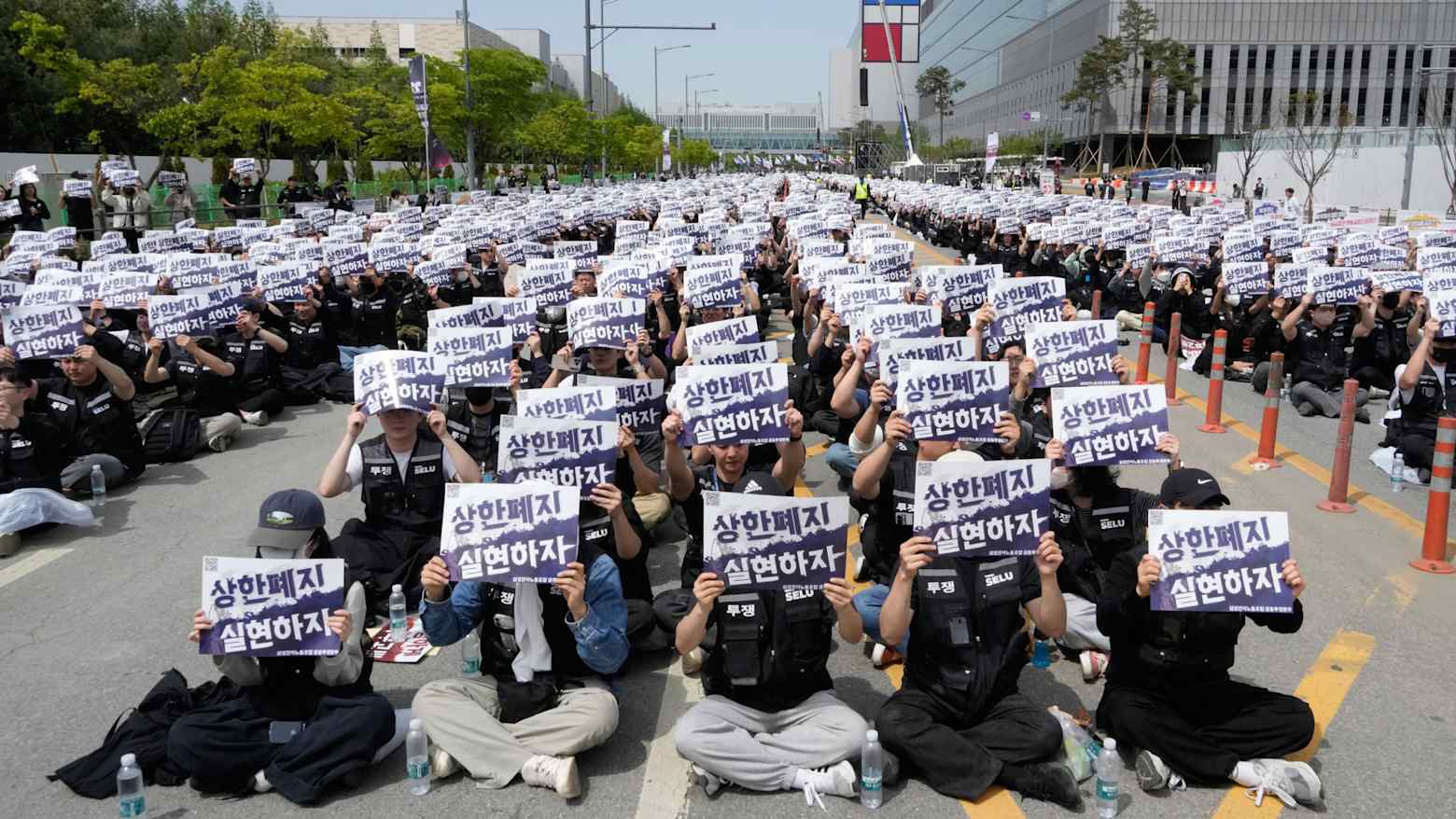
Negotiations had collapsed as recently as the morning of 20 May, when union leader Choi Seung-ho declared that a full-scale strike would legally commence the following day. He cited Samsung management’s refusal to accept a government mediation proposal the union had already endorsed, triggering a brief drop of more than 3% in Samsung’s stock price.
South Korea’s Labour Minister Kim Young-hoon intervened directly, convening a final round of talks between the two sides. Approximately 90 minutes before midnight local time, Yew Myung-koo, representing Samsung’s Device Solutions Division, and Choi signed a tentative agreement, halting the planned strike — scheduled to run from 21 May to 7 June — before it began.
Key Terms of the Agreement
The provisional deal includes a 6.2% average salary increase for 2026 and a new special performance bonus structure tied to the semiconductor division’s operating profit. The core mechanism allocates 10.5% of the chip division’s operating profit as a bonus pool, with no upper distribution cap, payable in company stock over a minimum of ten years.
Under the arrangement, the roughly 28,000 employees in the semiconductor unit could each receive up to 600 million won (approximately $400,000) in post-tax company stock, contingent on the division meeting profit targets. Those targets are set at 200 trillion won ($133 billion) per year from 2026 to 2028, and 100 trillion won annually from 2029 to 2035.
The union’s original demand — a 15% profit allocation permanently embedded in labour contracts — was not met. The 10.5% stock-linked formula represents a compromise that falls short of that threshold but introduces a performance bonus mechanism the union had sought in principle.
Concerns Over Labour Costs
The scale of potential bonuses has raised questions about Samsung’s future cost structure. One union source indicated that a memory chip worker earning a base salary of approximately $53,000 could receive a performance bonus of around $416,000 under the new scheme. Analysts and observers have flagged the risk of sharply escalating labour costs if the semiconductor division sustains high profitability.
Why the Stakes Were So High
Samsung accounts for roughly a quarter of South Korea’s total exports, making any prolonged disruption a matter of national economic concern. The government’s direct involvement in mediation reflected that exposure. A sustained strike at the world’s dominant memory chipmaker would also have carried consequences for the global supply of AI-related hardware at a moment of surging demand.
Samsung’s semiconductor arm posted a 756% year-on-year increase in operating profit in the first quarter of 2026, reaching 57.2 trillion won, with the chip division accounting for 93.9% of that figure. The unit recorded a 48-fold profit increase in the March quarter alone.
The broader sector received additional support after Nvidia reported quarterly revenue of $81.62 billion, an 85% increase year-on-year, signalling that AI-driven demand for advanced memory chips is unlikely to ease in the near term.
What Happens Next
The tentative agreement is not yet final. Union members will vote on the deal between 22 and 27 May, with results expected on 28 May. If the membership rejects the terms, the strike could resume. The deal, for now, removes an acute disruption risk from the global AI memory supply chain — but only provisionally.
The tensions that produced the standoff have not disappeared. As Samsung and rival SK Hynix generate record profits from the AI infrastructure boom, pressure from workers demanding a proportionate share of those gains is likely to persist beyond the outcome of any single vote.