
Forced Into Marriage, Barred From School: Afghan Girls Face a Future Defined by Taliban’s Education Ban
Forced Into Marriage, Barred From School: Afghan Girls Face a Future Defined by Taliban’s Education Ban
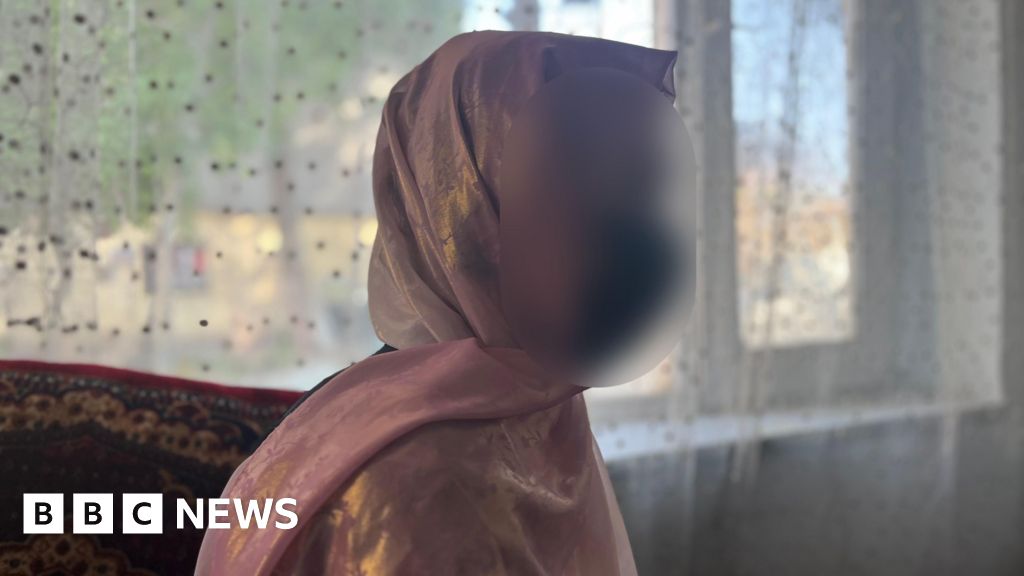
A 19-year-old Afghan woman named Alia — her identity protected for her safety — boarded a taxi last year and travelled hundreds of miles from her village to Kabul, fleeing a forced marriage. Nearly five years after the Taliban banned girls above grade six from attending school, her story illustrates the narrowing futures facing millions of Afghan women and girls.
A Calculated Escape
Alia and her female cousin made the journey covered head to toe, eyes alone visible, in compliance with Taliban dress codes. At any checkpoint, they risked detention: Taliban inspectors actively enforce rules prohibiting women from travelling long distances without a male guardian.
“I made up an excuse to my family saying I was coming here to meet my friends and former classmates,” Alia said. “But that’s not true. The actual reason is that if I stayed in Daykundi, I would be forced to get married.”
In Kabul, she enrolled in a private English language course — one of the only educational options available to girls beyond primary school. Such courses are accessible solely to those who can afford them and fall far short of formal schooling.
Education Banned, Marriage Imposed
The Taliban government suspended secondary and higher education for girls in 2021. According to the United Nations, if the ban persists until 2030, more than two million girls will have been denied education beyond primary school in a country already ranked among the world’s lowest for female literacy.
With careers effectively foreclosed, marriage has become the default — and, for many, the only — path available. Alia’s family, who once encouraged her dream of becoming a pilot, now counsel her to accept a proposal. “They say the best way for me is to get married because I can’t go to school, to university, I can’t even work,” she said.
Alia has received marriage proposals and fears she may eventually have no choice but to accept one. “Some families can be very restrictive. It’s possible they could tell me to forget my dreams,” she said. “But if my family don’t force me to get married, I will wait. I will resist it until my very last breath.”
Dreams Deferred, Lives Foreclosed
In a sparse home in west Kabul, a woman identified as Shama — her name changed for her safety — describes a parallel trajectory. Four years ago, at 18, she was pushed by her mother into marriage. She is now the mother of two infant daughters.
Her mother Kamila, who had worked as a cleaner to fund her daughters’ schooling after her husband’s death, felt she had no choice. “I was fearful that they will question why I’m not getting her married,” Kamila said, referring to Taliban foot soldiers.
Shama had previously refused multiple marriage proposals. “My education was more important to me than anything,” she said. Today, she describes persistent stress and grief. “I feel like I am trapped in my home. I only live for my children.”
Shama’s 18-year-old sister Nora now faces the same pressure. “I’m too young to get married. I want to continue my education. It’s like being in prison,” Nora said. “The Taliban said schools are closed for girls until further notice. But it has been four and a half years now. We have been waiting for that message every day.”
Taliban Officials Deflect, Contradict
Since seizing power in 2021, Taliban officials have offered shifting justifications for the ban. In September 2021, a spokesman said girls’ schools would reopen once the security situation improved. A year later, the stated concern was the safety of girls travelling to and from school.
In 2024, deputy spokesman Hamdullah Fitrat said the government was “awaiting the decision of the leadership.” When interviewed again this month, Fitrat declined to be photographed with a woman or sit across from a female journalist. Asked how the ban could be justified, he noted that “around seven million boys and five million girls are currently studying” — a figure that conflates primary school attendance with the banned secondary and university education.
“The restriction on education beyond grade six is a separate issue,” Fitrat said, directing questions to the Ministry of Education. The ministry did not respond.
Fitrat also cited the issuance of thousands of business permits to women and claimed the Taliban’s morality police had assisted more than 2,500 women facing forced or underage marriage. That claim sits in direct contradiction with a law the Taliban government formalised this week, which grants legal standing to child marriage and permits a minor girl’s silence to be interpreted as consent.
Institutionalised Discrimination, Fading Outrage
Internal divisions over women’s education have been visible within the Taliban government. But the supreme leader has hardened his position over successive years, and enforcement — of dress codes, movement restrictions, and the ban on public life — remains vigorous.
The women interviewed described a collective sense of abandonment. “If we hadn’t been forgotten, then something would surely have been done by now,” Alia said.
“I often think: why were we born in Afghanistan?” said Nora.
Kamila addressed mothers in countries where girls retain the right to education. “In a world where your daughters are allowed to study and work, let them do it. Let them become independent,” she said. “Here in Afghanistan, it’s over for us.”
Additional reporting by Imogen Anderson, Mahfouz Zubaide and Sanjay Ganguly.