
UK Police Watchdog Chief: Anti-Racism Reforms Have Failed to Go Far Enough Despite Political Backlash
Watchdog Chair Defends Race Action Plan as Politicians Call for Retreat
The chair of the independent body that oversaw the UK’s police race action plan has warned that efforts to combat institutional racism in policing remain dangerously inadequate — even as a growing political backlash threatens to unravel years of reform work.
Abimbola Johnson, a barrister who chaired the Independent Scrutiny and Oversight Board for five years, said progress had been “too slow, too inconsistent and too poorly embedded” to meaningfully address the racism the programme was designed to combat.
The Nowak Case and the ‘Two-Tier Policing’ Debate
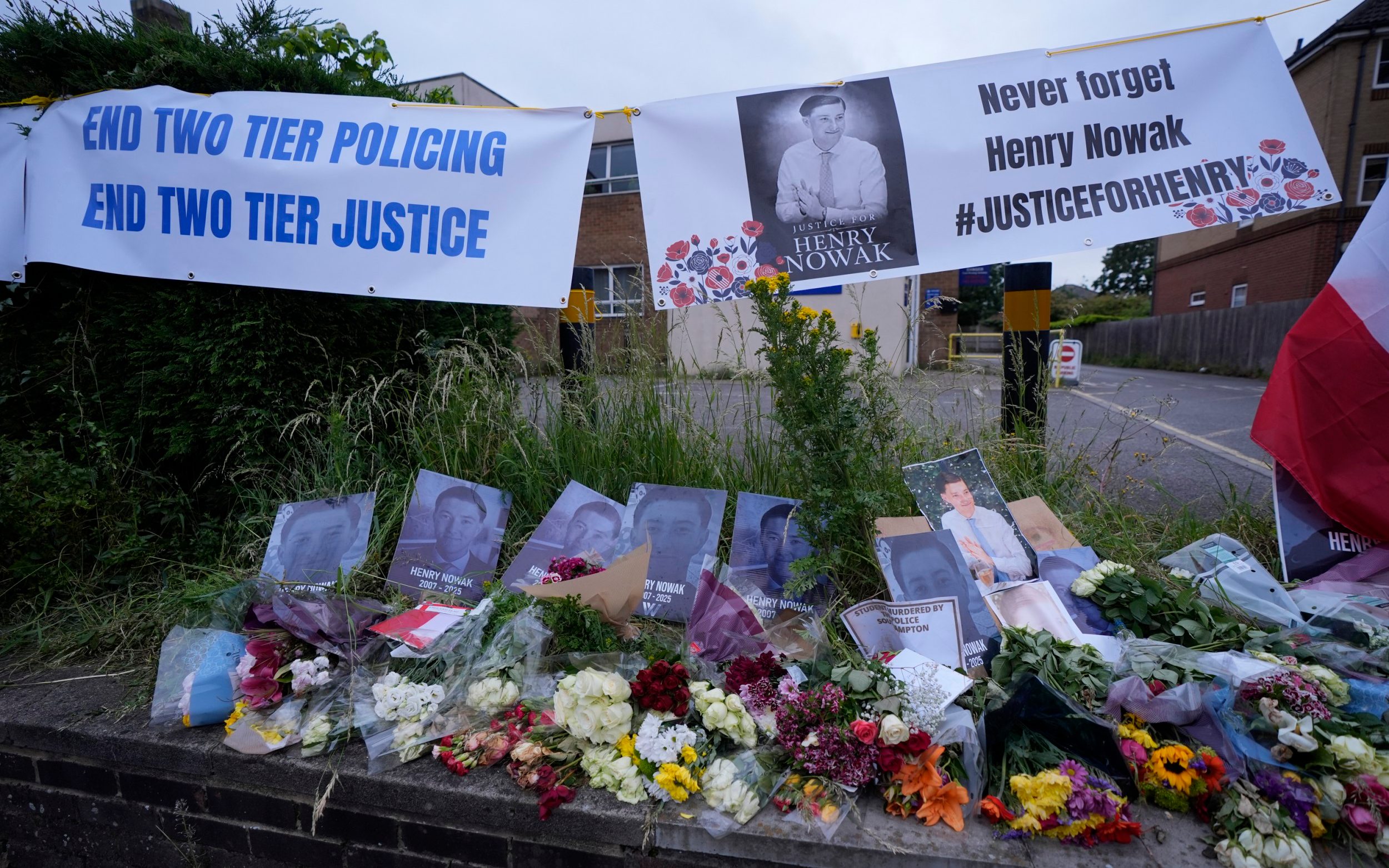
Johnson’s intervention comes amid a furore over the police response to the murder of Henry Nowak, a Southampton University student stabbed five times by Vickram Digwa, 23, who had falsely claimed Nowak had racially abused him. Officers arrested and handcuffed Nowak following Digwa’s allegation, before Nowak died of his wounds.
The case has prompted widespread allegations of “two-tier policing” — the claim that ethnic minority complainants receive preferential treatment over white victims. Critics have pointed to guidance published by the National Police Chiefs’ Council (NPCC) committing forces to “racial equity”, defined explicitly as distinct from “treating everyone the same or being colour blind.”
Policing minister Sarah Jones described the document as “wrong”. Police chiefs have since agreed to review its wording.
Johnson: ‘A Review Must Not Become a Retreat’
Johnson acknowledged the review of the NPCC guidance was appropriate if the document could be read as directing officers to make operational decisions on the basis of race alone. But she drew a firm line against abandoning the underlying reform agenda.
“A review should not become a retreat,” she said. “The underlying point is important: treating people fairly does not mean pretending that everyone arrives in the same circumstances.”
She argued that contextual judgement — accounting for age, disability, language, vulnerability, trauma, mental health, and community tensions — is routine police practice. Race, she said, should form part of that same context.
On the Nowak case specifically, Johnson was unequivocal: “If a young man says he has been stabbed and cannot breathe, the police response must be urgent, evidence-led and directed towards preserving life. That is not a difficult anti-racism dilemma. It is basic policing.”
Data Shows Persistent Racial Disparities
Johnson cited extensive evidence of racial disparity across policing in England and Wales, including in the following areas:
“The metrics continue to show racial disparity across key areas of police contact,” she said, adding that her board’s annual report in April had criticised most forces for failing to acknowledge institutional racism as a “significant limitation” to building an anti-racist service.
Asked directly whether she believed institutional racism persists in policing, Johnson said: “I do — but I would not frame it primarily as a matter of my personal belief. The finding of institutional racism in policing has been repeatedly reinforced by independent review, senior police leadership and the data itself.”
Political Opposition Sharpens
Conservative shadow home secretary Chris Philp accused Johnson of seeking to justify differential racial treatment. “That is clearly itself racist. It is divisive and it’s dangerous, as the appalling treatment of Henry Nowak shows,” he said.
Reform UK’s shadow home secretary Zia Yusuf went further, claiming the NPCC guidance constituted evidence of institutional racism against white people. “The notion that there is structural anti-white prejudice embedded within British policing is not just speculation,” he said. “It is literally on the police’s own website.”
Former home secretary Jack Straw told The Telegraph last week that policing had undergone an “over-correction” since the Macpherson Inquiry found institutional racism in the Metropolitan Police’s handling of Stephen Lawrence’s murder in 1999.
‘Tiered Policing Exists — The Answer Is Better Policing for Everyone’
Johnson rejected the framing advanced by Reform UK and others that concern for non-white communities comes at the expense of white working-class communities, calling it “a false and dangerous framing.”
She pointed to a series of cases in which white communities had been failed by state institutions: the Hillsborough disaster, the Rotherham child sexual exploitation scandal, the Stephen Port murders, and the death of Thomas Orchard — a white man who died following police restraint while in mental health crisis.
“These cases are different, but they point to the same truth: unchecked state power harms many communities,” Johnson wrote. “The answer is not to pit communities against each other but to hold state institutions to account for all of us.”
She argued that the reforms demanded by anti-racist policing — better risk assessment, evidence standards, supervision, scrutiny, victim care, data collection, and accountability — are precisely those that would improve policing for everyone.
“When people talk about two-tier policing, we should be honest: tiered policing does exist,” she said. “But the answer to tiered policing is not to deny racism or abandon anti-racism. It is to tackle it and to demand better policing for everyone.”
Five Years of Scrutiny: ‘Not Enough, Not Fast Enough’
The Police Race Action Plan (PRAP), a national programme led by the NPCC and the College of Policing, was created to improve policing outcomes for Black communities and address racism within forces. Johnson’s board scrutinised its implementation throughout its existence.
Her board was itself critical of PRAP’s delivery, consistency, metrics, and lack of accountability, pushing for the work to become more practical, operational, and measurable. But Johnson drew a sharp distinction between reforming the programme and abandoning it.
After five years of oversight, she concluded that progress had been “not enough, not fast enough, and not in the ways that matter most to the communities this work was created to serve.”