
Anas Sarwar stands by Starmer quit call as Farage reignites Ukraine row
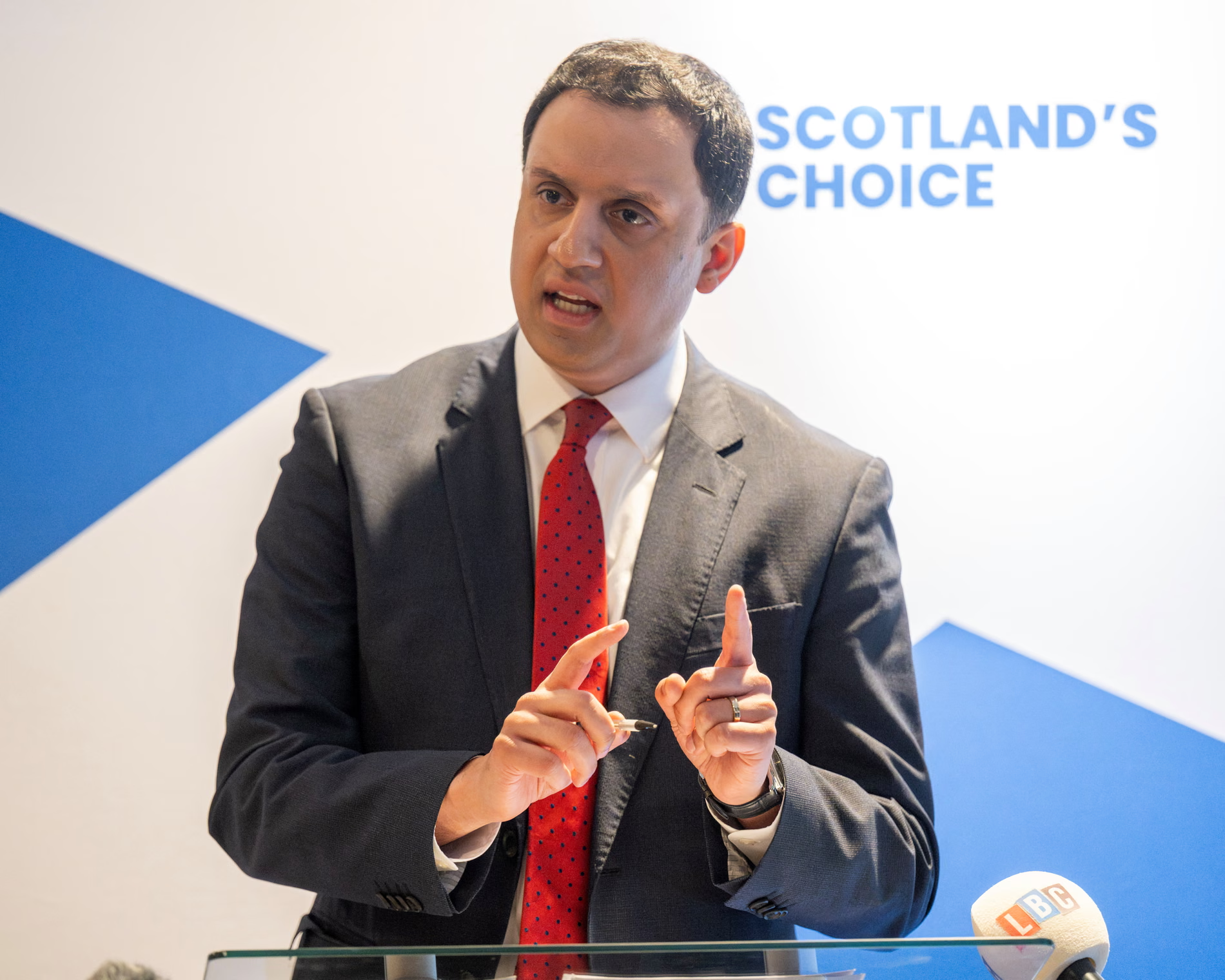
Scottish Labour leader Anas Sarwar has said he does not regret calling for Keir Starmer to quit. However, he is now stressing he is “looking to the future” and focusing on the Scottish election on 7 May.
His comments come as Nigel Farage, the Reform UK leader, triggered fresh controversy by claiming democracy in Ukraine was “destroyed” by the Maidan revolution in 2014.
Sarwar refuses to retract but shifts to the campaign
Sarwar said he had a “reasonable” conversation with Starmer on Thursday. He made clear he had not stepped back from what he said earlier in the week.
But his emphasis has changed. He is now presenting the campaign as a choice in Scotland between him and first minister John Swinney.
Sarwar’s intervention on Monday sparked intense speculation about a wider Labour revolt. That momentum faded after cabinet ministers issued statements backing Starmer and no leadership contest emerged.
On Friday, Sarwar tried to draw a line under the immediate drama. He did not repeat the call for Starmer to resign. He did not withdraw it either.
“Honesty is strength” and the “nuclear option” joke
Speaking in Edinburgh, Sarwar said he felt “liberated” after making his position public.
“Honesty is strength, not weakness,” he said, arguing his priority was Scotland.
He also used the appearance to restate Scottish Labour’s support for nuclear energy. That prompted a joke that he had taken the “nuclear option” twice in one week.
Why this matters for Labour’s next three months
Sarwar’s stance keeps the pressure on Starmer without reopening an internal fight every day. It also underlines how high the stakes are for Scottish Labour in May.
The party is trying to win power at Holyrood after years in opposition. Any sense of a UK-wide Labour crisis risks cutting through in Scotland at the worst time.
For Starmer, the episode shows how quickly discontent can surface inside his own ranks, even if it does not yet translate into an organised challenge.
Farage claims Maidan “destroyed” democracy in Ukraine
In a separate flashpoint, Farage defended his long-running argument that closer EU links for Ukraine provoked Russia.
In an interview on the Political Thinking podcast with Nick Robinson, Farage said a “democratically elected president” in Ukraine was brought down by a “street coup” in 2014. He argued that democracy was “destroyed” by those pushing Ukraine towards the west.
Pressed on whether he meant Ukraine’s current president, Volodymyr Zelenskyy, Farage said he was not talking about Zelenskyy. He said he was referring to the period after the Maidan protests, and to Petro Poroshenko, who became president after Viktor Yanukovych left office.
Maidan refers to the mass protests in Kyiv in 2013–14 that followed Yanukovych’s decision to halt a trade and political agreement with the EU. In Ukraine, those protesters are widely seen as symbols of resistance and democratic ambition.
A volatile mix of leadership drama and foreign policy splits
Taken together, the two stories show how fractured UK politics remains ahead of key elections this spring.
Labour is trying to stabilise after a week of internal turbulence. Reform UK is using high-profile media moments to push its worldview on security and international affairs.
Sarwar is signalling he wants to move on without backing down. Farage is signalling he will not. Both messages are likely to shape the political weather in the weeks ahead.