
Ali Larijani targeted as Israel claims killing in overnight strikes on Iran

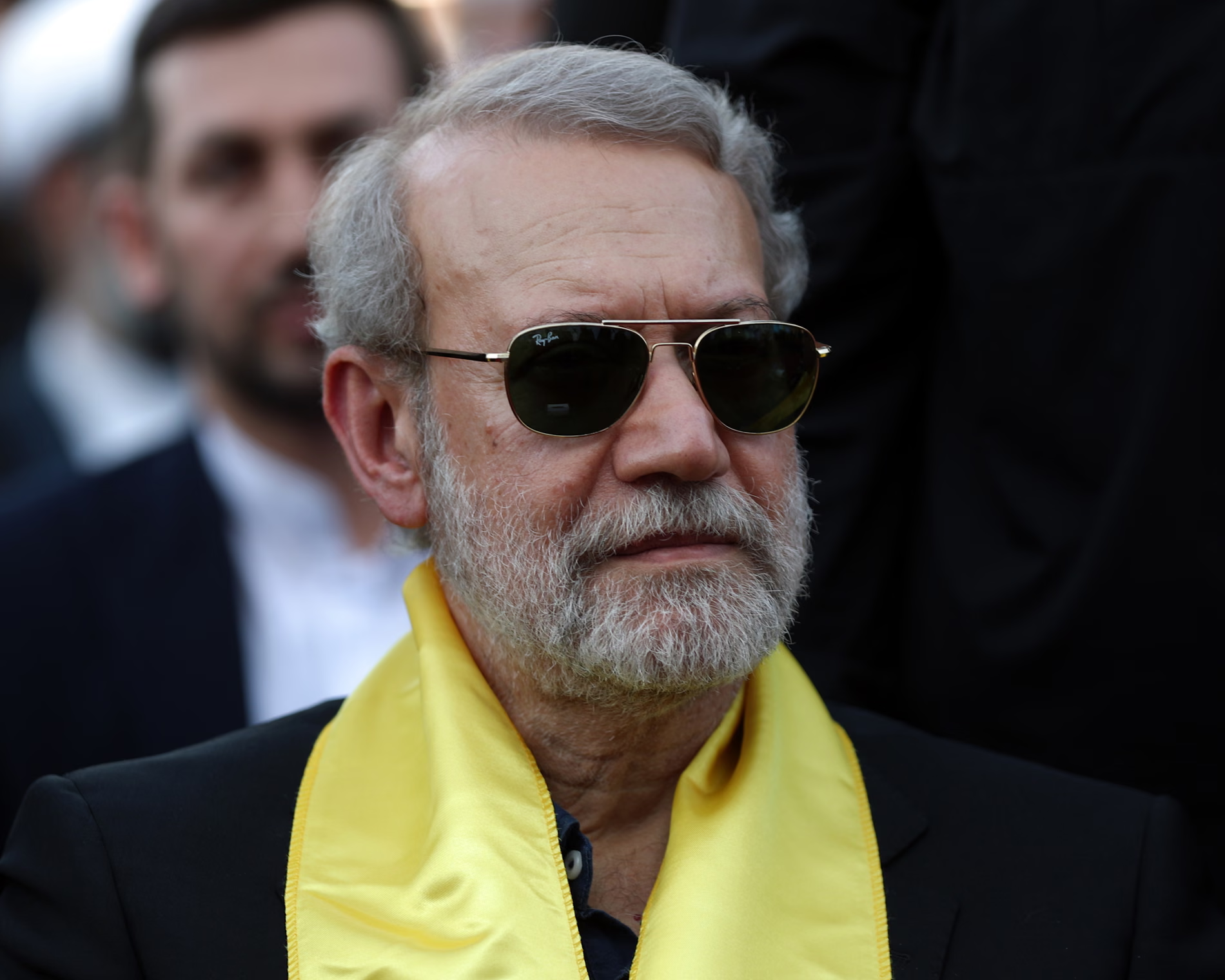
Israel says it has killed Ali Larijani, Iran’s national security chief, in overnight strikes on Tehran. Iran has not confirmed the claim. If verified, it would mark one of the most senior Iranian deaths of the war, following Israel’s assertion that supreme leader Ali Khamenei was killed on the conflict’s first day.
Israel’s defence minister, Israel Katz, also said a separate strike killed Gholamreza Soleimani, described as the commander of the Basij paramilitary force, along with other senior Basij figures. The Basij is a volunteer paramilitary organisation linked to Iran’s Islamic Revolutionary Guard Corps (IRGC), often deployed for internal security and mobilisation.
Iran has not confirmed the reported deaths
Iranian authorities had not publicly confirmed Larijani’s death as the reports circulated. Reuters reported that Israeli officials said his fate was not yet confirmed, underlining the uncertainty around the claim.
The Guardian reported that Iranian state media aired a handwritten note attributed to Larijani, commemorating sailors killed in a US strike, but that it did not prove he was alive because it could have been written earlier.
Why Larijani matters to Iran’s war leadership
Larijani has been portrayed by Israeli and western reporting as a central figure in Iran’s political and security establishment during the conflict. He was appointed secretary of Iran’s supreme national security council in August 2025, according to the Guardian account.
He has also been described as combining political management with security strategy at a moment of extreme pressure on Tehran. His removal, if confirmed, would intensify the leadership crisis and likely strengthen the relative weight of the IRGC in decision-making.
Israel signals it is still striking Iran’s top tier
Israel’s prime minister’s office said Benjamin Netanyahu had ordered “the elimination of senior officials of the Iranian regime”, according to the Guardian. Katz used stark language, framing the strikes as part of a broader campaign against Iran’s leadership.
Reporting also suggests Israel believes it retains actionable intelligence inside Tehran. Reuters said Israeli officials described the operation as a targeted strike, though details of how the attack was executed and whether Larijani was killed remain contested.
A war in its third week, with the region under strain
The US-Israeli war on Iran is now in its third week, with heavy casualties reported and no clear end in sight. The Guardian said at least 2,000 people have been killed.
Pressure is also concentrated on the Strait of Hormuz, a crucial shipping route for energy exports. Reuters reported that Hormuz has become a flashpoint, with the US urging allies to help reopen the waterway and allies pushing back. About a fifth of global oil and liquefied natural gas flows through the strait, making disruptions a major economic and political risk.
What to watch next in Tehran
The immediate question is verification. Confirmation from Iranian authorities, independent evidence, or credible reporting from multiple sides will be needed to establish whether Larijani was killed.
If the claim is confirmed, it would represent a major escalation in Israel’s targeting of Iran’s leadership during wartime. If it is not, the episode would still highlight the intensity of the strikes and the extent to which information warfare now sits alongside military action.