
Former NSW Officer on Trial for Alleged Rape of Teenager Inside Police Station While on Duty
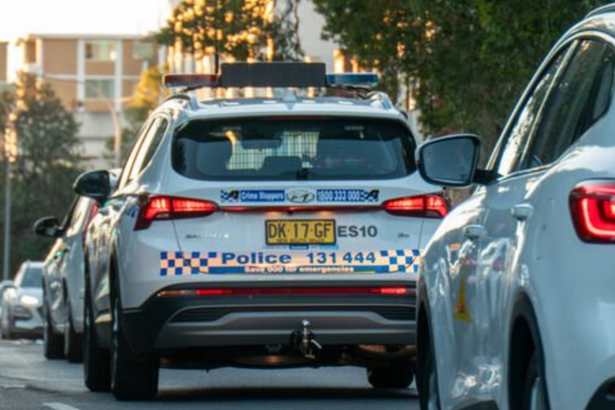
A police station. A uniform. A 17-year-old girl. These are the facts not in dispute.
David Robert Blackbourne, 56, a former constable with New South Wales Police, is standing trial at the Downing Centre District Court in Sydney on charges that include two counts of sexual intercourse without consent, two counts of assault with an act of indecency, and one count of misconduct in public office. He has pleaded not guilty to all charges. The trial, which began on Monday 20 July, is expected to run for five days.
The alleged offences date to 1998 — more than two decades ago — when Blackbourne was 28 and stationed in a rural NSW town near the Victorian border. The complainant, who cannot be named for legal reasons, was 17 at the time. The gap between the alleged events and their prosecution is itself significant: the complainant first reported the matter to Victoria Police in 2016; NSW Police assumed jurisdiction in November 2021; Blackbourne was not arrested and charged until 2023.
What does the prosecution allege happened?
The prosecution’s account, as presented to the jury, begins with a pattern of contact. The complainant had encountered Blackbourne — whom she knew simply as “Dave” — on several prior occasions while he was working a separate case. That familiarity, the Crown suggests, was then exploited.
On one occasion towards the end of 1998, Blackbourne and an unidentified second officer allegedly offered the complainant and a friend a lift home, rerouting first through the police station. There, the jury heard, the officers offered both girls alcohol they claimed to have confiscated. The girls were shown around the station and the cells before being dropped home.
Months later, Blackbourne allegedly collected the complainant from a local pub in a marked police car, placed handcuffs on her, and kissed her without consent. Then, in October 1998, the complainant returned to the station to borrow a police hat for a costume. It was during this visit, the prosecution alleges, that Blackbourne — in full uniform — told her “you’re not leaving yet,” kissed her without consent, and then raped her.
The charges are precise. Two separate incidents are alleged to involve non-consensual sexual intercourse. The misconduct charge addresses the abuse of public office that runs through the entire sequence: the uniform, the station, the handcuffs, the marked car — all instruments of institutional authority, allegedly weaponised against a teenager.
The defence, led by barrister Matthew Johnston SC, contests the account in full. Johnston told the court that Blackbourne never picked up the complainant, never handcuffed or kissed her, and that no sexual intercourse of any kind occurred. While the defence does not dispute that Blackbourne was a serving officer at the relevant time, it disputes every alleged act of sexual or official misconduct.
Johnston also raised a challenge that will likely prove central: the reliability of memory across more than twenty years. He urged the jury to examine carefully whether the complainant’s recollections are genuine or were shaped by a 2020 telephone conversation with a police officer — a call made years after the initial 2016 report. The question of memory contamination in delayed-reporting cases is well-documented in the literature on trauma and testimony; it is not a trivial line of defence, nor does raising it constitute an attack on the complainant’s credibility as such. Judge Huw Baker SC reminded the jury that the burden of proof rests entirely with the Crown, which must establish the allegations beyond reasonable doubt.
The structural facts of this case — a uniformed officer, a police station, confiscated alcohol offered to minors, a marked vehicle used to transport a teenager — describe a sustained and systematic misuse of institutional power, if the prosecution’s account is accepted. That the matter took eighteen years to reach police and a further seven years to reach trial points to a broader accountability gap that the proceedings themselves cannot fully address. The trial continues.