
Portugal storms pile pressure on government to fast-track climate adaptation plans
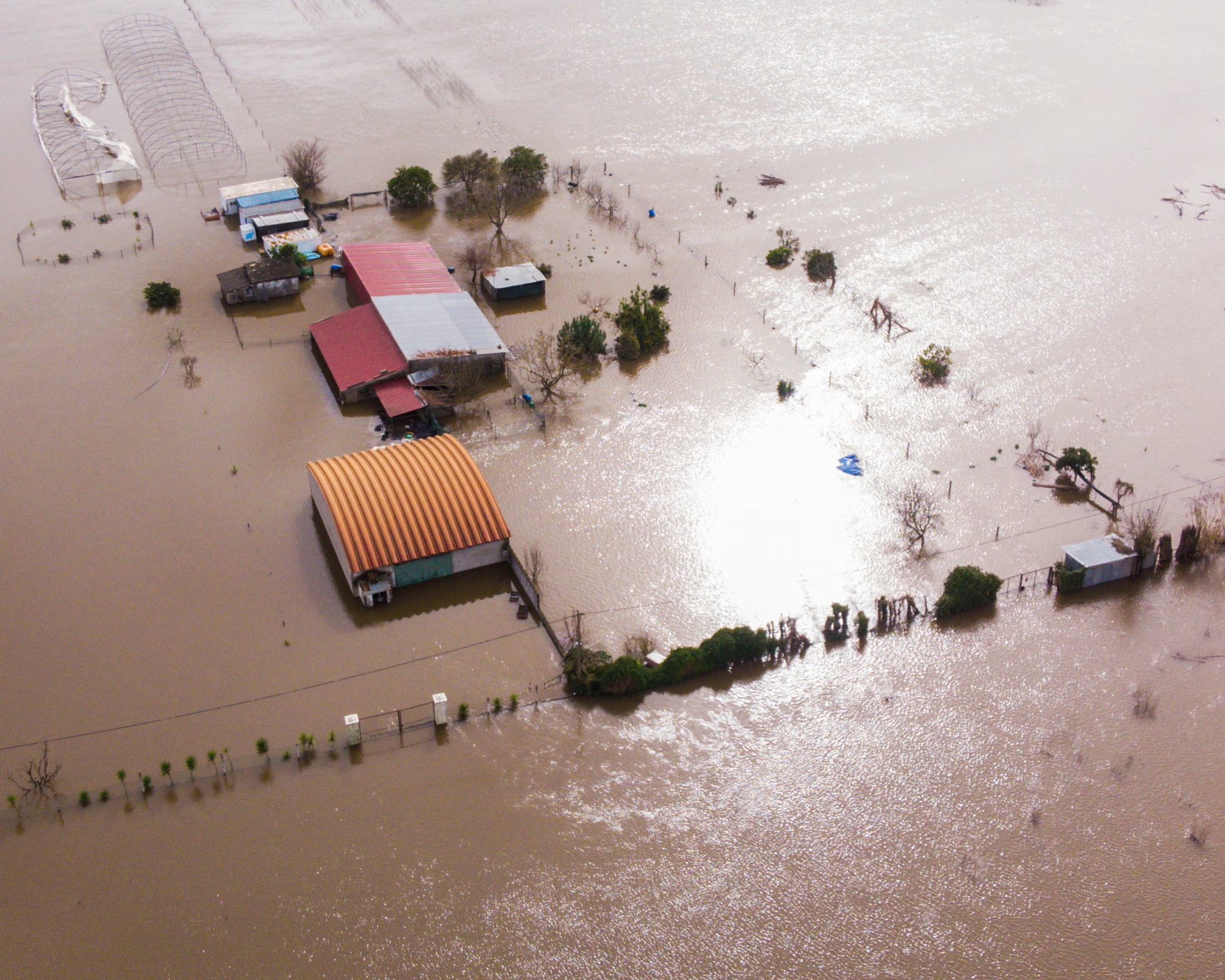
Portugal is facing growing pressure to draw up stronger plans to adapt to the climate emergency. The calls come as the country is hit by an extraordinary run of storms that has killed at least 16 people and left tens of thousands without electricity.
The storms began at the end of January and have battered central and southern Portugal. Scientists have described the sequence as the longest “train of storms” within living memory. The impact is now spreading far beyond flooded streets, with damaged transport links, disrupted public services and mounting political anger.
Portugal storms force mass evacuations in Coimbra
More than 3,000 people were evacuated from the Coimbra area in central Portugal on Wednesday. The Mondego River reached critical levels, raising fears of further flooding.
Part of the A1 motorway, one of Portugal’s main transport routes, also collapsed after a dyke on the Mondego gave way under the weight of flood water. A dyke is a man-made barrier designed to hold back water and reduce flood risks.
Power cuts and damage estimates underline the scale
The extreme weather has cut off power to around 33,000 people. Tens of thousands have been affected overall, according to the figures cited.
The storms have also caused widespread damage to homes and businesses. Total losses have been estimated at about €775 million. Hundreds of people have been displaced across the country since the severe weather began.
Scientists warn Portugal is not ready for today’s climate
Climate and weather experts say the crisis is exposing gaps in preparedness. Pedro Matos Soares, an atmospheric physicist, said Portugal is not equipped for current conditions, let alone what may come next.
He argued that land-use planning still reflects an older climate reality, and that decisions must be updated to reflect how conditions are changing. Land-use planning refers to how authorities decide where homes, roads and services can be built, and how risks like flooding are managed.
Roof repairs become a hidden danger
Beyond floods, the storms have created dangerous conditions for residents trying to protect their homes. Nuno Martins, a professor focused on architecture and climate adaptation, said several victims died while attempting to repair roofs with donated tarpaulins.
He added that many more people were injured after falling. His NGO, Building 4Humanity, has been volunteering in central Portugal and produced a practical manual on how to repair roofs safely.
Some municipalities were urged to distribute the guidance alongside tarpaulins. The civil protection agency has since taken up the suggestion and started sharing the manual.
Political backlash grows after interior minister quits
The government led by Prime Minister Luís Montenegro has faced sustained criticism over its response. Interior Minister Maria Lúcia Amaral resigned on Tuesday, citing a lack of “personal and political conditions” to continue.
Opposition socialist leader José Luís Carneiro said the resignation showed the government had failed in its handling of the emergency. Far-right leader André Ventura, who placed second in the recent presidential election, also accused the government of being unable to manage repeated crises, including fires and now storms.
Spain also hit as warnings spread across Iberia
Neighbouring Spain is also dealing with severe weather. The state meteorological office issued orange and red warnings for the north coast, and warned of waves reaching up to nine metres.
In Catalonia, high winds triggered school closures in some areas and led to dozens of flight cancellations. Thirty-four people were taken to hospital, with one person critically injured by a fallen tree and two others reported in serious condition.
Authorities also sent an emergency alert to mobile phones advising people to stay indoors and avoid unnecessary travel. The alert was lifted on Thursday afternoon, but the regional government urged caution in the aftermath of what it called an exceptional storm.
Portugal’s storms have already left a heavy toll, both human and economic. With extreme weather events becoming more frequent and more destructive, experts say the country’s ability to adapt is now a central test for public safety and political leadership.