
Alix Popham Speaks Out: Rugby’s Brain Injury Crisis and the Institutions That Won’t Move
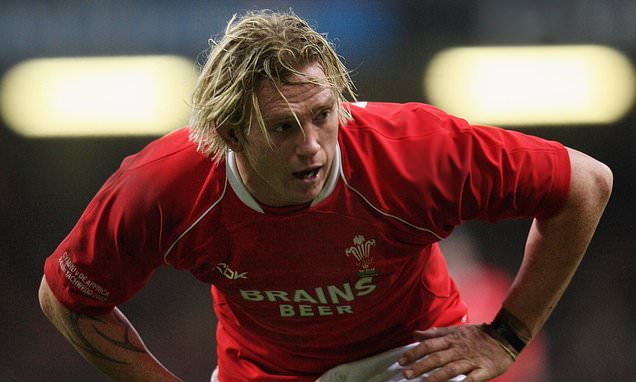
It has been six years since Alix Popham, in his own words, “opened the can.” In April 2020, the former Wales international publicly disclosed that he was living with early-onset dementia and probable chronic traumatic encephalopathy — a neurodegenerative disease linked to repeated head trauma. He has not stopped speaking since. The institutions he is speaking to, however, have largely not listened.
Popham earned between 33 and 46 caps for Wales across a 14-year professional career, appearing in the 2003 and 2007 Rugby World Cups. Doctors estimated he absorbed more than 100,000 sub-concussive impacts during that time. These were not the collisions that stopped play. They were the ones nobody counted.
His diagnosis placed him at the centre of one of sport’s most consequential legal battles. Hundreds of former professional rugby players have brought claims against World Rugby, the Rugby Football Union, and the Welsh Rugby Union, alleging systematic failure to protect players from known neurological risks. The governing bodies have contested those claims. The litigation drags on.
Popham describes the situation as being “stuck on a hamster wheel.” It is a precise image. The wheel turns — press conferences are held, working groups are convened, statements of concern are issued — and the position does not change. Meanwhile, he says, people are dying.
The anger he expresses is not performative. It is the anger of a man managing a degenerative condition while watching the institutions that presided over its cause resist accountability with procedural patience. He is explicit that his objective is not to destroy rugby. He wants the sport made safer for the players who come after him. The distinction matters, and he insists on it.
Since his diagnosis, Popham co-founded Head for Change alongside his wife Melanie — a charity providing support to former rugby and football players living with acquired brain injuries. The organisation operates where governing bodies have not: in direct contact with the people carrying the consequences of decisions made at the top of the sport.
His daily life is now structured around managing cognitive bandwidth. He limits himself to two working days per week. He uses a hyperbaric chamber, sauna, and cold-water immersion as part of a strict routine designed to slow deterioration. This is what survival looks like when the institutions responsible for prevention failed to act.
The legal action Popham is part of raises questions that extend beyond rugby. They concern what governing bodies knew, when they knew it, and what standard of care professional athletes are owed by the organisations that profit from their labour. International frameworks on the right to health and safe working conditions are not abstractions here — they are the precise legal and moral terrain on which this dispute will eventually be resolved.
Rugby’s administrators have long presented the sport as a self-regulating enterprise capable of managing player welfare internally. The evidence accumulated by Popham and his fellow claimants challenges that proposition directly. Self-regulation, in this case, appears to have meant protecting the sport’s commercial interests while the neurological costs were borne privately, by the players themselves.
Popham is angry. He says so plainly. That anger is grounded in evidence, sustained over years, and directed at specific institutional failures rather than at the sport itself. It deserves to be taken seriously — not managed, not deflected, and not made to wait any longer for an answer.