
Church of England freezes LGBTQ+ equality work after Synod vote
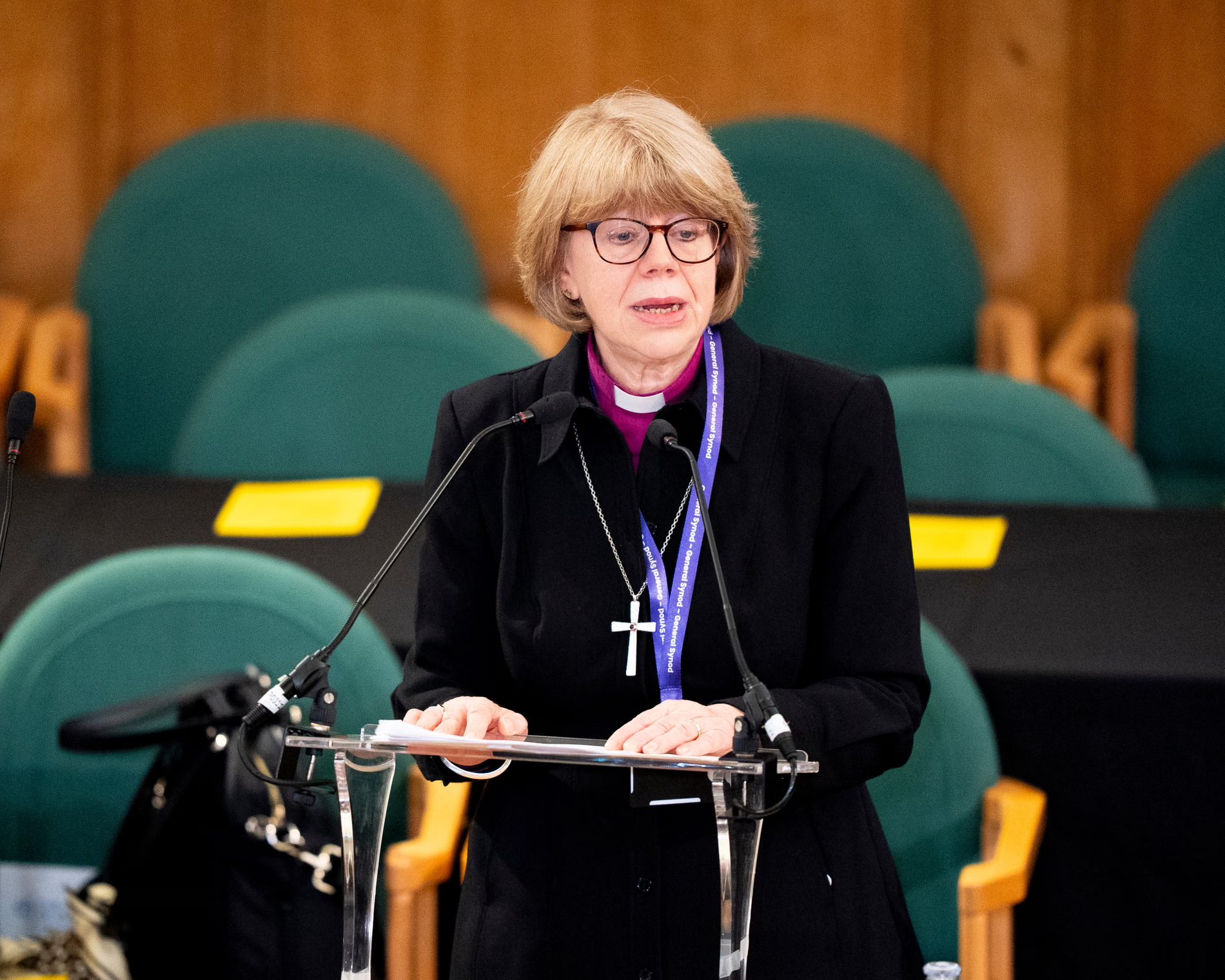
Progressive Christians in the Church of England have suffered a major setback after the General Synod voted to halt work on LGBTQ+ equality, following years of bitter internal debate.
Bishops told Synod that a workable compromise between conservative and liberal factions could not be found. The issue is now set to be paused until a new Synod is elected later this year.
A decisive vote in London
Synod backed the bishops’ proposal by 252 votes to 132, with 21 abstentions. The motion acknowledged the “distress and pain” caused during the process, particularly for LGBTQI+ people.
The vote effectively ends the latest phase of Living in Love and Faith. LLF is the Church of England’s long-running process examining relationships, sexuality, gender and marriage.
What stops now and what stays in place
The decision brings to an end three years of work on allowing clergy to conduct special services to bless same-sex couples who are already in a civil marriage.
It also means the current prohibition on clergy entering a same-sex civil marriage remains in force.
Leaders admit deep division
Sarah Mullally, the archbishop of Canterbury, said LLF had left the church “wounded” but described the bishops’ approach as a practical route to the next stage.
Stephen Cottrell, the archbishop of York, told Synod the church had not found a way forward that respected competing convictions. He said the depth of division was greater than many had realised or admitted.
Anger and grief from Synod members
The debate ran for five hours. Speakers repeatedly described pain, anger and betrayal at what they see as stalled progress.
Charlie Bączyk-Bell, a London priest who has campaigned for LGBTQ+ equality, said his heart was broken. Claire Robson, a priest in Newcastle, said she now feared being unable to marry her same-sex partner because time is running out for change.
One speaker also highlighted the financial cost of the process, and contrasted it with what they described as an immeasurable personal and pastoral toll.
Another working group and another fight ahead
The motion includes plans for a new working group on “relationships, sexuality and gender”. Critics argued that resetting structures risks repeating the same arguments without resolution.
With the process now put on hold, the next flashpoint will be elections for a new Synod later this year. Both liberal and conservative groups are expected to campaign hard, aiming to shift the balance and break the deadlock.
The vote leaves the Church of England with its internal rift unresolved. For many LGBTQ+ worshippers and clergy, the pause signals that meaningful change remains out of reach, at least for now.