
UK court rules Palestine Action ban unlawful in major setback for government

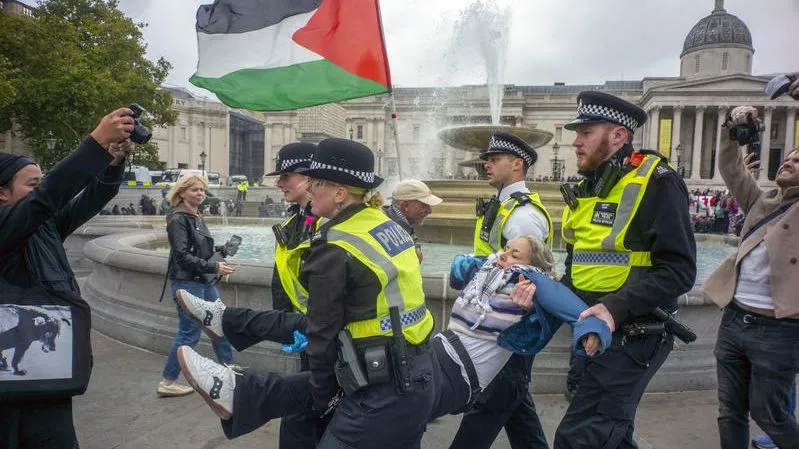
Three senior judges have ruled that the UK government’s decision to ban the direct action group Palestine Action under anti-terrorism laws was unlawful and disproportionate.
The ruling hands the home secretary, Shabana Mahmood, a sharp legal and political defeat. Civil liberties groups and senior figures involved in the case urged ministers to accept the judgment. Mahmood said she would appeal.
For now, the ban is still in place. The court said the order should not be quashed until both sides have been allowed to make further representations.
What the court decided on Palestine Action
The decision came from the High Court, led by Dame Victoria Sharp, president of the King’s Bench Division. Two other senior judges sat with her.
The judges said banning Palestine Action created a “very significant” interference with freedom of expression and freedom of assembly. Those rights sit at the heart of the UK’s protections for protest.
They also found the proscription decision did not follow the government’s own published policy. That policy requires ministers to weigh the nature and scale of the group’s activities and the specific threat it poses to the UK.
“Proscription” means formally banning an organisation under the Terrorism Act. It makes membership, support, and certain public expressions of support criminal offences.
Why the judges said the ban went too far
The court described Palestine Action as an organisation that advances its cause through criminality and encouragement of criminality. However, the judges said only a small number of the group’s actions met the legal definition of terrorism.
In their view, the level, scale and persistence of any terrorism-defined activity had not reached the threshold that justified proscription.
The judges also stressed that normal criminal law remains available to prosecute property damage and other offences linked to direct action.
A rare win against a terror proscription
The judgment is being widely reported as the first time a group banned under UK anti-terrorism legislation has successfully challenged its proscription in court.
Huda Ammori, a co-founder of Palestine Action who brought the case, called it a “monumental victory”. She said the ban targeted the group because of its disruptive campaign against Elbit Systems, Israel’s largest weapons manufacturer, and its UK-linked operations.
The government has maintained that the ban was lawful and necessary for national security. Mahmood said she respects the judiciary but intends to fight the ruling in the Court of Appeal.
Police pause new arrests but keep investigations alive
The Metropolitan Police said it would immediately stop arresting people solely for displaying support for Palestine Action, following the High Court decision.
However, the force also said it would continue gathering evidence for potential future prosecutions. That reflects the court’s position that the banning order has not yet been formally quashed.
This creates uncertainty for thousands of people arrested since the group was proscribed last year. Large numbers were detained for holding placards or making statements of support.
Many were investigated under Section 13 of the Terrorism Act, which covers support for a proscribed organisation and carries a maximum sentence of six months in prison.
A political fight now moves to the appeal courts
The ban was introduced in July 2025 by the then home secretary, Yvette Cooper. Since then, the case has become a flashpoint in the wider debate over protest, policing, and counter-terror powers.
Amnesty International UK, Liberty and the UN special rapporteur on human rights and counter-terrorism were among those urging the government to respect the court’s decision.
Opponents of the ruling argue the group’s actions cross a line. The Board of Deputies of British Jews and the Jewish Leadership Council backed an appeal, citing fear and disruption linked to some targets. The shadow home secretary, Chris Philp, also supported the decision to appeal, pointing to public safety and national security.
The next steps will be closely watched. The court has signalled the ban should fall, but only after further argument. Until then, both campaigners and those arrested under the proscription remain caught in a legal limbo that could last through the appeal process.