
American Families Choose Exile Over Separation as Deportation Enforcement Intensifies

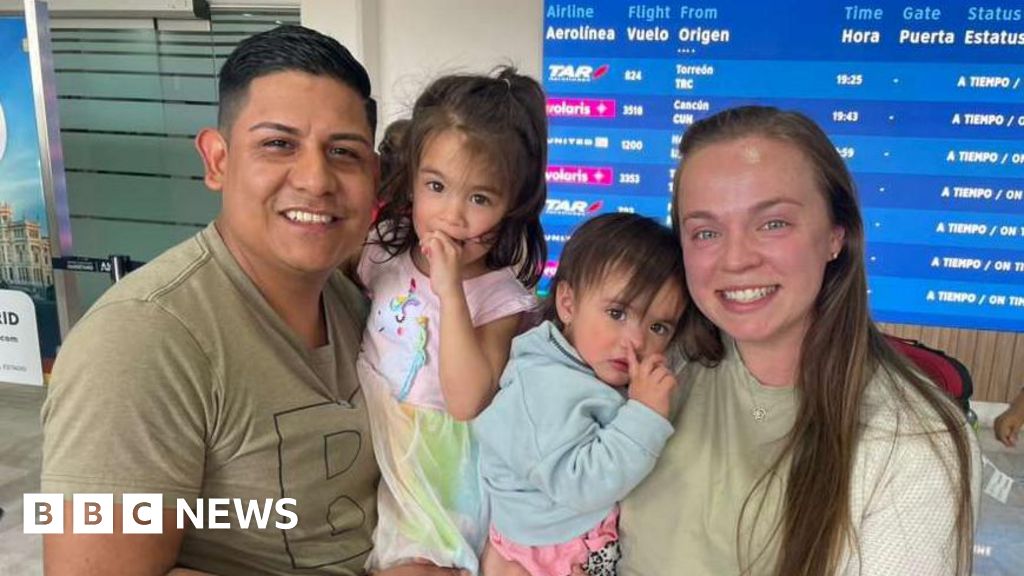
When Immigration and Customs Enforcement agents arrested Alejandro Pérez at his home last October, his wife Janie faced an impossible choice: watch her family torn apart by deportation, or abandon her life in the United States to follow her husband into exile.
Eight months later, Janie Pérez sits in a cramped apartment in Querétaro, Mexico, 1,500 miles from the only home her two young daughters have ever known. Her husband is free, but their American dream has become a Mexican reality marked by isolation, financial strain, and the constant weight of starting over.
“People think we chose this,” Pérez said. “But when your choice is between keeping your family together or losing half of it forever, there’s really no choice at all.”
The Economics of Enforcement
The Pérez family represents a growing phenomenon in U.S. immigration enforcement: American citizens choosing self-deportation to maintain family unity. While comprehensive statistics remain elusive, immigration attorneys and advocacy groups report increasing numbers of mixed-status families making similar calculations.
After Alejandro’s five-month detention, during which Janie exhausted their savings on legal fees and travel costs for prison visits, deportation became inevitable. His removal left Janie, a U.S. citizen, with their daughters Luna, 8, and Lexie, 6, facing a stark arithmetic: attempt to maintain a household on a single income while supporting a deported spouse abroad, or relocate entirely.
The financial pressures proved decisive. “I was working two jobs and still couldn’t make rent,” Janie explained. “At least together in Mexico, we could pool our resources.”
Voluntary Displacement
Some families choose departure before enforcement arrives. Raegan Klein and Alfredo Linares relocated to Puerto Vallarta after determining that Alfredo’s two decades of undocumented residence made deportation increasingly likely under intensified enforcement policies.
Alfredo, who built a career as a chef in American restaurants, calculated that voluntary departure offered better long-term prospects than waiting for arrest. “At least this way, we controlled the timing,” Klein said. “We could sell our things, say goodbye properly.”
Yet voluntary departure carries its own penalties. Unlike deportees, who may qualify for certain protections and services, self-deporting families often forfeit access to assistance programs and face bureaucratic obstacles in establishing legal residency.
The Children’s Burden
For American-born children, parental immigration decisions create a particular form of displacement. Luna and Lexie Pérez struggle with Spanish-language instruction and cultural adjustment while processing their father’s absence during his detention and deportation.
“Luna keeps asking when we’re going home,” Janie said. “I don’t know how to explain that this is home now, maybe forever.”
Child psychologists note that such involuntary transnational mobility can produce lasting developmental impacts, particularly when children perceive the relocation as punishment rather than choice.
Legal Limbo
Mixed-status families face complex legal challenges that extend beyond immigration status. Property ownership, employment authorization, healthcare access, and educational continuity all become complicated when families cross borders under duress.
Janie Pérez maintains her U.S. citizenship but cannot easily return for extended periods without abandoning her husband, who faces a ten-year re-entry bar. This creates what immigration scholars term “constructive deportation” of American citizens—legal exile enforced through family separation policies.
The phenomenon raises questions about the extraterritorial reach of U.S. immigration enforcement and its impact on American citizens who never violated immigration law themselves.
Adaptation and Resistance
Despite the challenges, some families find unexpected opportunities in displacement. Alfredo Linares has opened a small restaurant in Puerto Vallarta, drawing on culinary skills developed during his American career. The business provides stability while allowing him to avoid the vulnerability of undocumented employment.
For the Pérez family, adaptation proceeds more slowly. Alejandro struggles to find work matching his previous income, while Janie navigates Mexican bureaucracy to secure residency papers and school enrollment for their daughters.
“We’re building something new,” she said. “Not the life we planned, but maybe something that can work.”
These stories illuminate how immigration enforcement extends far beyond the individuals it directly targets, reshaping entire family systems and creating new forms of transnational displacement that challenge traditional categories of voluntary and involuntary migration.