
Most Young Britons Would Refuse to Fight for the UK, Polling Shows — and Conscription Won’t Fix That, Says Former Army Officer

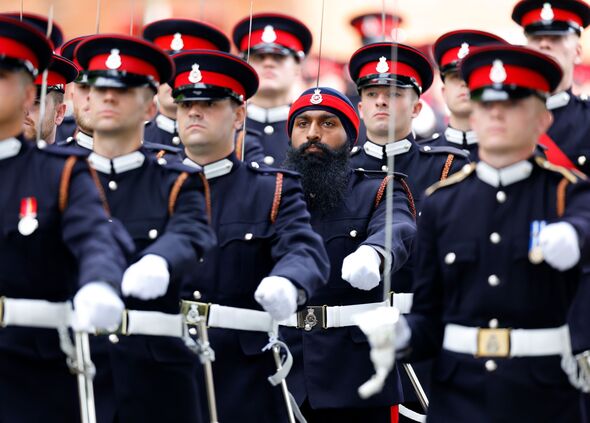
Polling finds majority of young Britons unwilling to serve as conscription debate intensifies
More than half of Britons aged 18 to 30 say they would refuse to fight for the United Kingdom under any circumstances, according to polling cited by a former army officer who has warned that compulsory national service remains a practical and cultural impossibility — except in one scenario: national survival.
Lt Col Stuart Crawford, a former army officer and defence analyst, made the assessment in response to growing calls for the reintroduction of mandatory military service in the UK, arguing that while the sentiment may be understandable, the obstacles are overwhelming.
The Conscription Debate
Pressure on the government to expand Britain’s military capacity has intensified amid concerns about the size of its armed forces relative to rival powers. Russia fields approximately one million full-time troops; Britain maintains roughly 140,000. France and Germany have already moved to reintroduce forms of military service in response to deteriorating European security.
Crawford was responding specifically to multimillionaire author and podcaster Scott Galloway, who argued that Britain should implement mandatory national service to address what he described as a crisis among young men. Galloway cited Israel’s compulsory service model as evidence that structured military obligation could provide purpose and combat rising rates of depression in that demographic.
Why Conscription Is a ‘Non-Starter’
Crawford acknowledged the underlying problem — that a significant number of young British men appeared to be drifting without direction — but rejected conscription as the solution. He pointed to the rise of incel culture, the so-called “manosphere,” and the influence of figures such as Andrew Tate as symptoms of a broader cultural dislocation that military service alone could not resolve.
The logistical barriers are considerable. ONS data places the number of 18 to 24-year-olds in the UK at between 5.7 million and 5.8 million as of early 2026. Crawford described obliging that entire cohort to undertake national service as “out of the question,” meaning any scheme would require a ballot system — with all the questions of fairness that entails.
Physical infrastructure presents an equally serious constraint. Crawford argued there are nowhere near enough barracks or training facilities to absorb a large influx of conscripts. The armed forces, he noted, already struggle to recruit sufficient volunteers for regular service. Exemptions for medical workers and critical infrastructure staff would reduce the eligible pool further still.
The Military’s Own Resistance
Crawford also identified institutional resistance within the armed forces themselves. The British military has historically favoured volunteers over conscripts, a preference encapsulated in the old adage he quoted directly: “One volunteer is worth ten pressed men.”
“The idea of training glum recruits who would rather be somewhere else is not in the least appealing to professional soldiers, sailors and airmen,” he wrote.
National service has deep roots in British culture, having operated from the latter stages of the First World War through to the early 1960s. Its legacy persists in the national consciousness through television comedies including Dad’s Army and It Ain’t Half Hot Mum. The Beatles were among the first generation exempted from the requirement.
The One Exception
Crawford’s overall verdict was unambiguous. “I believe it is a non-starter in general application,” he wrote, “unless Britain were to face another crisis of national survival akin to the last century’s two world wars.”
He added a pointed caveat: “Today’s youngsters will no doubt be relieved that it is unlikely to happen any time soon. But I would never say never. The time may come.”
The polling Crawford cited — showing a majority of young Britons unwilling to serve under any circumstances — suggests that any future government seeking to mobilise the population would face not only logistical and institutional barriers, but a fundamental question of civic legitimacy it has yet to begin answering.