
Arron Banks and the Surveillance of Journalists: What We Know and Why It Matters
What has Arron Banks been accused of?
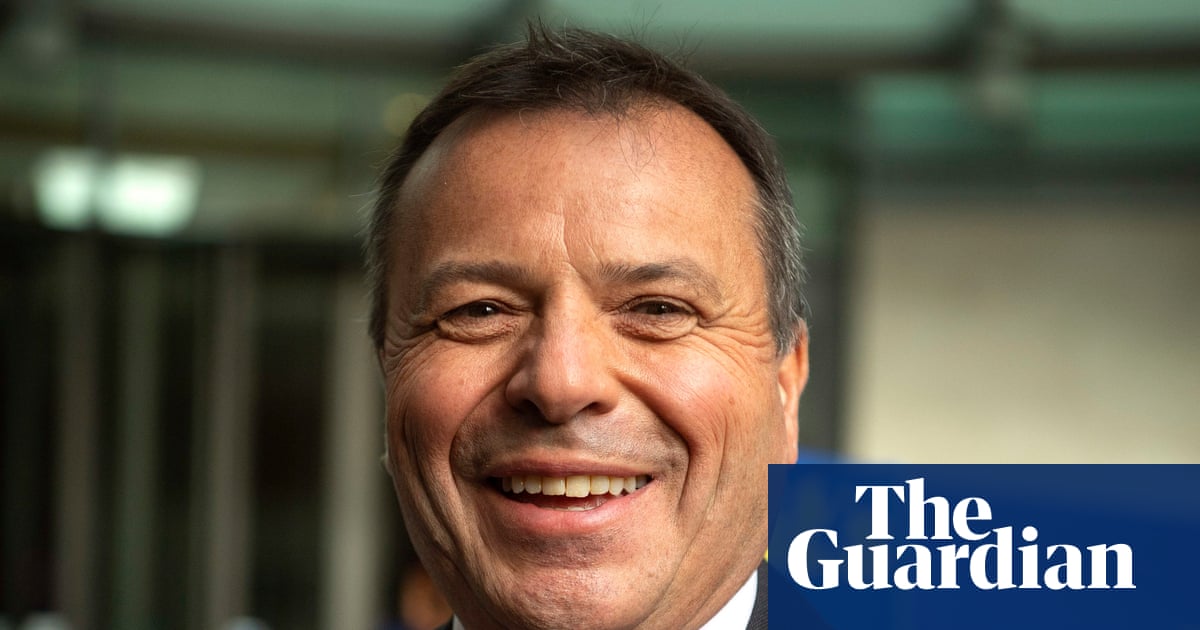
Arron Banks, the businessman and prominent financial backer of Reform UK, is facing mounting pressure to disclose the full scope of a surveillance operation allegedly directed at journalists investigating the party’s funding. The revelation, first reported by the New Statesman, centres on Banks’s apparent admission that he instructed Precision Risk and Intelligence — a private investigations firm he once owned — to examine Gabriel Pogrund, the editor of the Sunday Times‘ Insight investigations team. Pogrund’s unit has published a series of stories scrutinising the financial flows surrounding Reform UK and its figurehead, Nigel Farage. Banks, when asked directly by the New Statesman whether he had paid investigators to look into Pogrund, did not deny it. He replied: “When you live by the sword, you die by the sword.”
In a separate response to the magazine’s inquiries, Banks offered a partial justification: “We believe the Sunday Times used hacked information and that was an area of interest. We do have an investigative arm that’s got advanced capabilities.” The Sunday Times has strongly and categorically rejected that suggestion. Banks’s framing — positioning counter-surveillance as a defensive response to alleged journalistic wrongdoing — is a rhetorical move worth examining carefully, since it inverts the accountability relationship between a powerful political donor and the press scrutinising him.
Could other journalists have been targeted?
That question is now at the centre of the controversy, and it remains unanswered. When asked over the weekend whether he had commissioned investigators to surveil reporters at the Guardian — which, alongside the Sunday Times, has broken multiple stories in recent months detailing cash given to Reform UK and to Farage personally from donors and wealthy benefactors — Banks said he was “not really interested in the Guardian” but declined to say anything further. That non-denial has done little to reassure press freedom advocates. Jemimah Steinfeld, chief executive of Index on Censorship, stated plainly: “I really, really hope that it’s not happening to other journalists. But my fear is that it will be, because Gabriel is not the only one who’s asking the right questions about Reform.”
Steinfeld pressed Banks to be open and transparent about the full extent of his surveillance activities, warning that such tactics are “often used to just stop the questions, to stop accountability, and that can have hugely detrimental effects on our democratic structure.” The concern is structural, not merely personal: if multiple journalists covering the same political beat have been subjected to private investigation, the cumulative chilling effect on investigative reporting could be significant and difficult to reverse.
What does the law and democratic principle say about this?
Commissioning private investigators to surveil journalists is not, in itself, automatically illegal under UK law — a gap that critics argue is itself a problem. But the practice sits in deeply uncomfortable legal and ethical territory. Nicky Morgan, a former Conservative Secretary of State for Culture, Media and Sport, was unambiguous: “Investigating a journalist can only be intended to have a chilling effect on free speech” and is “not compatible with an open democracy.” The right to press freedom is protected under Article 10 of the European Convention on Human Rights, which the UK remains a signatory to; the European Court of Human Rights has consistently held that surveillance of journalists capable of revealing sources constitutes a serious interference with that right.
Theo Bamber, chief executive of the News Media Association — which represents both regional and national media outlets — framed the issue in terms of democratic normalisation: “Using private investigators to try to deter journalists from making legitimate inquiries about public figures is an attack on our democracy. Sadly, intimidation and abuse of local and national journalists is increasingly used as a weapon to limit scrutiny and deflect attention away from matters of public interest. This must not become normalised.” Bamber called on ministers to “wake up to this threat” and to do substantially more to protect independent journalism.
How does Reform UK’s inner circle respond?
Reform UK has formally denied any knowledge of Banks’s alleged use of private investigators. Yet the response from within the party’s orbit has been notably ambivalent rather than condemnatory. Gawain Towler, a member of Reform’s board and a former head of press for Ukip, said he was personally uncomfortable with the development but sought to contextualise it by raising questions about how journalists obtain private information. “Personally I don’t like it,” he said. “But truly how in the light of the situation does one ask questions with a possibility of getting an answer.” His remarks gestured toward an alleged connection between the National Crime Agency and journalists — a claim he did not substantiate — as a justification for asking questions by other means.
That framing deserves scrutiny. The suggestion that surveillance of journalists constitutes a legitimate form of accountability inquiry conflates two fundamentally different things: the public interest in scrutinising powerful political actors, and the private interest of those actors in suppressing or pre-empting that scrutiny. These are not symmetrical. Journalists investigating a major political donor operate under editorial oversight, legal constraints, and professional codes. A private intelligence firm operating at a donor’s direction answers to none of those frameworks.
Is this the first time Banks has used such tactics?
It is not. Banks, who co-ran the pro-Brexit campaign group Leave.EU, has previously been reported to have hired operatives he described as “ex-MI5 and SAS” to surveil political opponents in the run-up to the 2016 EU referendum. Among those targeted was Matthew Elliott, a Conservative peer and chief executive of the rival Vote Leave campaign. Elliott has since warned that such tactics will “drive out the decent people we need in public life” — a concern that resonates beyond partisan lines.
The pattern matters. A single incident might be characterised as a dispute or an aberration. A documented pattern of deploying private intelligence capabilities against political rivals and now against journalists raises a different order of question — one about the systematic use of surveillance as an instrument of political power. The Liberal Democrats’ Cabinet Office spokesperson, Lisa Smart, put it directly: “Hiring private investigators to target journalists who are simply doing their jobs is a desperate attempt to dodge accountability. Anyone who uses or condones these tactics demonstrates complete contempt for a free press and should have no business in British public life.”
What remains unknown — and what should be asked?
Several material facts remain unestablished. The full list of journalists subjected to investigation has not been disclosed. The precise legal basis — if any — on which Precision Risk and Intelligence operated has not been examined publicly. Whether any information gathered was used to influence editorial decisions, intimidate sources, or identify confidential contacts is unknown. These are not peripheral questions. They are the questions that determine whether what occurred constitutes an isolated act of political defensiveness or something considerably more serious.
The pressure on Banks to account fully for his actions is, at this stage, entirely civil and reputational. Whether it remains so depends on what further reporting reveals — and on whether the journalists pursuing those answers continue to be able to do so without being watched.