
Chile at 53: The Unresolved Reckoning Over Pinochet’s Coup and Its Contemporary Rehabilitation
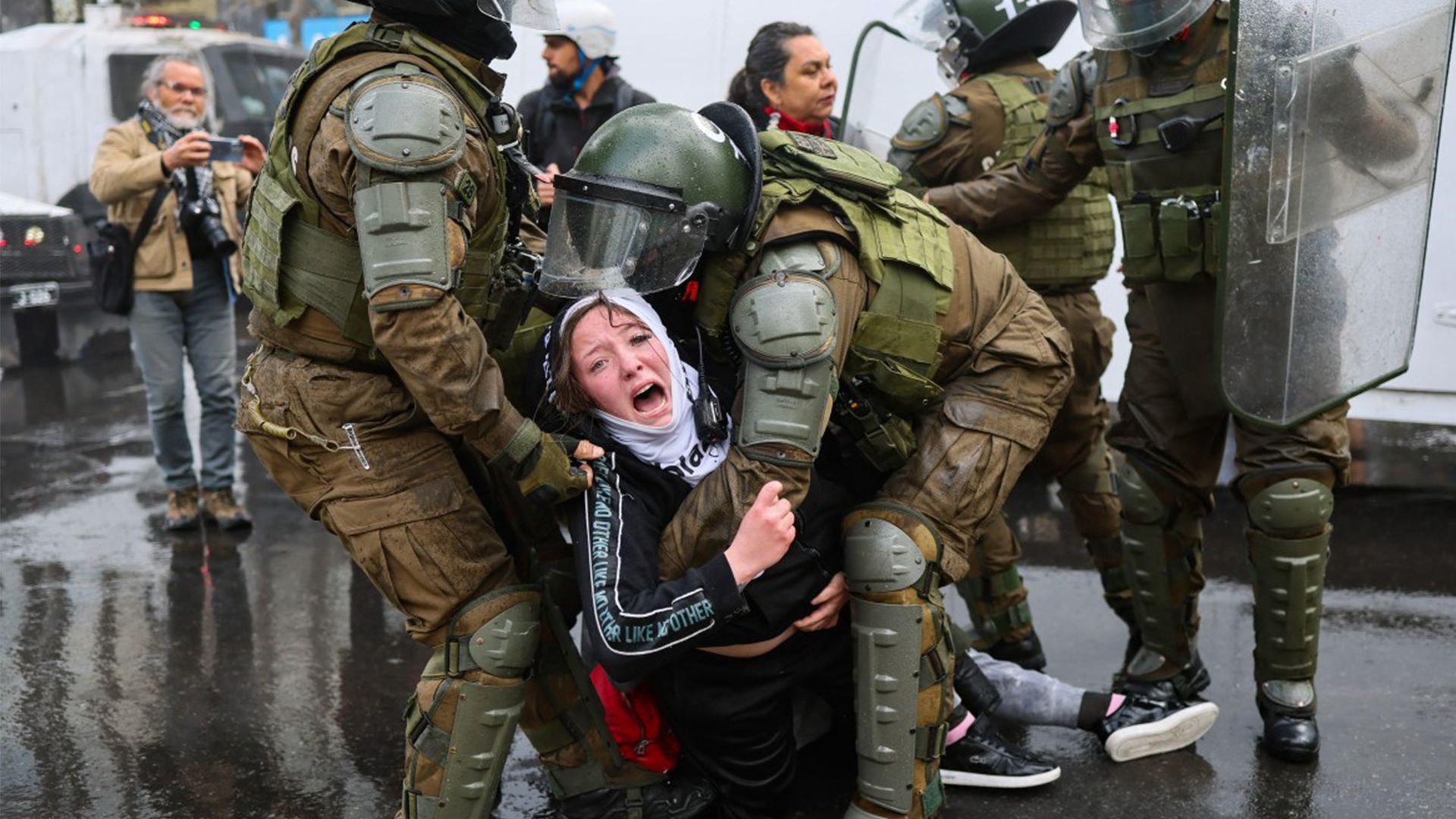
Fifty-three years after Chile’s armed forces overthrew the democratically elected President Salvador Allende on 11 September 1973, the country has still not finished arguing about what happened — or about what that history is permitted to mean in the present.
The coup did not occur in an international vacuum. Declassified United States records document years of covert intervention aimed at preventing Allende’s consolidation of power, financing political opposition to his government and weakening his administration. Washington was also closely monitoring military plotting in the months before the coup. Those documents establish a substantial American role in the destabilisation surrounding Allende’s presidency, although they do not prove that the United States operationally directed the military assault on 11 September itself.
What followed is considerably less ambiguous.
The military junta dissolved Congress, restricted political activity and dismantled democratic institutions. Under Augusto Pinochet, who gradually concentrated power in his own hands, state security organisations carried out systematic repression against political opponents. Chile’s own official investigations subsequently documented enforced disappearances, political executions, imprisonment and torture on a massive scale. State records cite at least 1,469 people subjected to enforced disappearance, 1,747 executed and more than 31,000 tortured during the dictatorship.
These are not allegations preserved only by partisan organisations or political opponents of the regime. They form part of the institutional record of the Chilean state itself.
And yet, more than three decades after democracy was restored, the political meaning of that record remains contested.
That contradiction was unusually visible on this year’s anniversary.
For the first time since Chile’s return to democracy in 1990, the government organised no official ceremony commemorating the 11 September coup. President José Antonio Kast instead continued with his regular agenda and argued that Chile should not remain permanently “anchored in the past”. Previous democratic presidents, including the centre-right Sebastián Piñera, had formally marked the anniversary and condemned the human-rights violations committed under military rule.
Outside the official government programme, however, remembrance continued. Former president Gabriel Boric, members of the Allende family, opposition politicians and ordinary Chileans gathered for commemorations and demonstrations in Santiago. Hundreds attended ceremonies and marches despite the absence of a presidential event. Days earlier, clashes had also broken out between demonstrators and police during a march ahead of the anniversary.
The recurrence of this conflict, year after year, is itself the story.
What is being contested on Chilean streets is not simply whether people remember 1973. Almost nobody seriously disputes that the coup occurred. Nor can the existence of systematic state repression easily be erased when Chile’s courts, truth commissions, archives and public institutions have spent decades documenting it.
The deeper struggle concerns interpretation.
Was the coup an indefensible destruction of constitutional democracy? Was it, as some defenders of the military regime continue to argue, a necessary response to political and economic chaos? Can the dictatorship’s economic legacy be discussed separately from the repression through which the regime exercised power? And at what point does historical reinterpretation cease to be legitimate debate and become the normalisation of documented state violence?
Those questions explain why 11 September remains politically explosive.
They also expose an unusual institutional tension. On one side stands a state apparatus that possesses extensive archives documenting crimes committed during the dictatorship. Chile created truth commissions, recognised victims, established reparations, opened judicial proceedings and, more recently, developed a National Search Plan intended to determine what happened to people who were forcibly disappeared.
That search programme is not merely symbolic. It is formally defined as a permanent state policy aimed at clarifying the circumstances surrounding the disappearance and death of victims of enforced disappearance.
On the other side stands an increasingly open political argument over how prominently the state itself should continue to speak about those crimes.
The tension between the two positions is striking.
A government can inherit archives stating that enforced disappearance was systematic and widespread while simultaneously deciding that the anniversary of the political rupture that enabled those crimes no longer requires an official ceremony.
It can continue administrative mechanisms established to locate the disappeared while adopting a markedly different rhetorical position on how much space the dictatorship should occupy in contemporary political life.
The archive says: this happened.
The political debate asks: how much should it still matter?
Memory is not politically neutral
This is why disputes over historical memory should not be dismissed as symbolic battles over events that occurred half a century ago.
Collective memory establishes the boundaries of acceptable political behaviour.
When a democratic state officially recognises that torture, disappearance and extrajudicial killing took place, it is not merely recording historical facts. It is also establishing a normative judgment: certain methods of exercising political power cannot be legitimised regardless of the crisis in which they occurred.
Conversely, when those judgments become blurred, qualified or treated as matters of partisan interpretation, the political consequences extend beyond debates about Pinochet.
The question becomes whether democratic legality is absolute or conditional.
If a coup can retrospectively be justified because the preceding government was polarising, economically unsuccessful or ideologically threatening, then the prohibition against overthrowing elected governments is no longer a principle. It becomes a calculation.
That is precisely why discussions about Allende’s own record must be separated analytically from the legitimacy of the coup.
Chile before September 1973 was profoundly polarised. Allende governed amid economic crisis, institutional confrontation, radicalisation on both left and right and severe disputes over constitutional authority. Chile’s own congressional historical material acknowledges the extent of that political breakdown.
But recognising the failures and conflicts of the Allende period does not logically require legitimising the abolition of Congress, authoritarian rule or systematic violations of human rights that followed.
Both propositions can be true simultaneously.
A democracy can fail badly without dictatorship becoming a democratic remedy.
The limits of transitional justice
Chile’s experience also illustrates a broader problem facing societies emerging from authoritarian rule.
Transitional justice rarely arrives as a single clean process. It develops unevenly through truth commissions, court cases, reparations, archives, institutional reforms and political compromises.
Chile accomplished a great deal.
The Rettig and Valech commissions established an official record of killings, disappearances, political imprisonment and torture. Thousands of victims received formal recognition. Courts eventually pursued cases that had once appeared impossible to prosecute. Archives that had remained inaccessible gradually became available to investigators, victims and families.
But transitional justice also unfolded under constraints inherited from the dictatorship itself.
Pinochet remained commander-in-chief of the army after leaving the presidency and later became a senator for life. He died in 2006 without a final criminal conviction against him. Many families spent decades without knowing where the remains of disappeared relatives had been taken.
Even today, the work remains unfinished.
That incompleteness has consequences.
When accountability mechanisms are partial, the space they leave unfilled does not remain empty. It becomes available for competing narratives.
Judicial uncertainty can become political ambiguity.
Institutional silence can become historical revisionism.
The absence of complete accountability allows supporters of an authoritarian regime to shift the discussion away from what the state did and toward whether those actions were, in their view, understandable given the circumstances.
That rhetorical transition is subtle but consequential.
The argument is no longer necessarily that torture did not occur. It may instead become that torture occurred in a period of exceptional danger.
It is no longer necessary to deny that democracy was destroyed. The claim can become that democracy had already ceased to function properly.
It is no longer necessary to defend dictatorship explicitly. One can instead insist that continuing to discuss it prevents the country from “moving forward”.
That is how the political meaning of established historical facts can change even when the facts themselves remain formally recognised.
The state can remember and forget at the same time
Chile in 2026 therefore presents an unusual but revealing picture.
The institutional infrastructure of memory remains extensive. The National Human Rights Institute continues to hold the Valech archives and provide documentation to victims and courts. As of July 2026, thousands of files had been delivered for judicial and personal requests. The National Search Plan remains part of the state’s machinery for establishing the fate of the disappeared.
Yet the ceremonial and political treatment of that history has changed.
For the first time in the democratic era, the presidency chose not to lead an official commemoration on 11 September. Kast’s position was framed not as denial of the historical record but as a refusal to allow the country to remain permanently defined by it.
That distinction matters.
The most consequential forms of historical revisionism do not always require destroying archives or explicitly denying crimes.
Sometimes they operate through emphasis.
What receives a ceremony and what does not.
Which historical events are described as foundational and which are presented as divisive relics.
Which victims remain part of the national story and which gradually become the concern of families, activists and historians rather than the state as a whole.
Institutional memory can therefore survive while political memory retreats.
Why the argument refuses to disappear
The persistence of demonstrations every September is often presented as evidence that Chile remains trapped in its past.
An equally plausible interpretation is that the past remains politically active because some of its central questions were never completely resolved.
More than 1,400 people are still officially classified as victims of enforced disappearance in state documentation. Families continue to seek information about what happened to relatives more than half a century ago. Judicial investigations into dictatorship-era abuses continue.
For those families, “moving on” has an obvious practical difficulty: one cannot close a historical chapter when the location of the dead remains unknown.
The issue is therefore not solely ideological.
It is material.
There are bodies that have not been recovered, crimes that remain under investigation and records that are still being examined.
That helps explain why appeals to reconciliation often produce such sharply different reactions.
For one section of society, reconciliation means ending the permanent political mobilisation of the dictatorship’s legacy.
For another, genuine reconciliation requires truth and accountability first.
Those positions can coexist for decades without converging.
Chile is not unique
The tension between institutional truth and political reinterpretation is not peculiar to Chile.
It is a structural problem that appears wherever transitions from authoritarian rule have left substantial parts of the old order unresolved.
Spain continues to debate the legacy of Franco.
Argentina repeatedly confronts disputes over how to describe the crimes of its military dictatorship.
Brazil has experienced renewed arguments over whether its own military regime should be remembered as dictatorship, revolution or necessary intervention.
In each case, democratic institutions inherit two tasks that do not always sit comfortably together: preserving social peace and establishing an authoritative account of state violence.
The temptation is to believe that enough time will eventually solve the contradiction.
Chile suggests otherwise.
Time can distance a society from trauma, but it also removes eyewitnesses. As generations with direct experience of dictatorship disappear, historical understanding depends increasingly on institutions: schools, museums, archives, courts, political ceremonies and public language.
That makes the state’s role more important rather than less.
What remains after the witnesses are gone
Fifty-three years after the coup, the central Chilean dispute is therefore no longer simply about Augusto Pinochet or Salvador Allende.
It is about who gets to define the democratic meaning of 1973.
Chile’s archives already provide a substantial factual answer. A democratically elected government was overthrown. Democratic institutions were dismantled. A dictatorship followed. State agencies systematically committed grave human-rights violations. Those conclusions are embedded in Chile’s own official historical and judicial record.
What remains unsettled is the political conclusion to be drawn from them.
Is remembering those events a permanent obligation of democratic government, or can the state eventually withdraw from commemoration while leaving the historical record intact?
Does refusing to commemorate signify reconciliation — or does it shift responsibility for memory from the state to victims and civil society?
And when political leaders urge a society not to remain anchored in its past, who determines the point at which remembrance becomes an obstacle rather than a safeguard?
These are not abstract historical questions.
They concern the mechanisms through which democracies establish their own limits.
The recurrence of Chile’s September conflict demonstrates that history does not cease to be politically relevant merely because the archive has settled many of the facts.
If anything, once the facts are established, the struggle moves elsewhere.
It becomes a contest over their meaning.
And that may be the most important lesson of Chile’s unfinished reckoning: when accountability remains incomplete, memory itself becomes a political institution — and whoever defines the memory helps define the limits of what the democracy that follows is prepared to tolerate.