
A Public Inquiry, Years in the Making
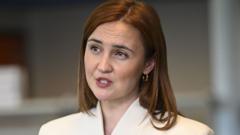
Scotland’s public inquiry into group-based child sexual abuse and exploitation will formally begin on Wednesday, the Scottish government confirmed this week, with Education Secretary Mairi McAllan telling parliament the investigation would carry the “strongest possible powers” to examine the full extent of the abuse. The announcement, while welcomed by some, arrives against a backdrop of mounting frustration from survivors who have waited not just months but, in many cases, decades for institutional accountability.
The inquiry will be led by Professor Alexis Jay, one of Britain’s foremost experts on child sexual exploitation, and will examine group-based abuse spanning from 1996 to the present day. Its mandate covers the prevalence and extent of offending, the impact on survivors, the characteristics of perpetrators, and, critically, any failings by authorities, including what McAllan described as “deliberate concealment.” The inquiry will not adjudicate civil or criminal liability, but its recommendations are expected to carry significant legislative weight.
The central thesis here is uncomfortable but unavoidable: Scotland’s inquiry is arriving late, and the delay itself reflects a pattern of institutional hesitation that the inquiry is now charged with investigating. That irony is not lost on survivors.
Survivors Bear the Cost of Institutional Delay
Holly Alex, 36, was abused by groups of men in Edinburgh and Livingston while she was in care as a teenager. Her social care records show that staff documented concerns she was being “groomed” for sex by “adult Asian men,” and those records further indicate that both social workers and police were aware of the risks she faced. That awareness did not protect her.
Speaking to BBC Scotland News, Alex was direct about her frustration with the pace of government action. “If you say you’ll do something at pace, do it at pace,” she said. “Don’t just pay lip service to it. Some people’s lives depend on the truth coming out.” Her testimony is not an isolated grievance; it is representative of a broader failure by institutions that possessed information and chose, or failed, to act on it.
The Scottish government ordered the public inquiry in February, eight months after a comparable inquiry was announced in England and Wales. Scottish Labour’s Katherine Sangster questioned why nine months had elapsed between the initial announcement and the inquiry’s opening session. The Scottish Conservatives’ Meghan Gallacher said she was “baffled by the lack of urgency,” noting that some survivors had been waiting for answers for decades. Scottish Liberal Democrat MSP Duncan Dunlop raised a distinct but related concern: that the inquiry would generate another set of recommendations that produce “little change in practice.”
The Weight of Prior Findings
Professor Jay’s appointment carries its own historical resonance. In 2014, she led the independent investigation into child sexual exploitation in Rotherham, South Yorkshire, which identified that at least 1,400 children had been sexually exploited between 1997 and 2013. That report triggered a cascade of investigations into how South Yorkshire Police had responded to, and in many instances dismissed, complaints from victims. The Rotherham inquiry became a benchmark for understanding how institutional cultures of denial and bureaucratic self-protection compound the original harm done to children.
Jay also oversaw a national review published in September, which found that a lack of data meant there was no reliable national picture of the scale of grooming gang offending in Scotland. That evidentiary gap is itself a finding of consequence: it suggests that the absence of data was not accidental but reflects a failure to collect, share, or act on information that agencies possessed in fragmented form. The new inquiry will need to determine whether that gap was the product of neglect or something more deliberate.
McAllan told parliament that the Scottish and UK inquiries would “complement and not replicate” each other’s work. The Statutory Independent Inquiry into Grooming Gangs in England and Wales, announced by former Prime Minister Sir Keir Starmer in June 2025 and operational since April, has itself faced turbulence: abuse survivors raised serious concerns about the scope and independence of child protection mechanisms even before the English inquiry launched, when calls emerged for former safeguarding minister Jess Phillips to resign amid claims the government sought to dilute the inquiry’s focus by broadening it to other forms of child abuse.
The Implication: Accountability Cannot Be Deferred Indefinitely
McAllan expressed confidence that Jay’s “unrivalled experience” would deliver meaningful answers. Jay herself was measured but direct: “This marks the beginning of our work, and I am clear that the focus of the inquiry will be on making practical recommendations that improve policy, practice and, where necessary, legislation to better protect children in Scotland.”
Notably, the inquiry will not wait for its final report before considering interim protective measures; McAllan confirmed it would examine improvements to child protection responses while the investigation is ongoing. That commitment, if honoured, would represent a departure from the standard model in which victims wait years for recommendations that arrive too late to help them.
The deeper question the inquiry must confront is not simply what happened, but why institutions that knew chose not to act. Scotland’s reckoning with group-based child sexual exploitation is beginning, formally, on Wednesday. The test of whether it amounts to genuine accountability, or another exercise in procedural reassurance, will be measured not in the quality of its final report but in what changes for children at risk while that report is being written.