
Lebanon Expands Financial Crime Prosecution, Indicting Ex-Central Bank Chief Salameh and Former Commercial Banker
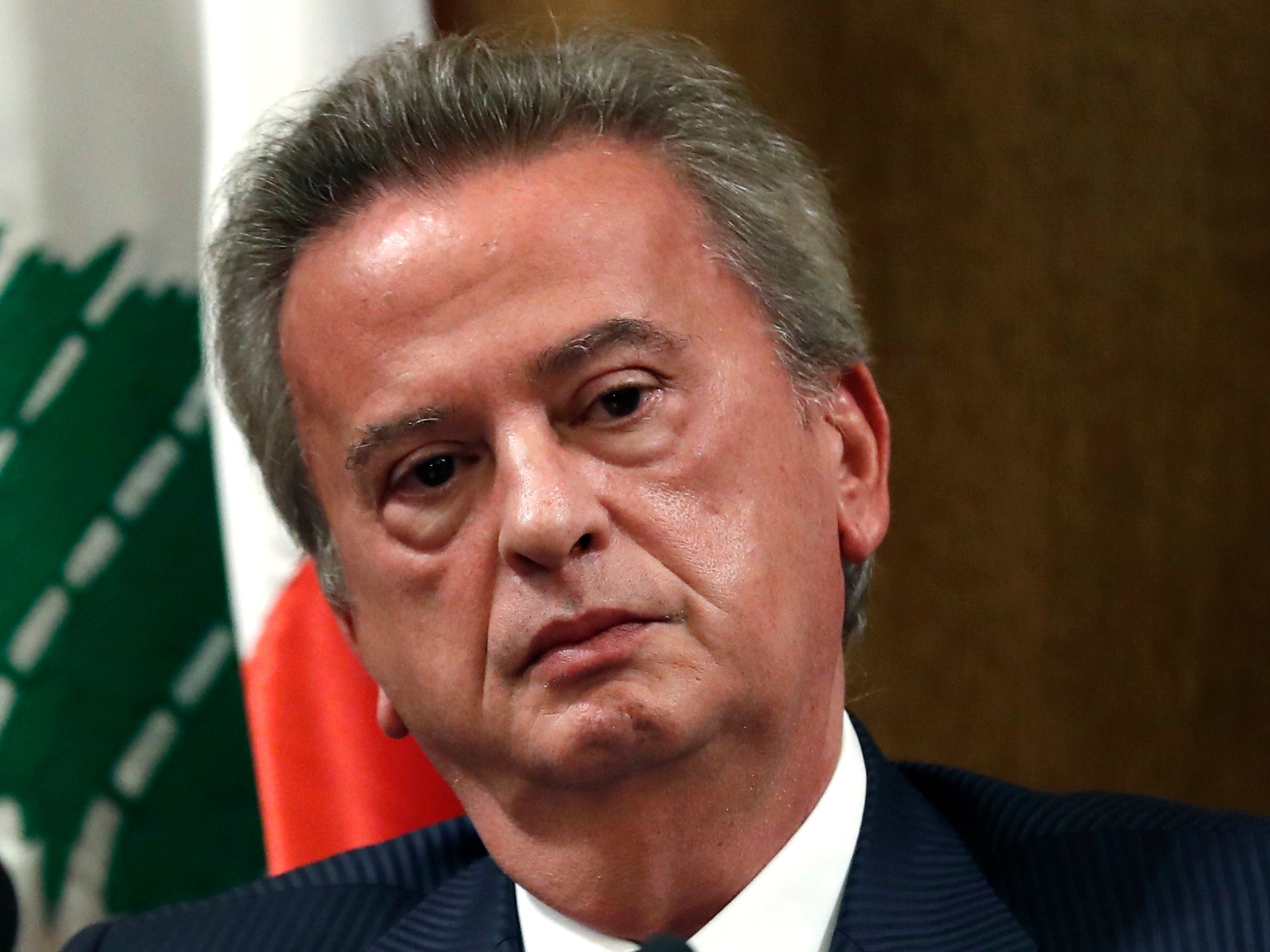
For three decades, Riad Salameh presided over Lebanon’s Banque du Liban with near-untouchable authority. Appointed central bank governor in 1993, he was long celebrated in international financial circles as a steward of monetary stability — even as Lebanon’s economy accumulated structural distortions that would eventually collapse into one of the worst financial crises in modern history. His tenure ended in July 2023. The legal reckoning that followed has now extended beyond Salameh himself to reach, for the first time, the private banking sector.
Lebanese judicial sources told Reuters and AFP on Monday that a judge has indicted Salameh alongside Samir Hanna, the former chief executive of Bank Audi, one of Lebanon’s largest commercial banks. The accusations include embezzlement of tens of millions of dollars from the Banque du Liban and illicit enrichment. Crucially, the file is said to include allegations that Hanna bribed Salameh during his tenure as governor — a charge that, if substantiated, would implicate the private banking establishment directly in the systemic misconduct under investigation.
The indictment of a commercial banker in connection with Salameh marks a significant expansion of Lebanese domestic proceedings. Previous indictments had remained focused on Salameh and figures within the central bank’s own structure. According to the judicial source cited by Reuters, this development signals that investigators are now pursuing accountability into Lebanon’s private financial sector — an institution whose leadership has largely escaped formal scrutiny despite the scale of the country’s economic implosion, which erased the savings of hundreds of thousands of ordinary depositors.
The broader legal architecture surrounding Salameh had already been taking shape for some time. In January 2025, Lebanon’s current central bank governor, Karim Souaid, disclosed that the institution had filed a criminal complaint against an unnamed former central bank official, a former banker, and a lawyer, alleging illicit enrichment through the misuse of public funds. Souaid stated that the operations had been routed through four offshore shell companies registered in the Cayman Islands, whose identities he did not disclose at the time. The indictment announced Monday appears to represent the judicial continuation of that complaint.
Salameh, now 76, was detained in Lebanon for approximately thirteen months on charges related to his conduct as governor, before being released in September 2024 after paying a bail reported to exceed fourteen million dollars — a record sum under Lebanese law. He was subsequently placed back in custody last month after failing to appear at a scheduled hearing, and is currently under medical supervision at a government hospital in the Beirut area. He has consistently denied all accusations, characterising the proceedings against him as a politically motivated effort to designate him a scapegoat for a financial collapse whose causes, he argues, are systemic and shared.
Hanna, 88, paid one million dollars in bail and remains free as financial investigations continue, according to the reports. His indictment is the first to formally bridge the central bank’s alleged misconduct with the conduct of a senior figure from the commercial banking sector — a connection that investigators and civil society groups have long argued was essential to any credible account of how Lebanon’s financial system operated in the years before its collapse.
Parallel proceedings continue outside Lebanon’s borders. Salameh faces active judicial investigations in France, Switzerland, and Germany, where authorities have examined allegations of money laundering and misappropriation of public funds. The United States, the United Kingdom, and Canada have each imposed sanctions on him. The convergence of domestic indictments and multinational investigations reflects a transnational accountability effort that, while slow and contested, has progressively narrowed the legal space around one of the Arab world’s most powerful financial officials of the past generation.