
Lebanon Becomes the Flashpoint That Could Shatter US-Iran Diplomacy
Iran Strikes Israel in Defence of Hezbollah as Lebanon Emerges as the Central Fault Line
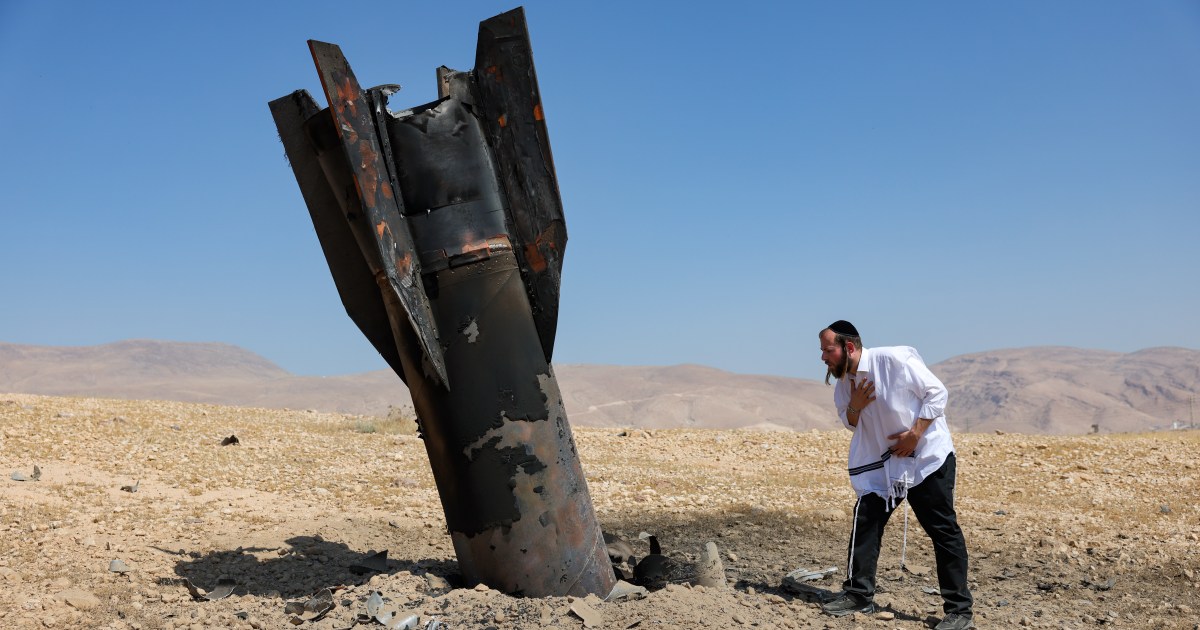
Iran launched direct missile strikes against Israel overnight on Sunday, retaliating for an Israeli raid on the southern suburbs of Beirut — a move that has cast serious doubt over the prospects of a US-Iran peace agreement and exposed the limits of Washington’s ability to restrain its closest regional ally.
The strikes followed an Israeli attack on Beirut’s southern suburbs, carried out despite US assurances that Israel would not target the Lebanese capital so long as Hezbollah refrained from striking northern Israel. Tehran’s response was swift and pointed.
“Tonight’s operation was a warning, and if the aggressions are repeated, the responses will be broader and will encompass all American-Zionist targets in the region,” Iran’s Revolutionary Guards (IRGC) stated.
Beirut: The Red Line
Israel responded with multiple strikes across Iran on Monday — including on the capital Tehran — despite US President Donald Trump reportedly urging Prime Minister Benjamin Netanyahu not to escalate. “I call the shots… he doesn’t call the shots,” Trump told the Financial Times on Sunday.
Iran launched a second volley of missiles toward Israel. Iranian missiles were largely intercepted, and no deaths in Israel have been reported. Trump nonetheless took to his Truth Social platform to demand restraint from both parties: “Israel and Iran must immediately stop ‘shooting’.”
After its second wave of strikes, Iran’s armed forces declared an end to operations but warned that further Israeli action in Lebanon would be met with “harsher” responses, according to the semi-official Fars news agency.
Negar Mortazavi, senior fellow at the Center for International Policy and founder of The Iran Podcast, told Al Jazeera that Tehran had been absorbing Israeli strikes on southern Lebanon — but drew a firm line at the capital. “When Israel wanted to attack Beirut last week, Tehran sent a serious warning to Washington that they would not tolerate attacks on Beirut, and they just proved that the warning was not a mere threat.”
The War in Lebanon: Key Facts
Lebanon was drawn back into the wider conflict on 2 March, after Hezbollah launched attacks on northern Israel. The group said it was retaliating for Israel’s killing of Iran’s Supreme Leader, Ayatollah Ali Khamenei, on 28 February — the opening day of the US-Israeli military campaign against Iran — and for what it described as near-daily Israeli violations of the November 2024 ceasefire.
According to Lebanon’s Health Ministry, the renewed fighting has killed at least 3,613 people and injured more than 11,072 since March. Over one million people have been displaced, and Israel now occupies nearly one-fifth of Lebanese territory.
A US-mediated ceasefire announced on 17 April failed to hold. Israeli strikes continued, including on Beirut. Earlier this week, Lebanese and Israeli negotiators announced yet another conditional ceasefire following talks in Washington — but Hezbollah leader Naim Qassem rejected it outright, calling it a “farce” and vowing to continue attacks on northern Israel for as long as bombs fell on Lebanon.
‘Together in War, Together in Peace’
Analysts say the latest escalation marks a fundamental shift in Iran’s strategic posture. For years, Tehran relied on a network of allied armed groups — Hezbollah in Lebanon, the Houthis in Yemen, and various factions in Iraq and Syria — to project power and deter Israel without direct state-on-state confrontation.
Rob Geist Pinfold, international security lecturer at King’s College London, described the logic of that approach: “Initially, the whole point of ‘forward defence’ was to prevent a state-on-state conflict between Israel and Iran.” That logic, he argues, has now been inverted.
“What we’re seeing here is that Iran has completely changed that dynamic. Rather than using these proxy groups to fight for Iran, it is escalating itself as a state to fight for its proxy groups.”
Mortazavi said Iran has now bound any peace framework to the fate of its regional allies. “Tehran’s message is: Together in war, together in peace.”
Nadim Houry, executive director of the Arab Reform Initiative in Lebanon, argued that Iran is trying to preserve its “unity of fronts” strategy — keeping its regional network intact by demonstrating it can deter unilateral Israeli action. “Iran’s fear is that if it looks like it cannot protect Hezbollah, its most important proxy, then its regional proxies will be undermined one after the other.”
A Flexible Red Line
Experts are divided on whether Iran has established an automatic trigger for future intervention or is instead using calibrated force to redraw the rules of engagement.
Andreas Krieg, professor of security studies at King’s College London, told Al Jazeera: “Iran has drawn a much harder ‘red line’ around Lebanon than before” — but stopped short of calling it a fixed tripwire. “Iran wants ambiguity. It wants Israel to believe further escalation in Lebanon could bring direct Iranian retaliation, but it also wants enough room to avoid being dragged into a full war on Israel’s timetable.”
Beirut-based analyst Ali Rizk said Tehran is likely calculating that Trump has strong incentives to avoid a wider war. “There is now a clear difference in American and Israeli priorities,” he said. “Trump, I think, would be willing to somewhat accommodate Iranian interests in Lebanon if that allows for an agreement that would address his main issues, like the nuclear file and the Strait of Hormuz.”
Ending the War ‘Much Harder’ Now
If Washington cannot restrain Israeli actions that Tehran deems unacceptable, analysts warn that Iran may conclude the US is incapable of delivering the comprehensive ceasefire it is seeking — potentially collapsing the diplomatic track entirely.
“The key question is whether Trump is willing to really rein in Israel in any meaningful way,” Houry said. “Will Trump take concrete measures to pressure Israel or will he simply go along?”
Rizk warned that Trump’s domestic political position may itself become a constraint. “Sacrificing talks with Iran just for the sake of Netanyahu bombing Lebanon exposes him more than ever as an Israeli stooge, which may be detrimental in the American midterms.”
For now, most analysts see a temporary freeze as the most plausible near-term outcome — but a durable settlement as increasingly remote. Krieg offered a bleak assessment: “The more likely outcome is a violent holding pattern: talks continue, Iran and Israel keep testing each other, Hezbollah remains active, and the US tries to prevent the system from tipping into a wider campaign.”