
Trump Claims New UK Prime Minister Burnham Pledged to Reopen North Sea Oil — Downing Street Stays Silent
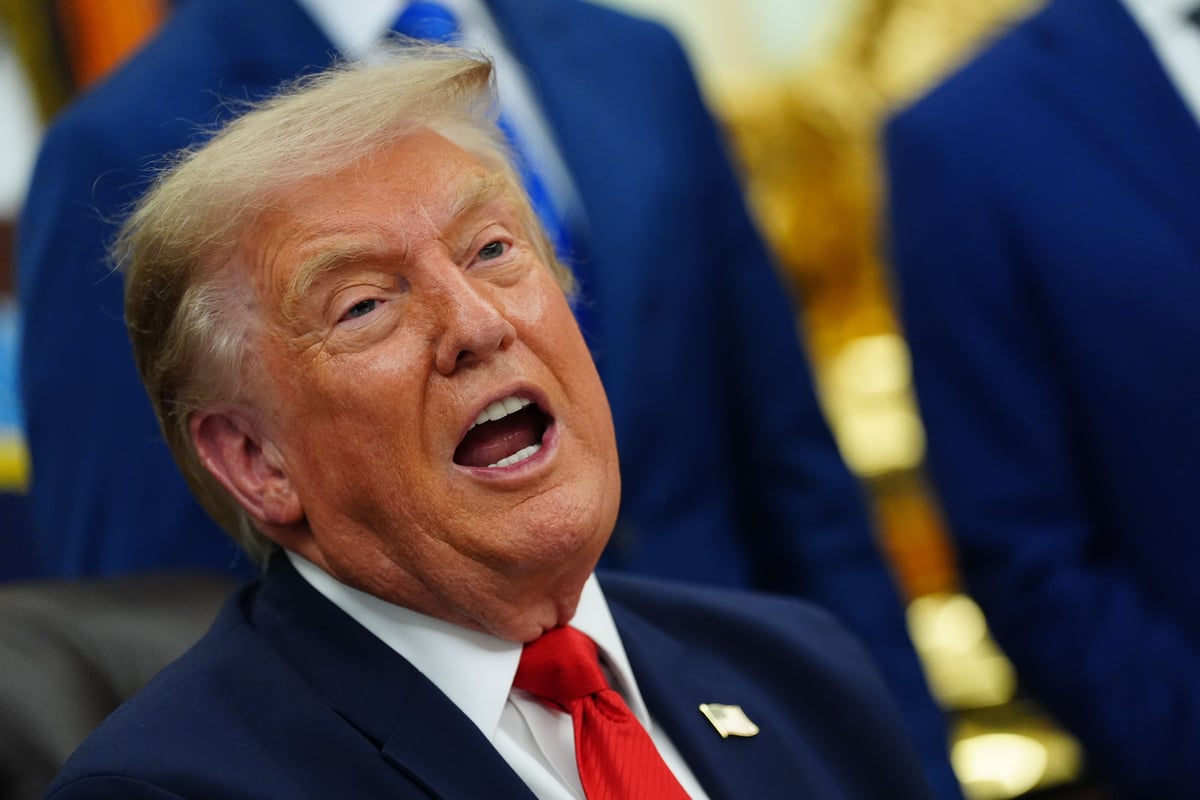
United States President Donald Trump declared on Tuesday, speaking from the White House, that British Prime Minister Andy Burnham had personally committed during their first telephone conversation to “open up North Sea oil” — a claim that, if accurate, would represent a significant reversal of Labour Party policy and that Downing Street has conspicuously declined to either confirm or deny. Trump, framing the alleged pledge as a marker of economic promise, told reporters that should Burnham follow through, the United Kingdom was “going to be a wealthy country.” The exchange, which took place on Burnham’s first day in office, has immediately drawn scrutiny given Labour’s 2024 general election manifesto explicitly ruled out issuing new North Sea drilling licences.
Downing Street’s silence on the substance of the call is itself instructive. When pressed following Trump’s remarks, government representatives would not be drawn on whether any shift in North Sea licensing policy is under consideration, leaving open the question of whether Trump accurately characterised Burnham’s position or whether the new Prime Minister’s words were interpreted — selectively or otherwise — through the lens of Washington’s long-standing fossil fuel advocacy. The current Energy Secretary, Miatta Fahnbulleh, who succeeded the now-Foreign Secretary Ed Miliband in the role, has acknowledged that existing licences may be exploited and that oil and gas remain “part of the mix” going forward, but she has stopped well short of signalling any departure from the manifesto commitment on new licences.
Trump’s enthusiasm for the North Sea is neither new nor incidental. The president has consistently championed expanded fossil fuel extraction while openly deriding wind energy, a posture that carries a particular personal dimension: he spent years in litigation against the Scottish Government in a failed attempt to block an offshore wind development visible from his Aberdeenshire golf resort. On Tuesday, he returned to familiar territory, asserting that “any time you see windmills, you see a failing country” and adding that turbines are “made in China, not used by China” — a characterisation that conflates manufacturing geography with energy policy in ways that do not withstand scrutiny but that serve a clear rhetorical function.
The political geometry of the moment is not without its own logic. The impression Trump took from the call — whether or not it faithfully reflects what Burnham said — secured the new Prime Minister an early and public endorsement from the American president, and it signals, at minimum, a reset in transatlantic relations that had grown increasingly strained during the final period of Sir Keir Starmer’s premiership, particularly over the Iran conflict. A warm opening with Washington carries obvious diplomatic utility, even if the price of that warmth remains unclear.
Immigration and the Broader Pressure Campaign
Trump also used the occasion to press his longstanding position on immigration to the United Kingdom, describing it as “killing your country” and asserting that migrants “from Africa, from South America, from different parts of Asia” were “invading Europe,” with Britain serving as a “prime” destination. He suggested Burnham would be compelled to address the issue, implying that Starmer had failed to do so adequately. These remarks, delivered without evidential grounding and in language that elides the legal, humanitarian and demographic complexity of migration patterns, nonetheless reflect the ideological framework through which the Trump administration is likely to conduct its relationship with European partners — one in which alignment on fossil fuels and migration restriction functions as a proxy for geopolitical reliability. Whether the Burnham government intends to engage that framework on its own terms, or to manage it at arm’s length, remains the central unanswered question following this first exchange.