
Court Upholds Palestine Action Ban as 117 Arrested Outside Royal Courts of Justice
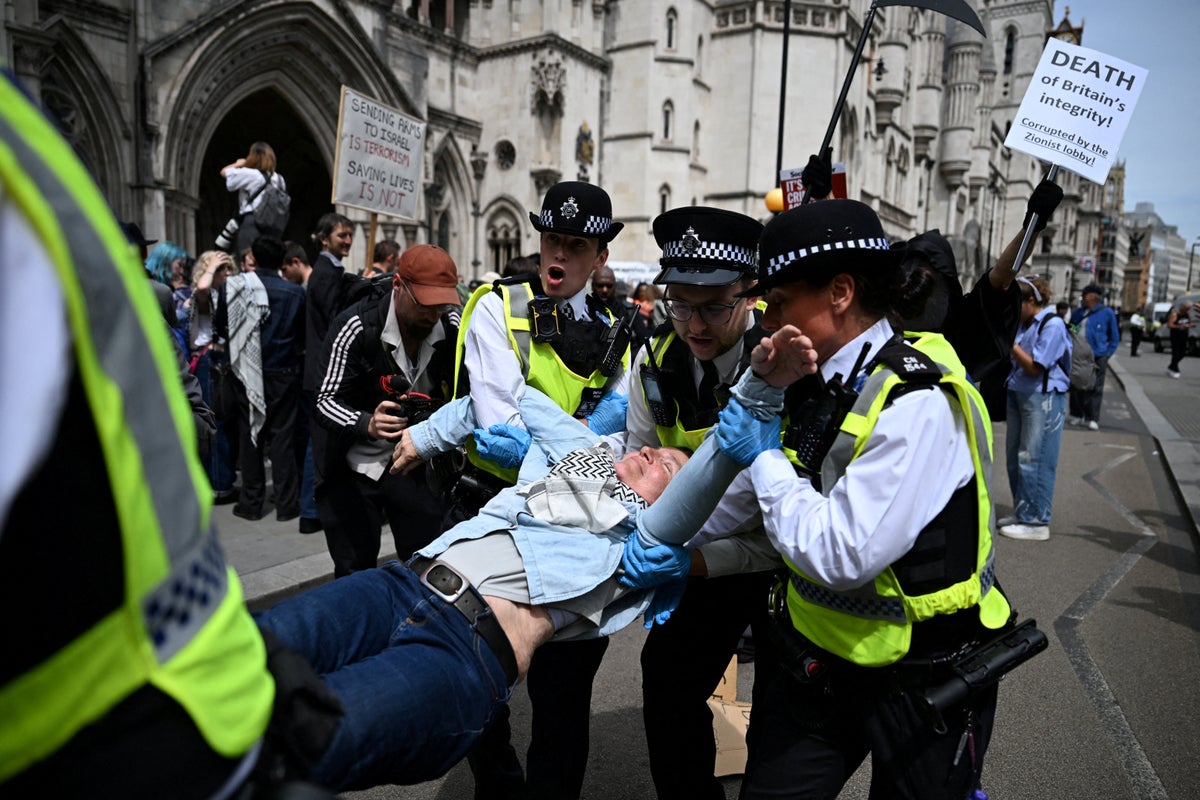
Mass Arrests Follow Appeal Court Ruling Affirming Proscription of Direct Action Group
British police arrested 117 people outside the Royal Courts of Justice in London on Monday after five Court of Appeal judges upheld the government’s ban on Palestine Action, ruling that its designation as a proscribed organisation was “justified and proportionate.” Two further arrests were made by City of London Police at a separate protest outside the Old Bailey.
Those detained were held on suspicion of expressing support for a proscribed organisation — a criminal offence under the terms of the ban, which carries a maximum sentence of 14 years in prison.
The Court’s Decision
The Court of Appeal’s ruling on 16 June 2025 reversed a February High Court judgment that had found the proscription unlawful. That earlier decision had followed a legal challenge brought by Huda Ammori, co-founder of Palestine Action.
The five appeal judges determined that the ban — imposed by then-Home Secretary Yvette Cooper on 5 July 2024 — constituted a lawful and proportionate interference with freedom of expression rights. The Home Office had kept the ban in force while pursuing the appeal.
Arrests at the Protest
Protesters gathered outside the Royal Courts of Justice were seen holding signs reading “I support Palestine Action” as officers moved in. Several individuals were carried away by police, including, according to witness accounts, an elderly woman in dark blue scrubs bearing a sign identifying her as a “retired doctor.”
A Metropolitan Police spokesperson confirmed the arrests and stated that officers “will arrest those who break the law,” adding that expressing support for Palestine Action “remains a criminal offence” following the appeal court’s judgment.
A Sweeping Crackdown Since Proscription
Monday’s arrests are part of a significantly broader enforcement operation. Since Palestine Action was first proscribed, the Metropolitan Police has arrested more than 3,000 people on suspicion of supporting the group.
Palestine Action had previously targeted facilities linked to arms manufacturers supplying Israel, using tactics including property destruction and occupation of premises. Its classification as a terror organisation — rather than a criminal group — has drawn criticism from civil liberties organisations, who argue the designation conflates direct action protest with political violence.
Legal and Civil Liberties Implications
The ruling raises significant questions about the boundaries of lawful protest in the United Kingdom. The proscription regime, established under the Terrorism Act 2000, was designed primarily to counter organisations engaged in or promoting violence. Critics contend its application to Palestine Action — a group whose activities centred on property damage rather than harm to persons — represents a significant expansion of the state’s power to criminalise political dissent.
The legal challenge mounted by Ammori and the group’s supporters is expected to continue, with further appeals possible. The case will likely intensify scrutiny of how successive British governments have applied counter-terrorism law in the context of protest movements linked to the conflict in Gaza.