
Netanyahu Vows to Hold Occupied Lebanese and Syrian Territory Despite US-Iran Ceasefire Deal
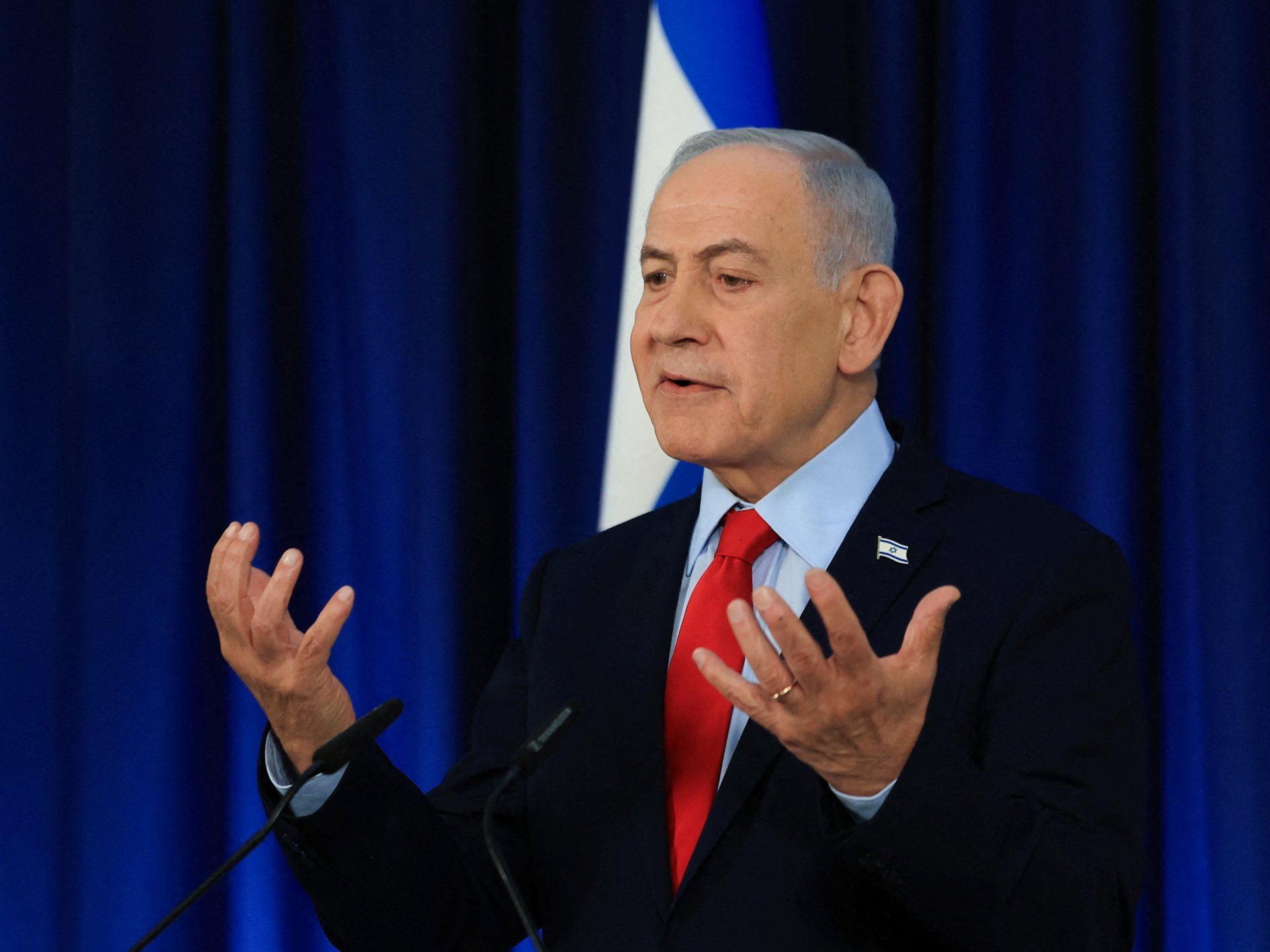
Netanyahu Vows to Hold Occupied Lebanese and Syrian Territory Despite US-Iran Ceasefire Deal
Israeli Prime Minister Benjamin Netanyahu declared on Monday that Israeli forces will remain indefinitely on occupied Lebanese and Syrian territory, directly challenging the terms of a ceasefire agreement being brokered between the United States and Iran that is expected to cover all active fronts, including Lebanon.
“We will stay in the Lebanon security buffer zone for as long as necessary,” Netanyahu told reporters at a press conference, signalling a posture of open defiance toward a deal that Pakistan’s Prime Minister Shehbaz Sharif — who announced the agreement on Sunday — described as including “the immediate and permanent termination of military operations on all fronts, including in Lebanon.”
The Occupied Territories
Israel currently occupies approximately 570 square kilometres (220 square miles) of Lebanese territory, extending beyond the Litani River — the stated boundary of Israel’s self-declared “security zone.” Israel also holds territory in Syria and Gaza, where its footprint spans roughly 1,000 square kilometres (386 square miles).
Israel’s conflict with Iran-backed Lebanese armed group Hezbollah began in October 2023 and escalated into a full-scale invasion in October 2024. The fighting has killed more than 3,000 people.
A Fragile Deal Under Strain
The US-Iran memorandum of understanding, which carries unconfirmed details, is due to be formally signed on Friday. Netanyahu’s public defiance risks destabilising an already precarious agreement.
On Sunday, one day before Netanyahu’s press conference, Israel launched a strike on Beirut’s suburbs that killed three people — an attack widely interpreted as crossing one of Iran’s stated red lines regarding the deal. The strike reportedly angered US President Donald Trump, who feared it could derail ceasefire negotiations. Despite threats of retaliation from Tehran, the memorandum was signed Sunday night.
Netanyahu acknowledged his differences with Trump without conceding ground. “Many times we see eye to eye, and there are also cases in which we see less eye to eye. I am responsible for Israel’s security interests. I stand up for them,” he said, according to The Jerusalem Post.
Internal Pressure from the Israeli Right
Netanyahu faces simultaneous pressure from multiple directions. Reports indicate he has clashed with Trump behind closed doors, while hardline members of his political base fear that a durable ceasefire with Iran will compel Israeli withdrawals from Lebanon, Syria, and Gaza.
Israeli Defence Minister Israel Katz reinforced the government’s position in a statement issued earlier Monday. “Prime Minister Benjamin Netanyahu and I are pursuing a clear policy of maintaining the Israeli army in the security zones in Lebanon, Syria and Gaza, without setting a time limit, in order to protect Israel’s borders and towns from jihadist elements,” Katz said. “We oppose the withdrawal of the Israeli army from Lebanon, despite all current and future pressures.”
Netanyahu’s Claims on Iran
Netanyahu framed Israel’s military campaign against Iran as a strategic victory, asserting that “Iran will never have nuclear weapons, not today and not tomorrow,” and claiming Israeli forces had “beheaded the leaders of the terror regime” and “crushed the terror factories.”
Those assertions remain unverified. What is verifiable is that Israel’s continued occupation of foreign territory places it in direct tension with the terms of an international agreement its principal ally is actively negotiating — and with the obligations imposed by international humanitarian law on occupying powers.