
Jargon, Indifference and Missed Opportunities: How Water Companies Deny Help to Millions of Vulnerable Customers
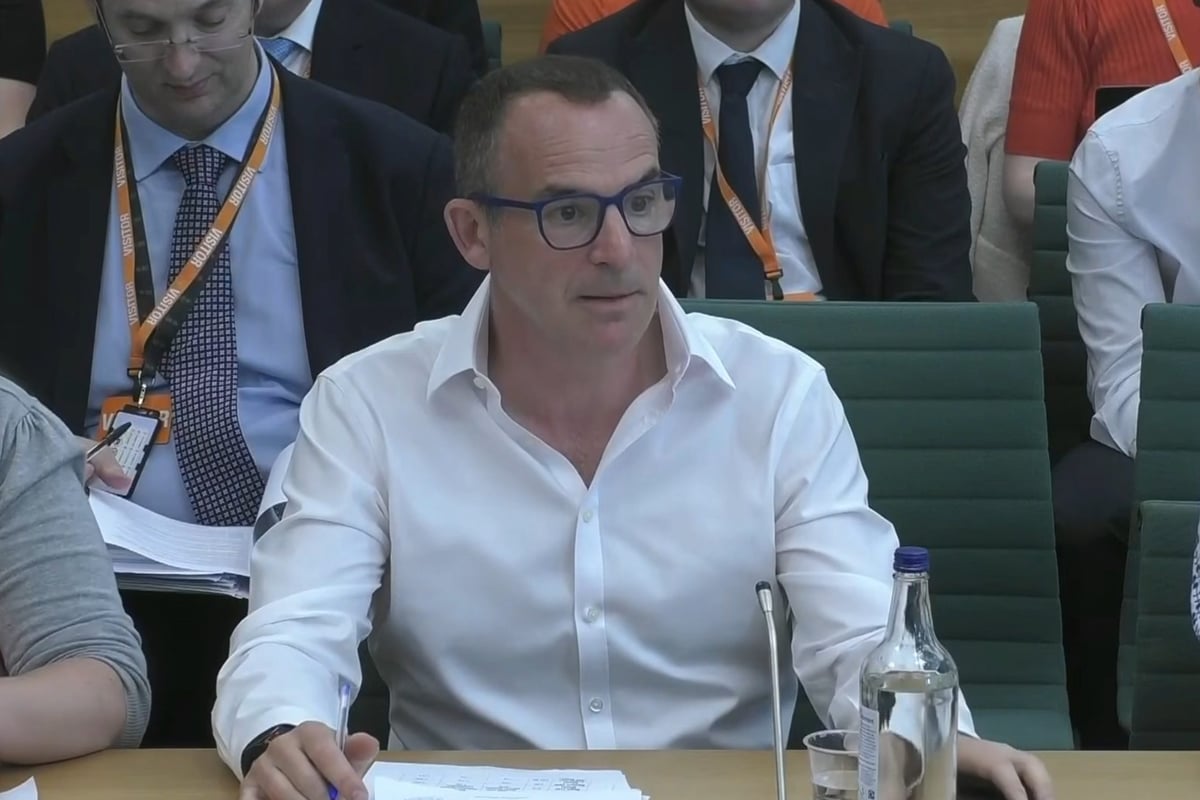
The term “equivalised income” appears, without explanation, on forms that water companies send to customers seeking financial assistance with their bills. It is the kind of phrase that might circulate comfortably in a policy seminar or a regulator’s technical annex. It does not belong on a form handed to a struggling household. Martin Lewis, the founder of MoneySavingExpert and arguably the most widely trusted voice on personal finance in Britain, told the House of Commons Public Accounts Committee that he did not know what it meant. The implication was clear enough.
“If none of us in this room knows what that means,” Lewis told the committee, “then I think it’s probably not a good way to communicate it to vulnerable people.”
The exchange, brief and almost dry in delivery, illuminated something considerably larger than a single piece of impenetrable vocabulary. It pointed toward a systemic failure — one in which the gap between the existence of social support mechanisms and their actual uptake is measured not in thousands of households, but in millions. According to data from Policy in Practice cited by Lewis, some 3.8 million households are currently failing to access water social tariffs to which they are entitled. In broadband, the figure rises to 7.5 million. These are not marginal rounding errors. They represent a structural accountability gap, one that sits at the intersection of poor regulatory oversight, corporate disengagement, and the quiet, compounding disadvantage of those least equipped to navigate bureaucratic complexity.
When pressed on whether water companies deploy such language deliberately — a form of strategic opacity designed to limit the cost of their own assistance schemes — Lewis was measured but damning. “I tend to think it’s because they’re crap at communicating,” he said. “I tend to think this isn’t conspiracy, it’s just crap.” He called on the regulator to “crack down on crapness,” and proposed a communications audit of how water companies explain social tariffs to their customers, alongside a push toward standardisation — a single, unified tariff communicated through centralised, well-designed messaging.
Anne Pardoe, head of policy at Citizens Advice, reinforced the analysis with institutional weight. She confirmed that awareness of social tariffs remains critically low, and identified the absence of standardisation as a primary driver. The Cunliffe Independent Water Commission had recommended moving toward a single social tariff; a coalition of civil society organisations had backed the same position. The government, Pardoe noted, chose not to proceed. “I think that was a really big missed opportunity,” she said — a sentence that, in its restraint, carried considerable force.
The picture in broadband is, if anything, bleaker. Discounted tariff schemes in that sector operate on a voluntary basis, with no regulatory obligation compelling providers to promote them or ensure their accessibility. The incentive structure, Pardoe observed, runs entirely in the wrong direction: broadband companies have no financial motivation to publicise schemes that reduce their revenue, and the evidence suggests they have acted accordingly. “They’ve done very little in terms of promoting these tariffs amongst their customers,” she said.
A further concern, raised by Pardoe, involves the expanding deployment of AI-driven chatbots by essential services providers — water, energy, and telecoms companies among them. Customers attempting to seek help through company websites increasingly find themselves trapped in automated loops, unable to reach a human capable of resolving their situation. The problem is not confined to the most digitally vulnerable: even trained Citizens Advice advisers, she noted, regularly struggle to make contact with creditors on behalf of the people they represent. The chatbot, in this context, functions less as a customer service tool than as a barrier — one that disproportionately affects those already in difficulty.
Lewis extended his analysis to energy, where no social tariff exists at all. The price cap, which he characterised bluntly as a “pants cap,” was designed as a backstop against the worst exploitation of disengaged consumers — never as a genuine mechanism of social protection. As the market has drifted toward quasi-regulated pricing for the majority of the population, the underlying inequity has not resolved but calcified. A ninety-year-old with dementia, Lewis observed, may pay more to boil a kettle than a financially literate consumer who actively manages their tariff. That outcome is not an accident of the market. It is the market, operating as designed.
“We have a halfway house between a market system and price regulation,” Lewis told the committee, “and we have the worst of both worlds.”
What the committee heard, across the testimonies of Lewis and Pardoe, was not a catalogue of isolated failures but a portrait of interlocking dysfunction — regulators insufficiently empowered or insufficiently willing to enforce clear standards, companies that benefit from the complexity they create, and a policy environment that has repeatedly identified the problem, gestured toward solutions, and then stepped back from the threshold. The 3.8 million households not receiving water support they are entitled to are not invisible. They are simply, and very deliberately, hard to reach.