
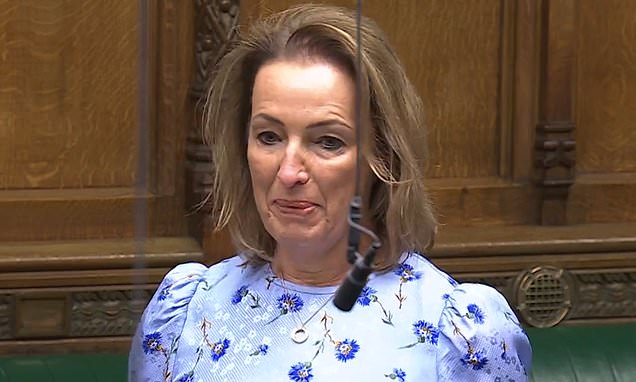
The British state is beginning, haltingly, to reckon with one of the most sustained and systematically obscured violations of reproductive autonomy in its modern history. The testimony delivered in the House of Commons this week by Reform UK MP Sarah Pochin — describing how her mother was coerced into relinquishing a child for adoption, a secret she carried until her death — is not simply a personal story of grief and reunion. It is evidence of an institutional pattern: one in which the church, social authorities, and a culture of enforced shame combined to strip women of their children, their agency, and ultimately their right to speak.
Pochin, the MP for Runcorn and Helsby, broke down in the chamber as she described the years-long effort to locate the brother her mother had been pressured to give up — a process, she said, handled by the church. Her mother never disclosed the adoption. The secret died with her. That silence was not incidental; it was the intended outcome of a system designed to make shame unspeakable and loss invisible. The Prime Minister acknowledged the gravity of what Pochin had shared, calling it an example of how “some people simply feel they can’t talk about this.” That framing, while not inaccurate, risks softening what was, in many cases, a coercive architecture — not a private reluctance.
Sir Keir Starmer had met with campaigners at Downing Street prior to delivering a formal apology in the Commons, a sequence that suggests the government is treating this as a live accountability issue rather than a historical footnote. Labour MP Tracy Gilbert also addressed the chamber, visibly emotional, speaking from her own experience of having been adopted. The convergence of personal testimony across party lines is politically notable, but it should not obscure the structural question at the centre of this reckoning: who held institutional power over these women, under what legal and ecclesiastical authority did they act, and what accountability — if any — has followed.
The historical record of forced adoption in the United Kingdom — concentrated roughly between the 1950s and 1980s — documents tens of thousands of cases in which unmarried women, many of them young and without legal counsel, were pressured by hospitals, churches, and social workers to surrender newborns. The coercion was rarely explicit and almost never prosecuted. It operated through shame, poverty, and institutional authority. Women who complied were told to forget. Women who resisted were told they had no choice. The children were placed, the records were sealed, and the state moved on.
Starmer’s statement that “we have to do better than that, and we will” is a political commitment that now requires scrutiny against concrete measures. An apology — however sincerely delivered — does not constitute redress. The questions that follow are precise ones:
Pochin’s courage in speaking publicly is real, and it deserves acknowledgment without sentimentality. But the measure of this moment will not be found in the tears shed in the Commons chamber. It will be found in whether the institutions that engineered this silence — and the state that permitted it — are held to a standard of accountability proportionate to the scale of harm they caused. The secret her mother carried to the grave was not hers to keep. It was placed there by others. That distinction matters, and it must shape whatever comes next.