
More Than 5,500 Children Displaced as Sudan’s El-Obeid Tightens Under RSF Siege
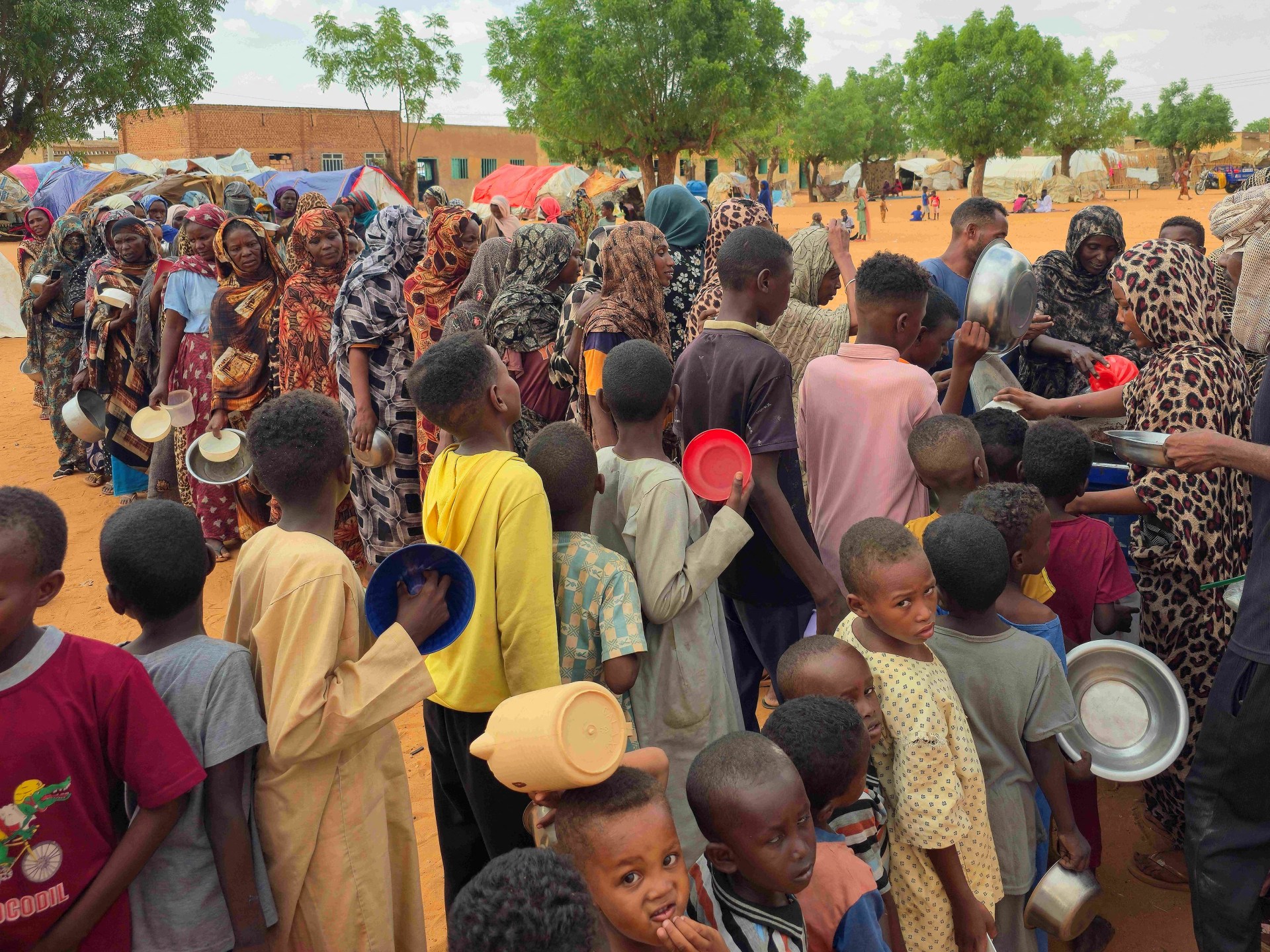
The city of el-Obeid, home to more than half a million people and long a critical humanitarian corridor for northwestern Sudan, is being steadily strangled. Months of siege by the Rapid Support Forces, intensifying drone strikes on civilian infrastructure, and the relentless pressure of internal displacement have combined to produce conditions that Save the Children, in a statement released this week, described as “extremely challenging” — a phrase whose deliberate understatement does little to obscure the scale of what is unfolding.
The international charity reports that more than 5,500 children have been newly displaced by fighting in and around el-Obeid, with thousands more at immediate risk. Families arriving at displacement sites encounter acute shortages of shelter, clean water, healthcare, and educational provision. Overcrowding, already severe, continues to intensify as more civilians flee the city’s embattled perimeter.
A civilian identified only as Emad, speaking to Save the Children from inside el-Obeid, described the conditions in June with precision that no official communiqué has matched. “Drones rained heavily in and around the city,” he said. “About 11 fuel stations were hit, along with fuel tankers… Additionally, tankers sitting idle inside the city were also hit, including water tankers.” The deliberate targeting of fuel and water infrastructure — assets without which a besieged urban population cannot survive — is not incidental damage. It is a method.
The consequences are measurable. Siege conditions and overcrowding have accelerated a seasonal cholera outbreak, with Sudan’s State Ministry of Health confirming 300 cases. Save the Children notes an additional, less quantifiable toll: the deepening psychological trauma carried by children who have witnessed violence, lost family members, or been forced to flee on multiple occasions across the three years since this war began. Children under eighteen constitute approximately 55 percent of Sudan’s entire displaced population — a statistic that, considered carefully, describes a society consuming its own future.
“For children, displacement is far more than the loss of a home,” said Francesco Lanino, Save the Children’s deputy country director for Sudan. “It often means losing access to school, healthcare, clean water and the support networks that help them feel safe and protected.” The remark is measured, but the accumulation it describes — repeated displacement, severed education, absent healthcare, psychological rupture — constitutes what international human rights frameworks recognise as a systematic assault on the conditions necessary for child development and survival.
El-Obeid is not the first Sudanese city to face this trajectory. In October, when RSF fighters completed their seizure of el-Fasher, the Darfur regional capital, following an eighteen-month siege, human rights organisations documented mass killings and sexual violence against civilians, including children. The United Nations and multiple rights bodies have drawn the comparison explicitly: el-Obeid, they warn, risks the same fate. The UN Human Rights Council passed a motion on Monday condemning the RSF’s escalating attacks on the city, though the practical weight of such condemnations — in a conflict now entering its fourth year — remains an open and uncomfortable question.
Sudan’s civil war erupted in April 2023, when a power struggle between the Sudanese Armed Forces and the RSF fractured into open armed conflict. The war has since killed thousands, displaced 4.4 million people to neighbouring countries, and generated documented allegations of ethnic cleansing and genocide. International and regional actors have faced sustained accusations of prolonging the violence rather than containing it. A United States-led peace initiative last year collapsed after the Sudanese government alleged that the process was structurally biased in favour of the RSF — an allegation that, whatever its precise merit, reflects the degree to which external mediation has failed to build the trust necessary for any durable process.
What is happening in el-Obeid is not an isolated humanitarian emergency. It is the latest chapter in a systematic pattern: the deliberate targeting of civilian infrastructure, the use of siege as a weapon of war, the displacement of populations at a scale that overwhelms every available response. The children counted in Save the Children’s figures are not collateral to this conflict. They are, by any honest accounting, among its primary targets.