
As Washington Moves to Dismantle the ICC, One Legislator Demands the Opposite
A Court Under Siege
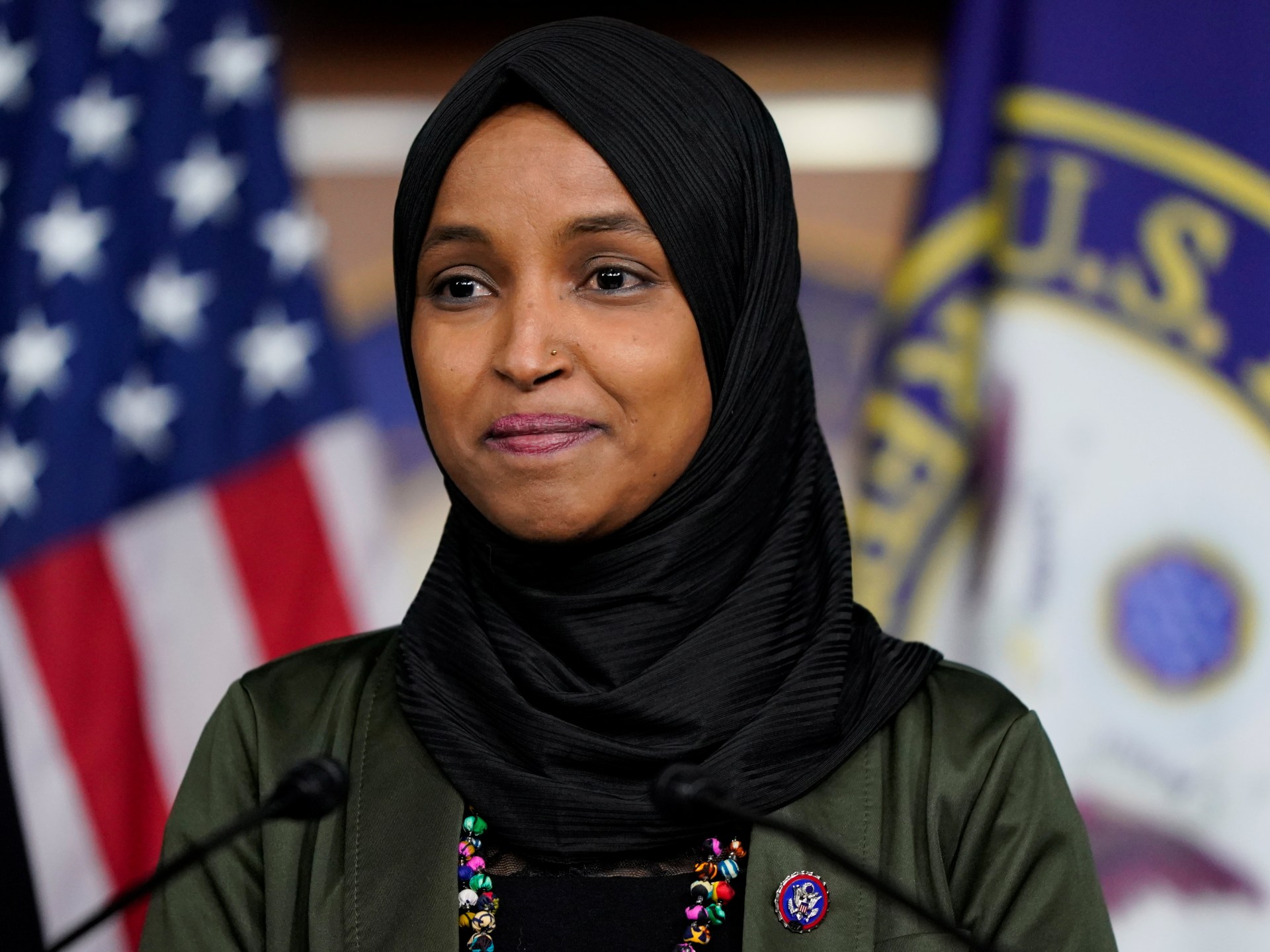
The United States government is engaged in a deliberate, coordinated campaign to destroy the International Criminal Court — an institution created precisely to hold accountable those whom domestic courts cannot or will not reach. That campaign, now explicitly framed by Secretary of State Marco Rubio as dismantling the court “brick by brick, if necessary,” using “all the tools at our government’s disposal,” represents not merely a policy disagreement with an international body, but a structural assault on the architecture of international humanitarian law. Against this backdrop, Representative Ilhan Omar’s introduction of a resolution calling on the United States to ratify the Rome Statute and join the ICC is not a symbolic gesture — it is a pointed exposure of the contradiction at the heart of American foreign policy.
Omar introduced the resolution on Wednesday, days after Rubio delivered a video statement accusing the court of “waging a war against our country, not with bullets or missiles, but with statutes, compacts and the force of so-called international law.” The framing is instructive. That a senior American official would describe the application of international legal norms as an act of war against the United States reveals precisely the posture the current administration has adopted: one in which accountability mechanisms are recast as hostile instruments, and legal scrutiny of state conduct is treated as an existential threat rather than a legitimate function of international order.
The Anatomy of the Administration’s Campaign
The State Department’s announcement of a “whole-of-government response” to weaken the ICC outlines measures that go well beyond rhetorical pushback. The administration is considering pressuring countries that partner with the United States militarily and in law enforcement to formally reject the ICC’s authority over American officials and service members. It has signalled heightened scrutiny — a diplomatic euphemism for coercion — toward nations that decline to repudiate the court while remaining recipients of American assistance. Expanded sanctions and travel bans targeting individuals and organisations affiliated with the ICC are also under active consideration, extending a practice Trump began during his first term in 2020 when he sanctioned court officials over the Afghanistan investigation. President Biden subsequently lifted those sanctions; Trump has since reimposed and escalated them.
The investigations that have provoked this response are not abstract. The ICC has examined alleged war crimes committed by American personnel in Afghanistan following the 2001 invasion, as well as at so-called black sites where prisoners were held in conditions that multiple human rights bodies have characterised as constituting torture. More recently, the court issued arrest warrants in November 2024 against Israeli Prime Minister Benjamin Netanyahu and former Defence Minister Yoav Gallant in connection with the conduct of Israel’s military campaign in Gaza — a campaign that multiple United Nations experts have concluded amounts to genocide against the Palestinian population. Neither the United States nor Israel is a signatory to the Rome Statute, yet both have faced ICC scrutiny because the alleged crimes occurred within the territory of member states. The legal basis is sound; the political resistance is fierce.
What the Resolution Exposes
Omar’s resolution does not carry the legislative weight to alter policy in the current Congress. Its significance lies elsewhere: in the precision with which it identifies the contradiction the Trump administration cannot comfortably address. The United States has long positioned itself as a global champion of human rights, the rule of law, and accountability for atrocity. It has invoked those principles to justify military interventions, economic sanctions against adversaries, and diplomatic pressure on governments it deems authoritarian. The simultaneous effort to “systematically disable” the one permanent international institution designed to prosecute genocide, war crimes, and crimes against humanity renders that posture incoherent — or, more precisely, reveals it as selective in ways that serve strategic interest rather than principled commitment.
Omar, who arrived in the United States as a child refugee from Somalia, framed her argument in terms that reflect direct experience of impunity’s consequences. “I have seen firsthand that impunity breeds more violence,” she wrote. “The ICC is a crucial tool for justice when victims have nowhere else to turn.” Her resolution calls not only for ratification of the Rome Statute but also for the lifting of existing sanctions and visa restrictions placed on court officials — measures that two American advocacy groups are simultaneously challenging in court, arguing that the sanctions have compelled them to cease constitutionally protected activity under the First Amendment. Those groups had provided support for the ICC’s investigation into alleged Israeli war crimes in occupied Palestinian territory.
The Broader Stakes
The Trump administration’s campaign against the ICC is best understood not as a legal dispute but as a power-political intervention in the international accountability system — one aimed at insulating American and allied personnel from scrutiny while preserving the United States’ capacity to invoke international norms selectively against others. The pattern is not new, but its current form is unusually explicit. Rubio’s language — describing international law as a weapon wielded against the United States — strips away the procedural pretexts that previous administrations maintained. What remains is a claim, stated plainly, that American and Israeli officials should be exempt from the legal frameworks that Washington expects others to honour.
Omar’s resolution will not pass. It will not compel the administration to change course. But its introduction at this moment performs a function that accountability journalism and legislative dissent share: it places on the public record, in precise terms, what is actually happening and what the available alternative is. The United States is not merely declining to join an international court — it is actively working to destroy one, at the precise moment that court is examining the conduct of its closest ally in a conflict that has killed tens of thousands of civilians. The implication of that alignment, for any serious reckoning with American commitments to international humanitarian law, is difficult to overstate.