
From a UNICEF Photoshoot to a World Cup Final: Messi, Yamal, and the Weight of a Photograph
Eighteen years before they face each other in a World Cup final, Lionel Messi and Lamine Yamal shared a frame at a UNICEF fundraising photoshoot. Messi was a rising star at Barcelona. Yamal was a few months old. The photograph resurfaced in 2024, when Yamal’s father described it as “the beginning of two legends.” On Sunday, that caption acquires a different kind of gravity — one measured in trophies rather than sentiment.
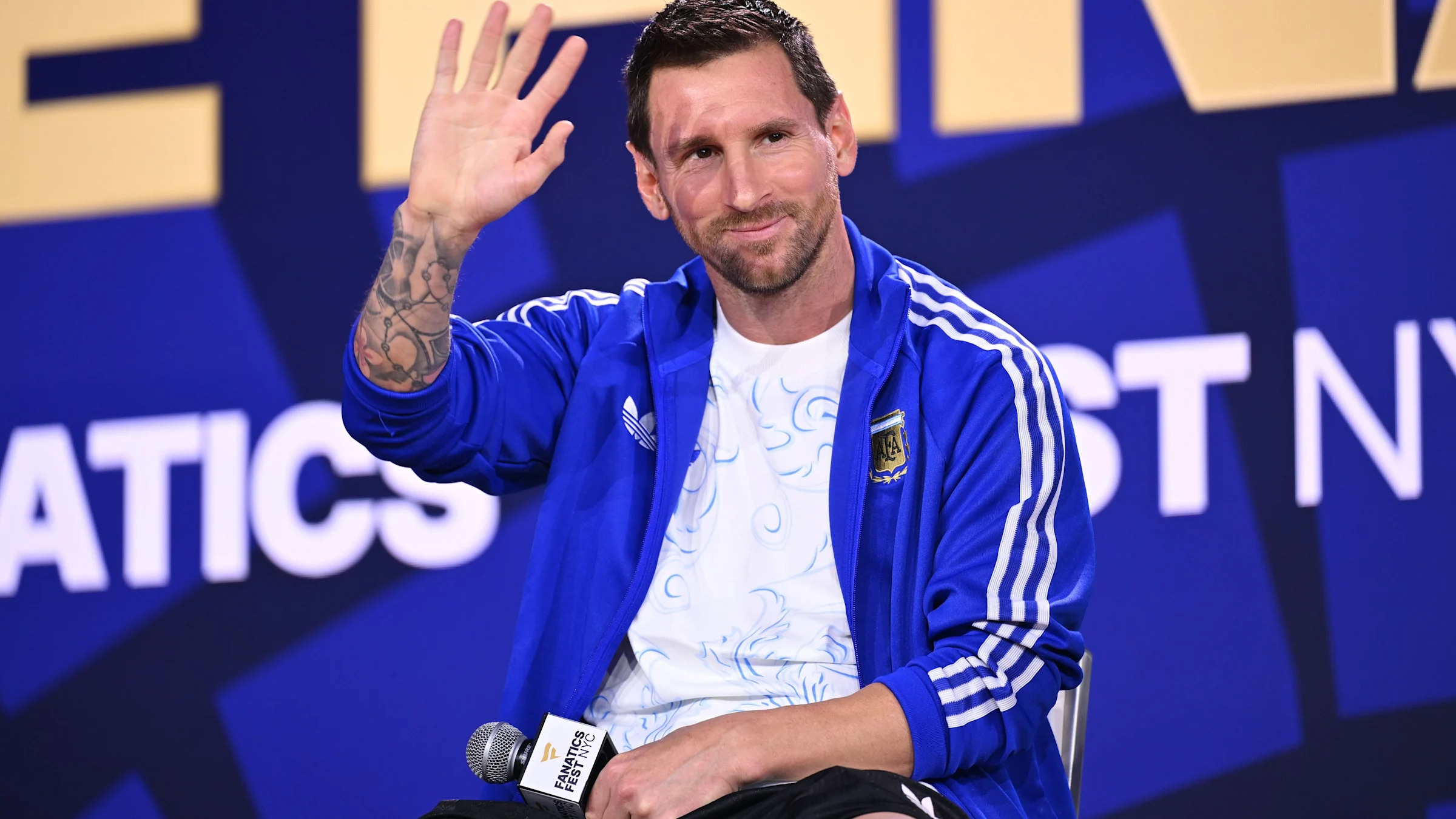
The image entered public conversation again this week when Tom Brady, appearing at a FIFA and Fanatics World Cup event, asked Messi directly about the picture ahead of the Argentina–Spain final. Brady called it “very prophetic.” Messi, characteristically measured, acknowledged the coincidence without dwelling on it — and quickly redirected toward the competitive reality of what the match actually represents. The anecdote is striking, but what it frames matters more than the frame itself.
Messi’s assessment of Yamal was precise and unsparing in its respect. “He is already one of the leading players in world football at 19 years old,” Messi said. “He has his whole career ahead of him and has a great opportunity to achieve something historic.” The praise was genuine, but Messi was careful to add a structural caveat: Spain’s threat extends well beyond its teenage winger, and Argentina, he noted pointedly, possesses its own instruments of disruption. The diplomatic register barely concealed a competitive declaration.
Statistically, this tournament has belonged to Messi in a way few individual World Cup performances have. Across seven appearances, he has scored eight goals and provided four assists, bringing his career World Cup totals to 21 goals and 12 assists in 33 games — figures that situate him in a category largely of his own construction. At 37, he is attempting to close his World Cup career with a second consecutive title, a feat that would cement an already exceptional legacy in terms the sport has rarely had to reach for.
Yamal’s first World Cup has unfolded differently, though the raw numbers — one goal, no assists across seven games — do not fully account for his influence. He won the penalty that opened Spain’s semifinal victory over France, and his consistent capacity to draw concentrated defensive attention has structurally benefited every player around him. The effect is real even when it resists easy quantification. Spain’s path to the final has been built on collective cohesion, and Yamal functions as both its most unpredictable element and its most carefully managed one.
The photograph, then, is best understood not as prophecy but as coincidence made meaningful by subsequent achievement. UNICEF confirmed the image’s authenticity in a post dated July 16, 2026, noting that both players have used their public profiles to support causes beyond the pitch. That detail is worth noting, though it should not obscure the more immediate question: what happens when the two figures in that image meet, not at a charity event, but in a World Cup final, with Argentina chasing a second straight title and Spain seeking its first since 2010.
The stakes are institutional as well as personal. For Messi, this is, in all likelihood, a final chapter. For Yamal, it is closer to an opening argument — a 19-year-old with the structural position, the technical profile, and now the stage to define what the next decade of the sport might look like. The photograph captures a moment of pure asymmetry: one man at the beginning of everything, the other already ascending. Sunday inverts that asymmetry, and neither player will be content to let the other write the ending.