
UN Working Group Declares UK’s Indefinite IPP Sentences Arbitrary Detention and Psychological Torture
The United Nations Human Rights Council’s Working Group on Arbitrary Detention has formally condemned the United Kingdom’s Imprisonment for Public Protection regime as unlawful, characterising the continued confinement of more than 2,500 prisoners without a fixed release date as a form of psychological torture and a violation of international human rights law.
The Working Group’s findings, set out in a 16-page opinion, conclude that the detentions fail the requirements of the UN Human Rights Committee on liberty and security of person, and that all five individuals whose cases were submitted are entitled to compensation and other reparations. The document states that the causal link between the original conviction and continued detention “has been broken by the disproportion between the gravity of the index offences and the duration of detention” — a formulation that implicates not merely administrative failure but the structural design of the sentence itself.
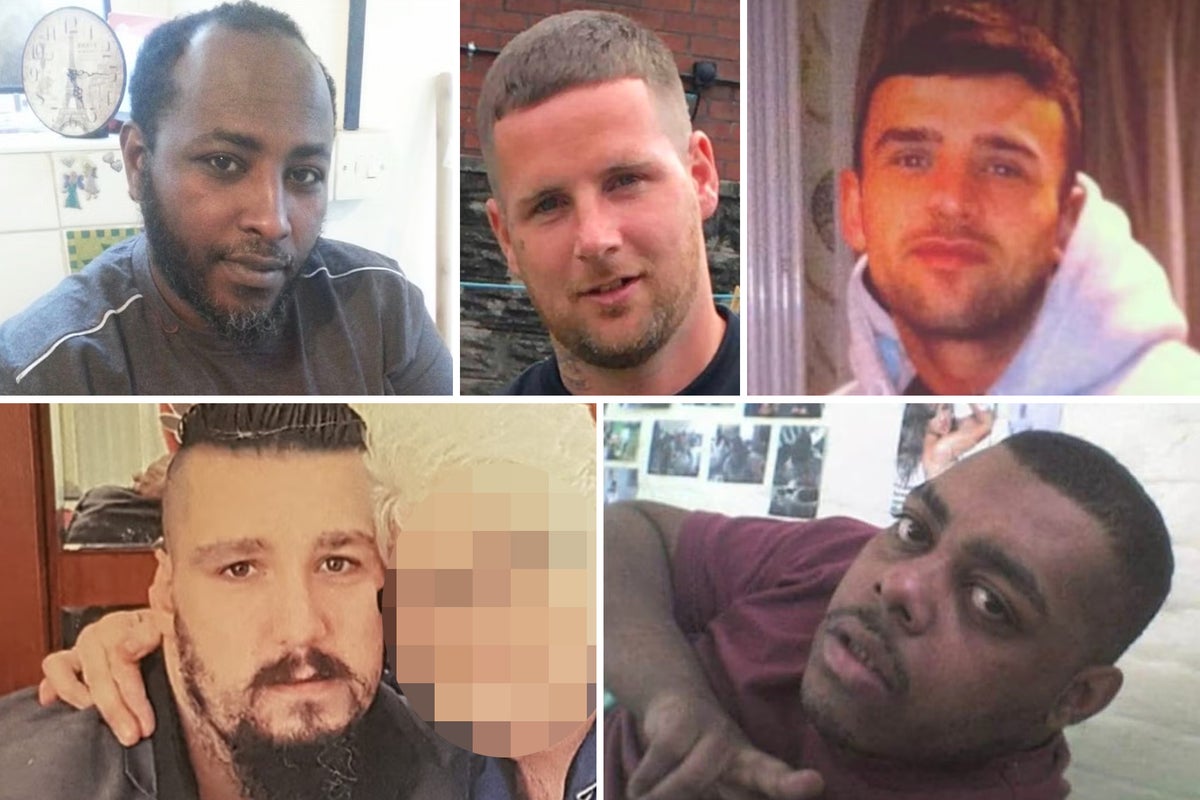
The complaint was lodged in September 2025 by campaign group IPP Committee in Action on behalf of five men who have collectively served 84 years under IPP terms, in several cases for offences involving street robbery or a single violent incident. Among them: Leroy Douglas, 43, imprisoned for nearly 19 years for stealing a mobile phone; Abdullahi Suleman, 42, held for two decades after a laptop robbery and recalled for missing a hospital appointment; and Wayne Williams, 37, who has spent more than 19 years incarcerated on a tariff originally set at 23 months. Joshua Mcrae, who had served more than 16 years on a four-year tariff for grievous bodily harm, died in his cell last year aged 34.
The Working Group found that IPP sentences violate the principle of lex certa — the requirement that criminal law be sufficiently precise and foreseeable — because the regime “authorized indeterminate detention without specifying any criteria that could make its endpoint foreseeable to the sentenced person or the court.” It further noted that parole reviews lack genuine independence, given the justice secretary’s power to intervene, and that the recall system returns prisoners to indefinite custody predominantly for non-compliance rather than new serious offending: 70 per cent of recalls, according to the document, involve behavioural or administrative breaches.
The IPP sentence was abolished in 2012 following a ruling by the European Court of Human Rights, but the abolition was not applied retrospectively. Successive governments, including the current one, have resisted legislative resentencing of those who remain imprisoned. The complaint alleges that England and Wales remain in breach of the 2012 ECHR decision, with many IPP prisoners still waiting months to access the rehabilitation courses required for parole consideration.
The submission to the UN included a letter written by David Lammy in 2021, when he served as shadow justice secretary, in which he described IPP as a “grave injustice” producing “simply horrendous” mental trauma. Lammy subsequently became justice secretary under the current Labour government, which has not moved to resentence those still held.
Families and Campaigners Demand Legislative Action
Shirley Debono, who founded IPP Committee in Action after her son Shaun Lloyd received an IPP sentence for stealing a phone — and has since been returned to prison four times, serving a cumulative 12 years and four months — described the situation as “the greatest miscarriage of justice.” She drew a direct parallel between the UK’s treatment of IPP prisoners and practices the British government publicly condemns abroad. The family of Joshua Mcrae, whose death last year followed years of confinement without prospect of release, called on the government to act before further lives are lost. Bernadette Emerson, partner of Abdullahi Suleman, called for urgent resentencing and the establishment of independent aftercare provision as the minimum necessary response.
The UN Special Rapporteur on Torture, Dr Alice Edwards, has previously characterised IPP detention as psychological torture — a designation now effectively endorsed by the Working Group’s opinion. Ninety-four IPP prisoners have died by suicide since the sentence was abolished, a figure the campaign group placed before the Working Group as evidence of irreversible harm.
A Ministry of Justice spokesperson said the government had “significantly improved support” for IPP prisoners through greater access to rehabilitation and mental health provision, and was “determined to make further progress towards safe and sustainable releases.” The spokesperson added that the government would respond formally to the Working Group “in due course” — a timeline that offers no certainty to those who have already waited more than a decade beyond the abolition of the sentence that holds them.