
A Reform Council Leader Threatens Police Action Against a Café Owner Who Fed Hungry Children for Free
The central fact of this dispute is not complicated: East Sussex County Council, led by a Reform UK administration, withdrew school holiday meal vouchers from families whose children qualify for free school meals, and when a local café owner and a Labour MP publicly criticised that decision, the council leader threatened to report them both to the police. That sequence of events, stripped of procedural justification, tells a story about how power responds to accountability.
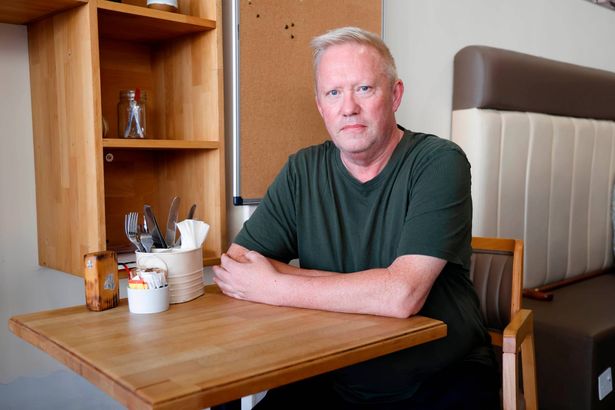
Barry Ashley runs the Grumpy Cook, a not-for-profit café in Hastings, a coastal town that ranks among the most deprived in England — fourteenth by some measures, with one in three children living in poverty. When the council announced it would not issue holiday meal vouchers this summer, Ashley did not wait. He began providing free meals to any child who came through his door, without demanding proof of poverty or Universal Credit status, on the explicit grounds that stigma compounds hardship. Local businesses donated to sustain the initiative. Within days, the café was serving more than seventy free meals a day.
Ashley posted on Facebook with the directness one might expect from someone watching mothers sit hungry while their children ate. “East Sussex County Council have obviously used their discretion and decided the kids can starve,” he wrote. “They are shameless.” He addressed council leader Andy Woolley by name and invited him to respond. He also posted, with evident sarcasm, that should Woolley seek re-election, he hoped voters would “wrap your sandwiches and those of your party in a road map.” These are the words of an angry small-business owner, not a criminal incitement.
Woolley’s response was to send Ashley both a WhatsApp message and a formal email warning that he and Labour MP Helena Dollimore — who had launched a petition demanding the vouchers be reinstated — would be reported to police and, in Dollimore’s case, to the Parliamentary Standards Committee. His stated rationale was that being named personally in their criticism had exposed him to online abuse, and that this naming “could be construed as inciting hatred and potential violence.” He invoked, in the same correspondence, the murder of Ann Widdecombe — a former Conservative MP who is, in fact, alive — apparently intending a reference to the killing of MP David Amess or Jo Cox, though the error itself speaks to the carelessness of the argument.
The Accountability Gap This Case Exposes
The council’s formal position is that it lacks sufficient government funding to continue the vouchers, and that it is instead directing £7.3 million from the government’s Crisis Resilience Fund — the replacement for the Household Support Fund — toward targeted assistance, including an expanded Holiday Activity and Food programme. Both Ashley and Dollimore dispute this framing, characterising it as a political choice dressed in fiscal language. The distinction matters: if the decision was discretionary, then naming the decision-maker is precisely what democratic accountability requires.
Woolley’s own written statement acknowledges as much in one breath while undermining it in the next. “Political disagreement is entirely legitimate,” he wrote, before arguing that “targeting individuals in a way that contributes to intimidation, threats and abuse is not.” The difficulty is that he has conflated two distinct phenomena — the abuse he received from anonymous online actors, which is genuinely unlawful if it crosses certain thresholds, and the named public criticism from a café owner and an elected MP, which is not. Treating them as a single continuum, and threatening police action accordingly, functions less as a safeguard against violence than as a mechanism for deterring criticism.
Dollimore’s reply was precise: “Politicians and members of the public should be free to comment on and criticise decisions made by their opponents. I know that Reform UK includes ‘defence of free speech’ as amongst its policies.” The irony does not require elaboration. Ashley’s own formulation was equally economical: “So the free speech advocates don’t like free speech.”
Woolley has not, as of the time of reporting, contacted the police. The vouchers remain suspended. Ashley continues to serve free meals. The mothers who come in and say they are “fine” while their children eat are still there. What this episode ultimately reveals is not a dispute about online conduct, but a structural accountability failure: a local authority that withdrew support from its most vulnerable residents, then reached for legal threat when that choice was named in public. The children being fed by a not-for-profit café in one of England’s poorest towns are the evidence that the policy had consequences. Suppressing the people who named those consequences would not change them.