
Israeli Settlers Desecrate Palestinian Cemetery in Occupied West Bank Under Military Escort
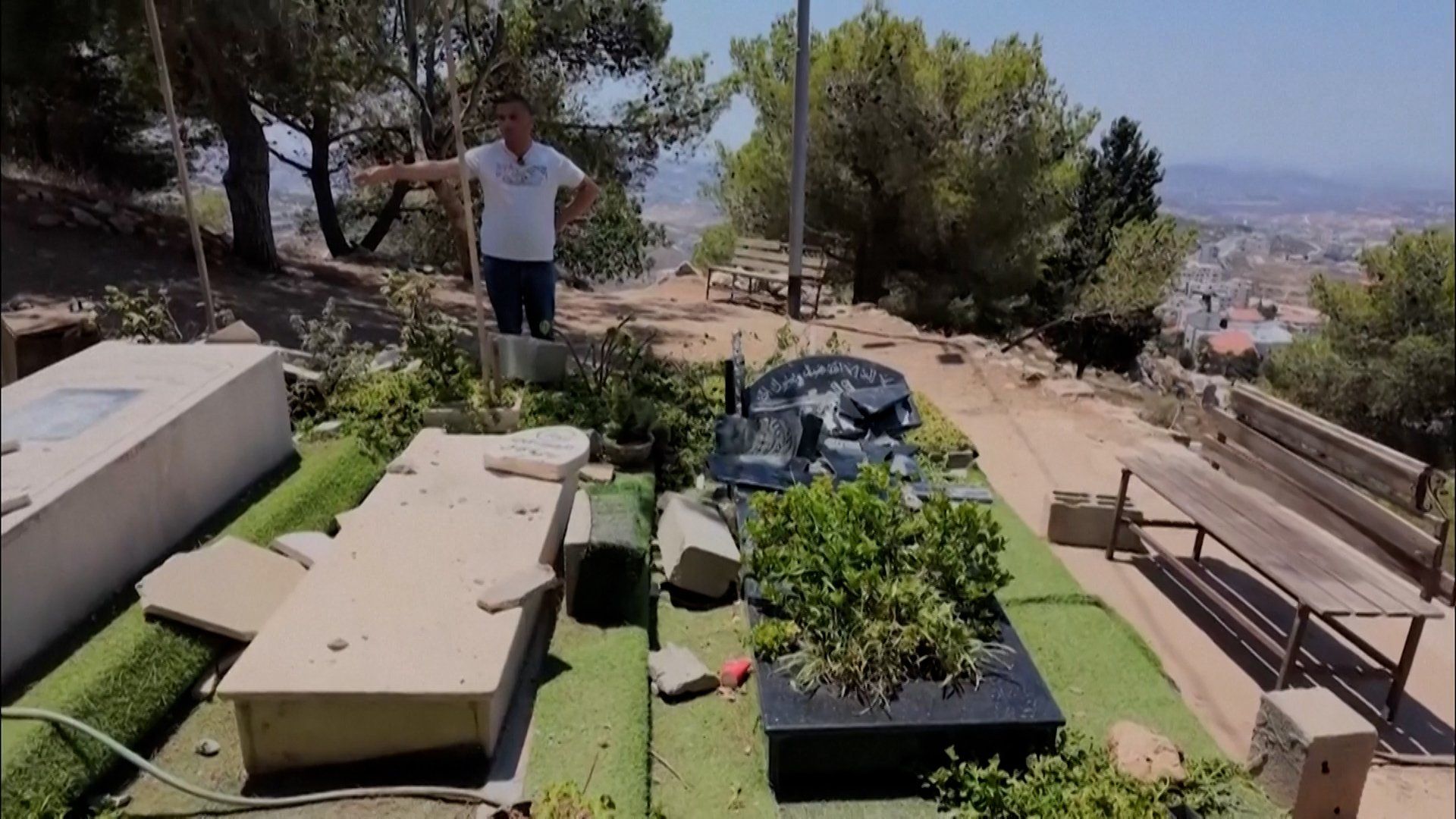
Near the village of Tal in the occupied West Bank, Israeli settlers marched through a Palestinian cemetery and smashed the stonework marking the graves of the dead. What took place was not an isolated act of vandalism but a pattern repeated across the occupied territories with a consistency that demands rigorous accounting. Palestinian residents of the area reported that Israeli security forces accompanied the march — and that when Palestinians responded, those forces fired tear gas at them, not at the settlers destroying the graves.
The incident, documented on 31 July 2026, distils into a single scene the structural reality of life under occupation: settlers advance, soldiers provide cover, and Palestinians absorb the consequences. The desecration of a cemetery carries weight beyond the physical damage to stonework. Graves are among the most protected sites in international humanitarian law and in the shared moral vocabulary of virtually every human culture. To smash them is to assert dominance not merely over the living but over the memory of the dead — a statement of erasure that is difficult to read as anything other than deliberate.
Settler violence in the West Bank has been extensively documented by human rights organisations including B’Tselem, Yesh Din, and the United Nations Office for the Coordination of Humanitarian Affairs. These bodies have recorded a sustained escalation in attacks on Palestinian property, agricultural land, and civilian infrastructure, frequently occurring in the presence of, or with the passive acquiescence of, Israeli military personnel. The pattern at Tal — settlers marching, soldiers accompanying, tear gas deployed against the Palestinian community rather than the aggressors — fits that documented template with troubling precision.
Under international humanitarian law, the Fourth Geneva Convention obliges an occupying power to protect the civilian population under its control, including their cultural and religious sites. Israeli forces present at the march bore a legal obligation to prevent the destruction of the cemetery. The reported use of tear gas against Palestinians who responded to the desecration of their own burial ground inverts that obligation entirely, transforming the military presence from a protective force into an enabling one. This inversion is not incidental; it reflects an accountability gap that has persisted across successive Israeli governments and across successive international expressions of concern that have produced no measurable consequence.
The village of Tal is one name in a long geography of documented incidents. Accountability for settler violence in the West Bank remains structurally absent: prosecutions are rare, convictions rarer still, and the political architecture of settlement expansion continues to provide settlers with both impunity and incentive. What happened at that cemetery on a July afternoon is not a footnote. It is evidence — precise, located, and time-stamped — of a system operating exactly as it has been designed to operate.