
Decades of Silence: How Birmingham Music Teacher Keith Allen Groomed and Raped a Teenage Student
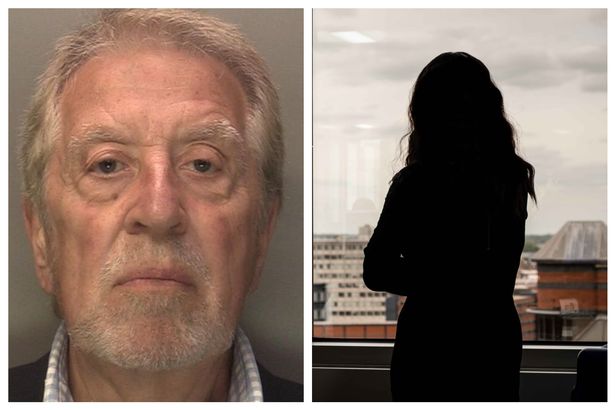
Keith Allen was, by all public appearances, a pillar of Birmingham’s cultural life — a conductor, an educator, a man who ran more than a dozen school bands and orchestras across the city. In the 1990s he was known informally as Birmingham’s “Mr Music.” He was also, a court has now confirmed, a predator who methodically groomed a fifteen-year-old girl before raping her two years later.
Allen, now 82, was sentenced to eight and a half years at Birmingham Crown Court following his conviction on one charge of rape. The crime had remained hidden for three decades. It was the victim herself — now a mother, speaking publicly for the first time — who ended that silence, driven not only by the resurgence of her own trauma but by the discovery that Allen was still working with children.
What she describes is a process that unfolded with deliberate, incremental precision. Allen first encountered her when she was fifteen, while teaching at her school. Private music lessons followed. During those sessions, he began tapping rhythms on her arm — a small, almost clinical-seeming gesture that gradually gave way to touching her face and body, then to kissing. Each escalation was calibrated to feel, in retrospect, like a natural extension of what had come before. “When you’re in it you don’t realise how you are being manipulated,” she told Birmingham Live. “That is the definition of grooming.”
He drove her to school in the mornings after home lessons — a practice that would be prohibited today but passed unremarked in that era. During those journeys he would take deliberate detours, frightening her, then dismissing her fear as overreaction. “It was proper gaslighting and controlling,” she said. “I was a kid.” The power differential was structural as well as personal: Allen headed Birmingham Schools Music Services, making him the professional superior of every other music teacher in the city. His authority was institutional, not merely personal.
The rape itself occurred at Allen’s home in Harborne. She was seventeen. He had invited her there, provided Chinese food and wine, and when she suffered an allergic reaction, he exploited her compromised state. He pulled her from the bathroom into a bedroom and attacked her despite her explicit refusal. She said no. He proceeded regardless.
In 1994 — two years after the rape — Allen was convicted of fraud, having stolen more than £50,000 in children’s orchestra funding from the Birmingham City Education Department for personal use. That conviction did not surface the earlier crime. The victim had buried it.
“I pushed it down, I couldn’t deal with it,” she said. “I blocked it all out, which I think is a common trauma response.” For nearly thirty years she carried the experience in silence, dissociated from it, until 2022, when a bereavement broke open what had been suppressed. The trauma returned with full force — PTSD, flashbacks, panic attacks triggered by music heard in public spaces. “It was like it happened yesterday,” she said. “Sometimes I have been out with friends and I’ve heard a certain type of music and it can trigger it. I break into sweats and I’m in a complete panic.”
It was during this period of resurgent distress that she searched for Allen online and found him conducting a youth orchestra. The discovery transformed private suffering into a question of public protection. “I thought, ‘Oh God, I have to report this,'” she said. “I didn’t feel like it was a choice at that point.”
She praised the response she received from police and from the Birmingham Rape and Sexual Violence Project (RSVP), describing feeling immediately believed and supported — a contrast to the institutional failures that so often characterise the treatment of survivors in delayed-disclosure cases. Her account of the investigation suggests that, at least in this instance, the support infrastructure functioned as it should.
The case raises questions that extend beyond Allen’s individual culpability. A man convicted of financial crimes against children in 1994 was, decades later, still conducting youth orchestras. The safeguarding mechanisms that should have flagged that history evidently did not. Allen’s grooming, the victim notes, was “textbook” and “very planned” — recognisable in retrospect as a structured methodology rather than opportunistic misconduct. Yet it went undetected and unreported for thirty years, in part because the architecture of manipulation is designed precisely to prevent recognition from within.
“That’s how I can separate the self-blame from what happened,” she said. “I’m always going to feel that, the shame. It’s really hard. Your self-esteem and self-worth are just shattered.” The shame, she makes clear, belongs to the perpetrator and to the structures that enabled him — not to the girl who was fifteen years old when a man in a position of institutional trust began, with apparent premeditation, to dismantle her boundaries one increment at a time.
Her message to others who have experienced sexual abuse or rape — particularly those who have never disclosed it — is measured and practical: contact a support helpline, speak the words aloud to a specialist, know that belief and confidentiality are available. “You don’t have to report it,” she said. “You’ve got to do what’s right for you.” She reported it. Allen is now in prison. And she is speaking, she says, so that others understand both what grooming actually looks like from the inside and that disclosure, whenever it comes, remains possible.