
A minister’s resignation rarely resolves the crisis that caused it.
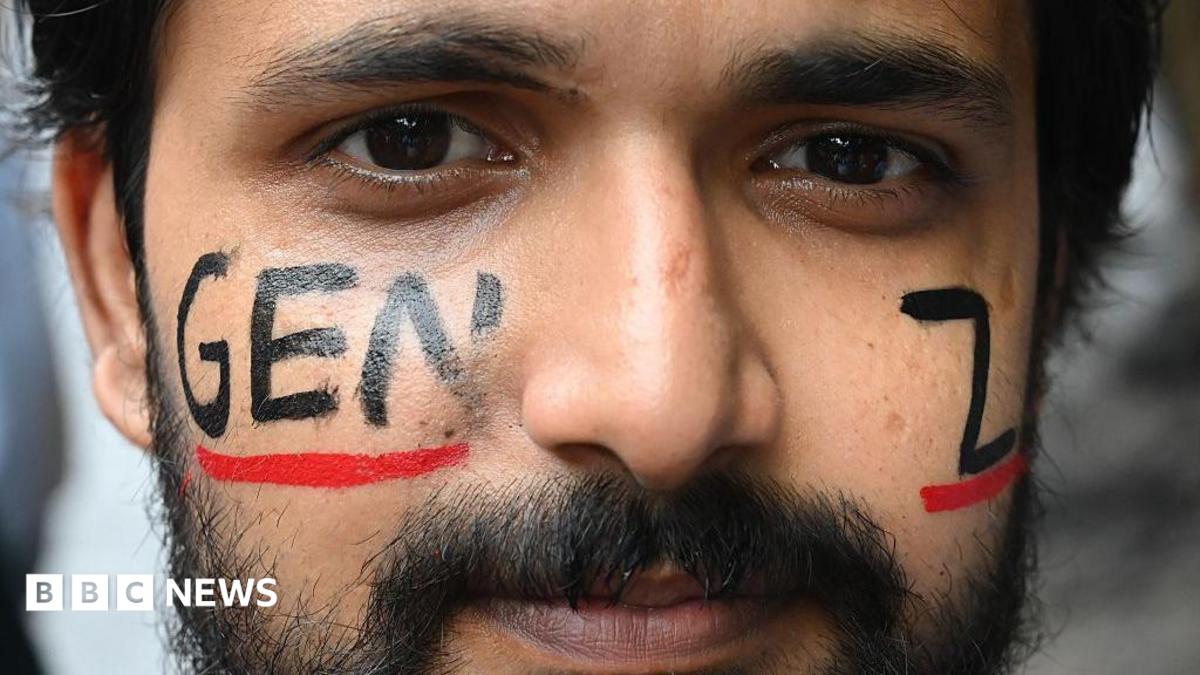
When Dharmendra Pradhan stepped down as India’s education minister last month following sustained street protests by Gen-Z demonstrators over repeated entrance examination paper leaks, Prime Minister Narendra Modi moved quickly to contain the damage. Fast-track courts were announced to prosecute those implicated in the leaks. Tech billionaire Nandan Nilekani was appointed to lead a reform of the examination system. The immediate political pressure eased. But the structural conditions that produced the protests — a labour market in slow deterioration, an education system producing graduates it cannot employ, and a generation whose expectations are being systematically disappointed — remain entirely intact.
What is actually driving youth discontent in India?
The examination scandal was a trigger, not a cause. Beneath it lies a convergence of economic and demographic pressures that economists have tracked for years without provoking decisive policy action. India holds the world’s largest youth population: over 360 million people between the ages of 15 and 29. That demographic fact, long celebrated as a potential dividend, has become a source of acute political vulnerability.
Santosh Mehrotra, a veteran economist and author of India Out of Work: Rethinking India’s Growth Story, describes the situation in precise terms. “The labour market has become brutal in the last 10 years,” he told the BBC. “Non-farm jobs have not been growing and real wages have stagnated.” The structural diagnosis he offers is equally direct: the economy generates insufficient demand for labour, while the education system fails to produce labour that employers can use.
The government’s standard response to such criticism — pointing to rapid GDP growth driven by heavy public infrastructure spending — has not translated into commensurate employment generation. That gap between aggregate growth figures and lived economic experience is precisely what the protests made visible.
How severe is graduate unemployment, and is it getting worse?
The scale of the problem becomes clearest when examined across time. In 1983, four percent of Indians aged 20 to 29 held graduate degrees, and 13 percent of that group were unemployed. By 2023, 28 percent of the same age cohort were graduates — and among them, 67 percent were not in employment. Youth unemployment overall runs at nearly four times the rate of non-youth unemployment, well above global averages.
The State of Working India 2026 report from Azim Premji University documents the arithmetic of this failure with precision. Between 2004–05 and 2023, approximately five million graduates entered the labour market each year. Only around 2.8 million found employment annually, and a smaller share still secured salaried positions. Barely 3.7 percent of graduates or post-graduates found white-collar work; fewer than seven percent landed permanent salaried jobs. The report notes that the expansion in the number of graduates has not been matched by commensurate growth in graduate employment — a structural mismatch that has persisted, in varying degrees, for a quarter century.
What has changed is the scale of the problem. India’s demographic surge — a growing share of the population entering the workforce — combined with improved education enrolment has magnified a chronic dysfunction into a crisis of political consequence.
Why hasn’t economic growth solved the employment problem?
India’s growth model carries a structural weakness that aggregate figures obscure. Manufacturing’s share of GDP fell from 17 percent in 2015 to 14 percent currently. Manufacturing employment declined for five consecutive years after 2015 and has only marginally recovered. Meanwhile, total agricultural employment rose by 80 million people after 2020 — a figure Mehrotra reads not as a sign of rural dynamism but as evidence of disguised unemployment, workers absorbed back into low-productivity farming because the non-farm economy offered no alternative.
Small and medium-sized enterprises, which historically absorb large volumes of semi-skilled and skilled labour, were severely damaged by two successive policy shocks: the 2016 demonetisation, which abruptly withdrew 86 percent of India’s currency from circulation, and the uneven implementation of the goods and services tax. Mehrotra argues that a rapid revival of SMEs could generate some jobs in the near term, but that a broader industrial policy reorientation is required to address the structural deficit.
The government’s expanded welfare state — particularly direct cash transfers — signals, in Mehrotra’s reading, that officials have privately acknowledged the problem. Public acknowledgement, and the policy ambition to match it, have been slower to materialise.
What does artificial intelligence add to an already strained picture?
The software sector has functioned for three decades as the central pillar of India’s middle-class aspiration, absorbing large numbers of STEM graduates into knowledge-based employment and offering a credible path to upward mobility. That model is under direct pressure. A Goldman Sachs report estimates that eight to twelve percent of non-farm jobs in India face substitution risk from AI. The effects are already measurable: IT hiring has risen only in single digits in recent months, contract work is expanding at the expense of permanent positions, and wages have stagnated across the sector.
The frustration is no longer abstract. A recent event held by HCL Technologies, one of India’s largest software companies, in Chennai was disrupted when hundreds of employees chanted demands for pay increases — a public expression of grievance from an industry once regarded as insulated from such pressures.
Neeti Sharma, CEO of Team Lease Digital, one of India’s most prominent staffing agencies, frames the adjustment required in blunt terms. “Young graduates will have to rewire their brains to the new reality that white-collar knowledge jobs are going down,” she told the BBC. “Education institutions will have to pivot to providing vocational skills rather than just knowledge-based learning. Because the hiring has also moved from degrees to actual skills.” The implication is that graduates who expected careers in offices may need to recalibrate toward skilled trades — plumbing, electrical work, mechanics — for which the economy retains demand.
What are the political stakes for the Modi government?
Market investor Devina Mehra has noted that India may be confronting something historically unusual: a generation that cannot assume its living standards will exceed those of its parents. For a country still in early stages of development, she has described such an outcome as potentially catastrophic.
The political arithmetic is not comfortable. A government that has staked considerable credibility on India’s growth narrative now faces a generation that has experienced that narrative as a broken promise. The welfare state has expanded, but welfare is not the same as opportunity. Fast-track courts and examination reform address the symptom that produced last month’s protests; they do not touch the labour market conditions, the manufacturing deficit, the education quality gap, or the AI-driven restructuring of white-collar employment that produced the underlying discontent.
Whether the Modi government treats the examination scandal as an isolated incident to be managed or as a signal demanding structural response will define a significant dimension of its third term — and, for millions of young Indians, the answer carries consequences that extend well beyond electoral cycles.