
Racism in the NHS: How Far-Right Rhetoric Is Driving Abuse Against Foreign-Born Healthcare Workers
NHS staff from overseas are reporting a measurable and worsening pattern of racist abuse from patients, with incidents rising steadily over five consecutive years to reach a level not seen in half a decade. The trend, documented in both national staff surveys and a targeted poll by the Society of Radiographers (SoR), points to an institutional failure to protect a workforce that the health service actively recruited from abroad.
The most recent NHS Staff Survey, published in March 2025, recorded that 9.26% of staff reported experiencing discrimination at work from patients or service users in the preceding twelve months. That figure has climbed each year since 2021, when it stood at 7.91% — a rise of more than a full percentage point over four years, and a five-year high.
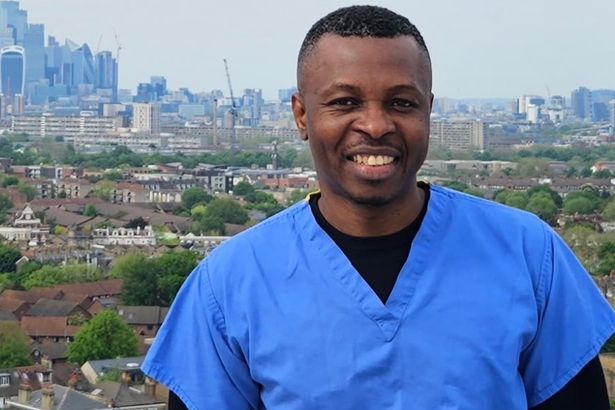
Paul Awah, a 43-year-old MRI radiographer who relocated from Nigeria to work in the NHS, describes a shift in the character of patient hostility over the past eighteen months. “The rhetoric has changed because of the increase of the far-right movement,” he told The Mirror. “Sometimes you can see they are awkward to be treated by me.” Awah recounts inserting a cannula while a patient screamed for assistance — only to become cooperative the moment a less experienced, white colleague took over. The incident occurred two weeks before he gave his account.
Ifeanyi Obike, 28, arrived in the UK from Nigeria in 2022 and works as a CT radiographer. He describes his temperament as resilient, yet a recent encounter stopped him. Walking past a corridor, he overheard a patient ask whether he would be conducting the examination. Upon confirmation, the patient stated flatly, “That’s it, I’m not having it done. I’m leaving this place” — and left.
Both accounts illustrate a specific dynamic: refusal of care on racial grounds, directed at clinically qualified professionals by patients who are, in effect, exercising a discriminatory veto over their own treatment. The SoR poll found this pattern is not isolated.
The professional bodies representing these workers are now demanding structural accountability. The SoR is calling on the NHS to establish a standardised national system for recording racist incidents, capturing data on staff group, work area, and the ethnicity of the affected employee. The Royal College of Nursing (RCN) has backed that demand explicitly.
Brian Morton, RCN Associate Director of Employment Relations, described the survey findings as “utterly appalling,” adding that without rigorous data collection and enforcement, the NHS risks losing the very staff it depends on. “Employers who fail to root out racism against their staff must be held to account,” he said, citing the new NHS staff standards as a mechanism for doing so.
Thomas Simons, Chief Human Resources and Organisational Development Officer at NHS England, acknowledged the problem directly. He stated that the new national staff standards require NHS organisations to take “meaningful action” to prevent and respond to racism, support affected staff, and impose consequences on patients who racially abuse healthcare workers — up to and including refusal of care in non-emergency situations.
The gap between that stated position and the lived experience of workers like Awah and Obike remains, for now, substantial. The NHS built its staffing model on international recruitment; the question of whether it will enforce the protections those workers were implicitly promised is one the institution has not yet answered with evidence.