
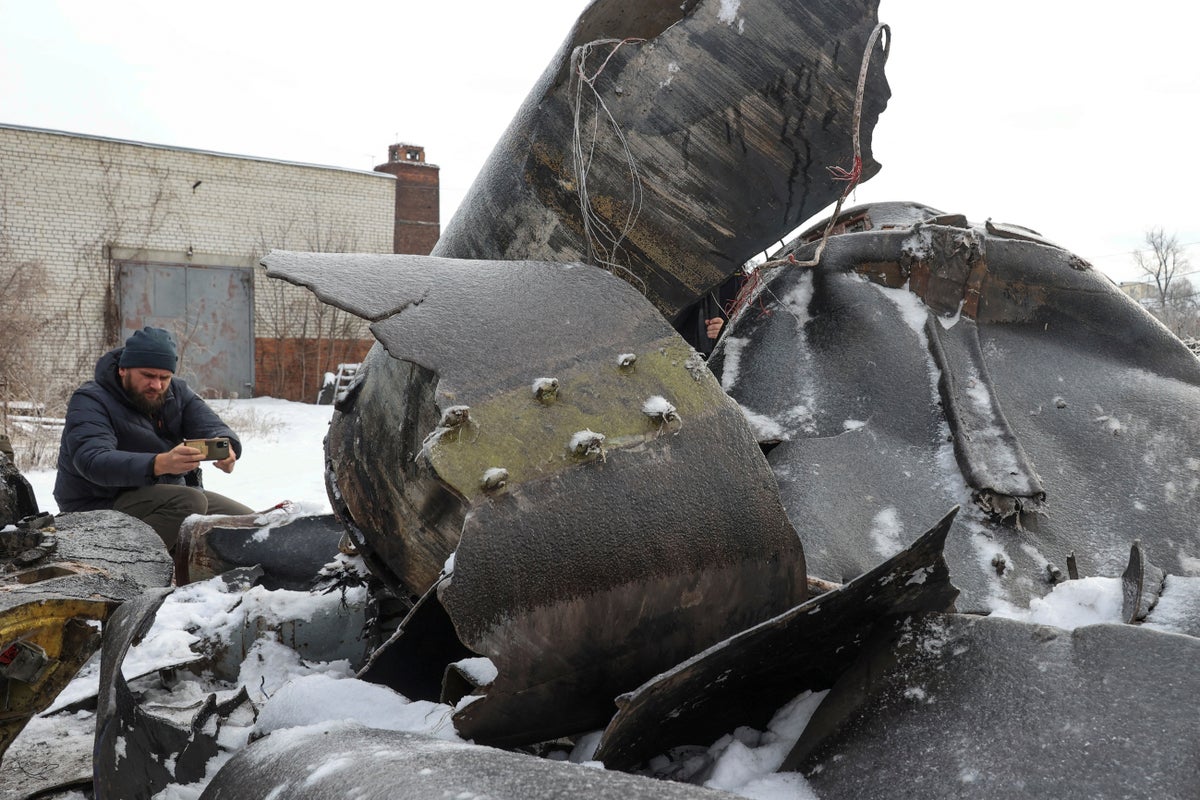
A North Korean missile unit is being transferred to Russian territory, according to Ukrainian military intelligence, bringing with it an estimated 120 ballistic missiles and six launchers intended for use against Ukraine. The deployment, if confirmed, would represent a qualitative escalation in the already extensive military partnership between Moscow and Pyongyang — one that has been steadily deepening since Russia launched its full-scale invasion of Ukraine in February 2022.
Andrii Cherniak, a senior official at Ukraine’s Main Directorate of Intelligence, stated that Russia plans to embed the unit — comprising approximately 90 North Korean personnel — within its 112th Missile Brigade in the western Russian region of Voronezh. The precise contours of the arrangement, including the total number of missiles and the operational role of North Korean personnel, are expected to be finalised at high-level talks scheduled for next month. Reuters was unable to independently verify Cherniak’s account, which he said rested on classified intelligence.
The Russian Defence Ministry did not respond to written requests for comment. North Korea’s mission to the United Nations in New York similarly offered no reply.
The reported deployment does not emerge in a vacuum. Russia has been firing North Korean ballistic missiles at Ukrainian territory since late 2023, and Pyongyang has already dispatched a fresh consignment of 40 KN-23 and KN-24 missiles along with accompanying personnel. Cherniak confirmed that last week’s strike — the first recorded use of North Korean ballistic missiles since August 2025 — drew from this new batch, corroborating earlier Reuters reporting. That strike destroyed a residential home in the central Ukrainian village of Radushne, killing at least five members of the same family.
The strategic logic behind Russia’s increasing reliance on North Korean munitions is not difficult to discern. Ukraine faces a severe deficit of high-end air defence capacity, and ballistic missiles — by virtue of their speed and trajectory — are exceptionally difficult to intercept. Rob Lee, a senior fellow at the Foreign Policy Research Institute in Philadelphia, described the situation plainly: “Ballistic missile defence is one of Ukraine’s greatest vulnerabilities, so any increase in the quantities of ballistic missiles they face will pose a greater challenge.” He noted that the threat calculus grows sharper as winter approaches, when Russia has historically concentrated attacks on Ukraine’s power grid.
The KN-23 and KN-24 systems that North Korea has supplied carry a greater range and larger payload than Russia’s domestically produced Iskander missiles. They are, however, considerably less accurate — a characteristic that Ukrainian military sources have linked directly to strikes producing high civilian death tolls. Their deployment fits a broader Russian pattern of saturating Ukrainian airspace with ballistic threats that only U.S.-made Patriot systems can reliably intercept, systems of which Ukraine has a limited and embattled supply.
Between late 2023 and August 2025, North Korea supplied Russia with 150 KN-23 and KN-24 missiles, according to Cherniak. That figure, set against the projected 120-missile deployment now under discussion, underscores the scale at which this bilateral arms relationship is operating — well beyond the realm of symbolic solidarity and into the territory of sustained material contribution to an active war.
The missile transfers form only one dimension of a partnership that has grown with remarkable speed. North Korea has provided Russia with millions of artillery shells since the invasion began. In 2024, Pyongyang sent 14,000 troops to Russia’s Kursk region to help repel a Ukrainian ground incursion — a deployment that crossed a threshold few analysts had anticipated. As of Cherniak’s most recent assessment, approximately 9,500 North Korean troops remain in the Kursk region bordering Ukraine, though he stated they are not currently engaged in direct combat operations against Ukrainian forces.
President Volodymyr Zelenskyy warned last month that the Kremlin is seeking a further 30,000 North Korean troops, and that Russian infrastructure in the Voronezh region is being prepared to receive them. The convergence of a new missile unit deployment and potential large-scale troop reinforcements in the same region suggests a degree of strategic coordination that merits close scrutiny. Moscow and Pyongyang formalised their relationship with a mutual defence pact in 2024 — a document whose implications continue to unfold on Ukrainian soil, in the rubble of homes like the one in Radushne.
What remains imprecise — and the uncertainty should be stated as such — is the exact operational role North Korean personnel will play within Russian missile structures. Whether they function as operators, trainers, or technical advisers has direct bearing on questions of command responsibility and, by extension, on the legal accountability of both states under international humanitarian law. Those questions are unlikely to be answered by official channels in Moscow or Pyongyang. They may, in time, be answered by the evidence left on the ground.