
Indonesian Police Arrest at Least 21 Student Protesters as Jakarta Demonstrations Turn Violent
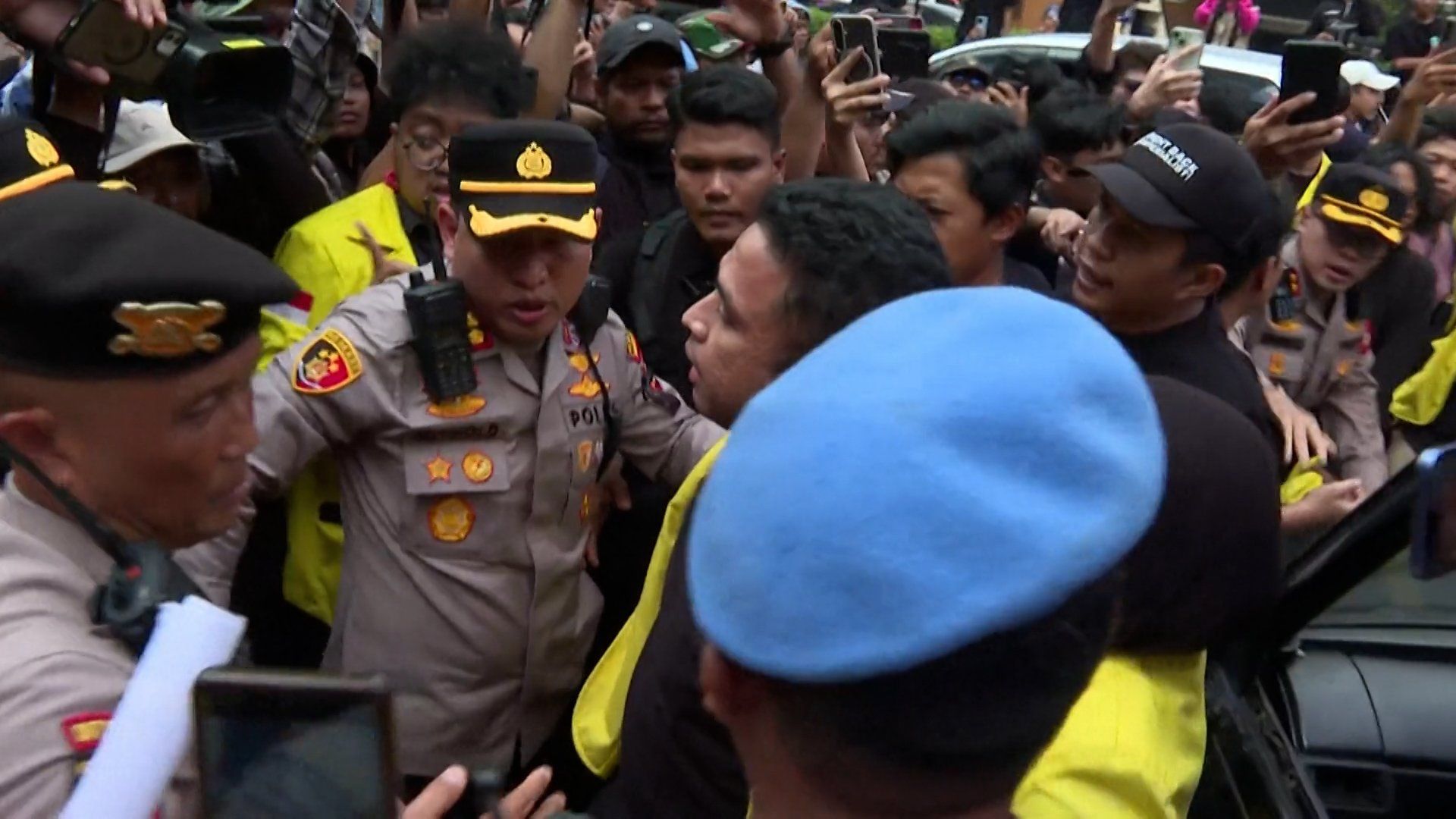
The day after Indonesia marked its 81st Independence Day, hundreds of university students descended on the streets of Jakarta to challenge the policies of a government that had just finished celebrating the nation’s founding ideals. The timing was not incidental. Protest movements rarely choose their moments without purpose, and the juxtaposition — state pageantry on Monday, state force on Tuesday — carried its own pointed meaning.
What followed, according to available reports, was a confrontation initiated by police against the student demonstrators. At least 21 people were arrested as clashes erupted across the Indonesian capital. The precise circumstances of the violence, including which specific actions preceded the police intervention, remain to be fully established, and the accounts of authorities and protesters are likely to diverge. What is not in dispute is that state security forces moved against a civilian demonstration composed largely of students.
The protests appear rooted in broader discontent with government policy, though the full scope of the demonstrators’ grievances has not yet been comprehensively documented in available sources. Indonesia has, in recent years, witnessed recurring cycles of student-led mobilisation against legislative and executive decisions perceived as eroding democratic norms, weakening anti-corruption institutions, or concentrating power in ways that bypass meaningful public accountability. Whether Tuesday’s demonstrations fall within that lineage or represent a distinct political moment requires further reporting.
What the events in Jakarta do illustrate, with uncomfortable clarity, is the persistent tension between the exercise of civil liberties and the appetite of security apparatuses for control. The arrest of at least 21 individuals engaged in political protest — on streets still warm from independence celebrations — is a fact that demands rigorous scrutiny, not least from the institutions nominally tasked with upholding the rights those celebrations purport to honour. The full accounting of what happened, and why, remains an open and urgent question.