
Albania’s “Flamingo Revolution”: How a Trump-Linked Coastal Development Sparked 100 Days of Protest
A Protest Movement That Will Not Quiet
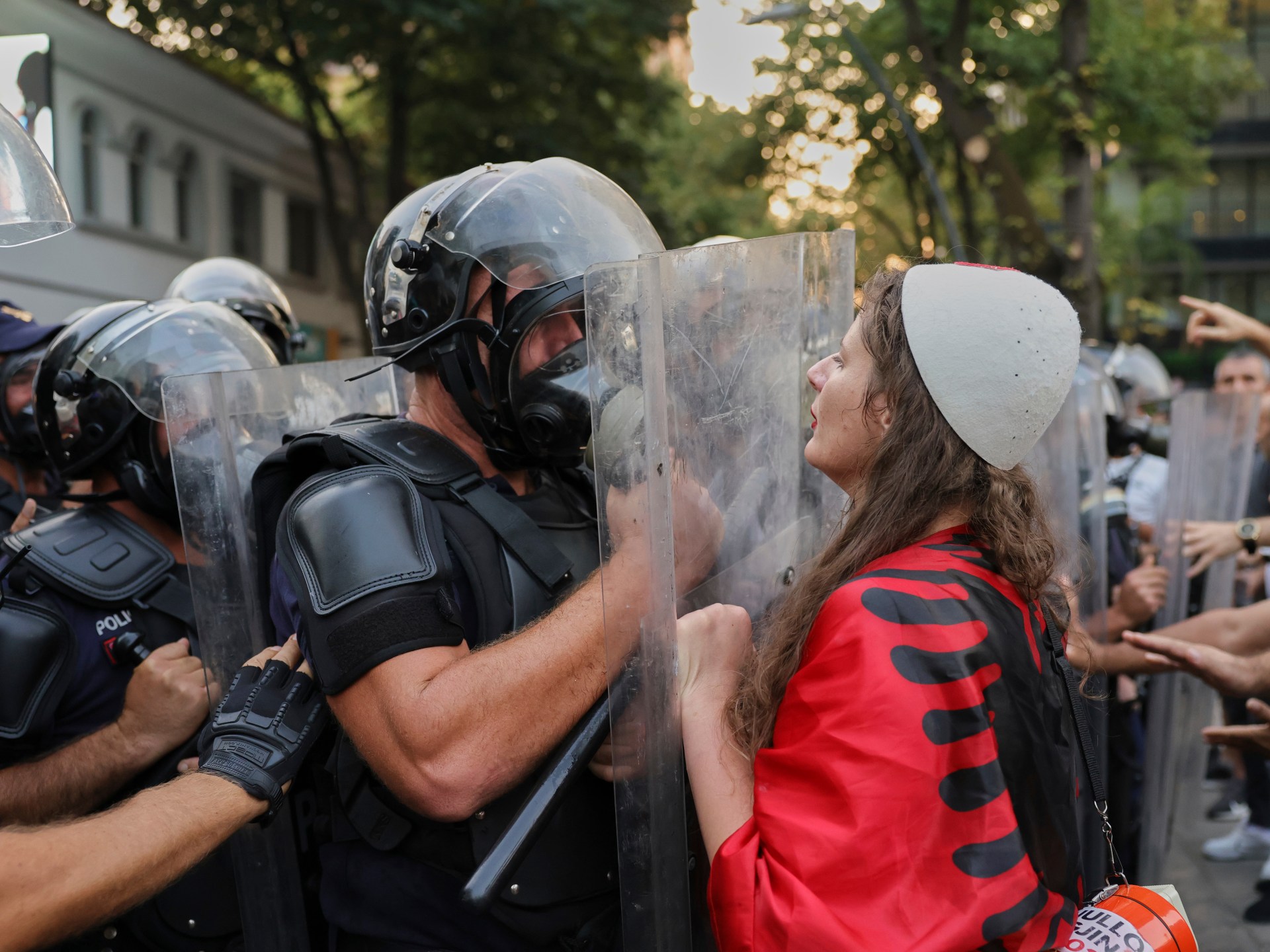
For more than 100 consecutive days, Albanians have taken to the streets of Tirana to oppose a luxury coastal development linked to Jared Kushner and Ivanka Trump. On Tuesday, as parliament reconvened following its summer recess, those demonstrations turned confrontational. Police deployed in riot gear blocked protesters from reaching the parliament building, while crowds pelted officers with eggs and tomatoes. Cars carrying lawmakers were struck with plastic bottles before police intervened to clear a path.
Several protesters were detained. Whether formal arrests followed remained unclear.
What Is Being Built — and Where
The project at the centre of the unrest is a vast luxury hotel complex planned for a coastal nature reserve along Albania’s Adriatic shoreline. Scientists and environmental activists have documented what they describe as irreversible ecological harm already caused by preliminary construction work, including the destruction of nesting sites belonging to loggerhead turtles — a species classified as threatened with extinction — and migratory bird populations.
Critics also warn that the development would effectively curtail public access to a stretch of coastline that has historically remained open.
The Albanian government has been conspicuously vague about the precise terms of Kushner’s involvement. Ivanka Trump, however, has spoken publicly about the venture, describing it as an “incredible project.” That characterisation sits uneasily against the ecological record already accumulating on the ground.
Key Findings at a Glance
The following points summarise what is documented and what remains contested:
The Political Escalation
What began as a focused environmental campaign has metastasised into something the Socialist Party cannot easily contain. Rama’s government has held power for over a decade. The protests now constitute a direct referendum on that tenure — not merely on a hotel.
The timing of Tuesday’s clashes, coinciding with parliament’s return from recess, was deliberate. Demonstrators understand the symbolic weight of the legislature reconvening while their demands go unanswered. The government’s response — riot gear, vehicle escorts for lawmakers, detentions — has done little to defuse the confrontation and may be hardening it.
An Accountability Gap With International Dimensions
The involvement of figures from the immediate family of a sitting United States president in a development that environmental scientists say is causing measurable ecological destruction raises questions that extend beyond Albanian domestic politics. International environmental frameworks, including obligations under the Convention on International Trade in Endangered Species relevant to loggerhead turtle protection, provide a legal context against which the project’s impact can and should be assessed.
Albania’s government has not explained how the project cleared — or bypassed — the environmental review processes that such a protected coastal zone would ordinarily require. That silence is itself a finding.
The flamingos on the protesters’ signs are not merely decorative. They mark a site of documented harm, a governance failure, and a test of whether accountability travels upward — to the powerful — or stops, as it so often does, at the cordon line.