
Russia’s Missile Campaign Intensifies as Ukraine Confronts a Compounding Crisis on Two Fronts
A War Fought on Two Fronts
Missiles. Drones. And a funding shortfall measured in billions. Ukraine is absorbing pressure from two directions simultaneously, and the gap between what it needs and what it receives continues to widen.
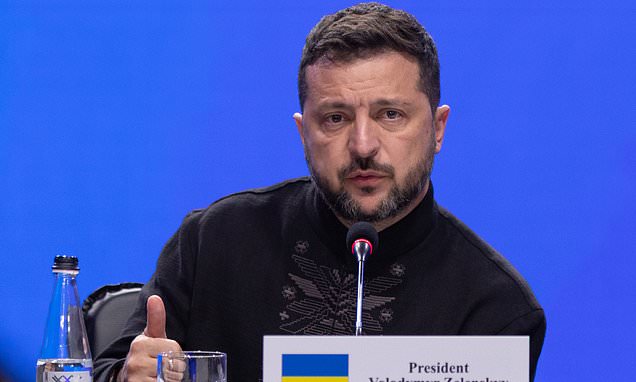
Ukrainian President Volodymyr Zelensky publicly accused Russian President Vladimir Putin of conducting what he called “senseless terror” following a large-scale coordinated assault involving ballistic missiles, cruise missiles, anti-ship missiles, and Shahed-type drones. The attack struck civilian infrastructure across multiple Ukrainian cities, compounding a military and financial crisis now entering its fifth year since Russia’s full-scale invasion began in February 2022.
The Anatomy of the Strike
The scale was significant. Ukrainian air defence forces intercepted 175 aerial targets during the assault — a figure Zelensky himself cited — but he acknowledged that interception was incomplete.
“Unfortunately, not all of them” were stopped, Zelensky stated on social media. The consequences were immediate and documented.
Russia’s defence ministry characterised the strikes as targeting Ukraine’s military-industrial complex and logistics infrastructure. That framing is a standard feature of Russian official communication and does not align with documented impact sites. Under the laws of armed conflict, the distinction between military objectives and civilian objects is not rhetorical — it is legally binding.
The Funding Crisis: A Structural Problem
The aerial campaign unfolds against a backdrop of acute financial strain. Ukraine faces a multi-billion pound funding shortfall that threatens both its military capacity and its ability to maintain basic state functions. The precise figure remains contested across reporting, but the structural reality is not: donor fatigue, political instability in key Western legislatures, and unresolved debates over the terms of future support have created a compounding vulnerability.
European officials have been deliberating their collective response. The language emanating from Brussels and various European capitals describes Moscow’s campaign as one designed not merely to inflict military damage but to erode the political will of Ukraine’s Western partners. Whether that framing translates into sustained, concrete financial commitment remains an open question — and an urgent one.
Key Takeaways
The situation as it currently stands can be reduced to a small number of documented facts and unresolved uncertainties.
What is not in dispute is the trajectory. The air war has intensified as the conflict enters its fifth year. Civilian populations bear the cost of that intensification in the most direct terms. The funding debate, meanwhile, takes place at a remove that its consequences do not justify.