
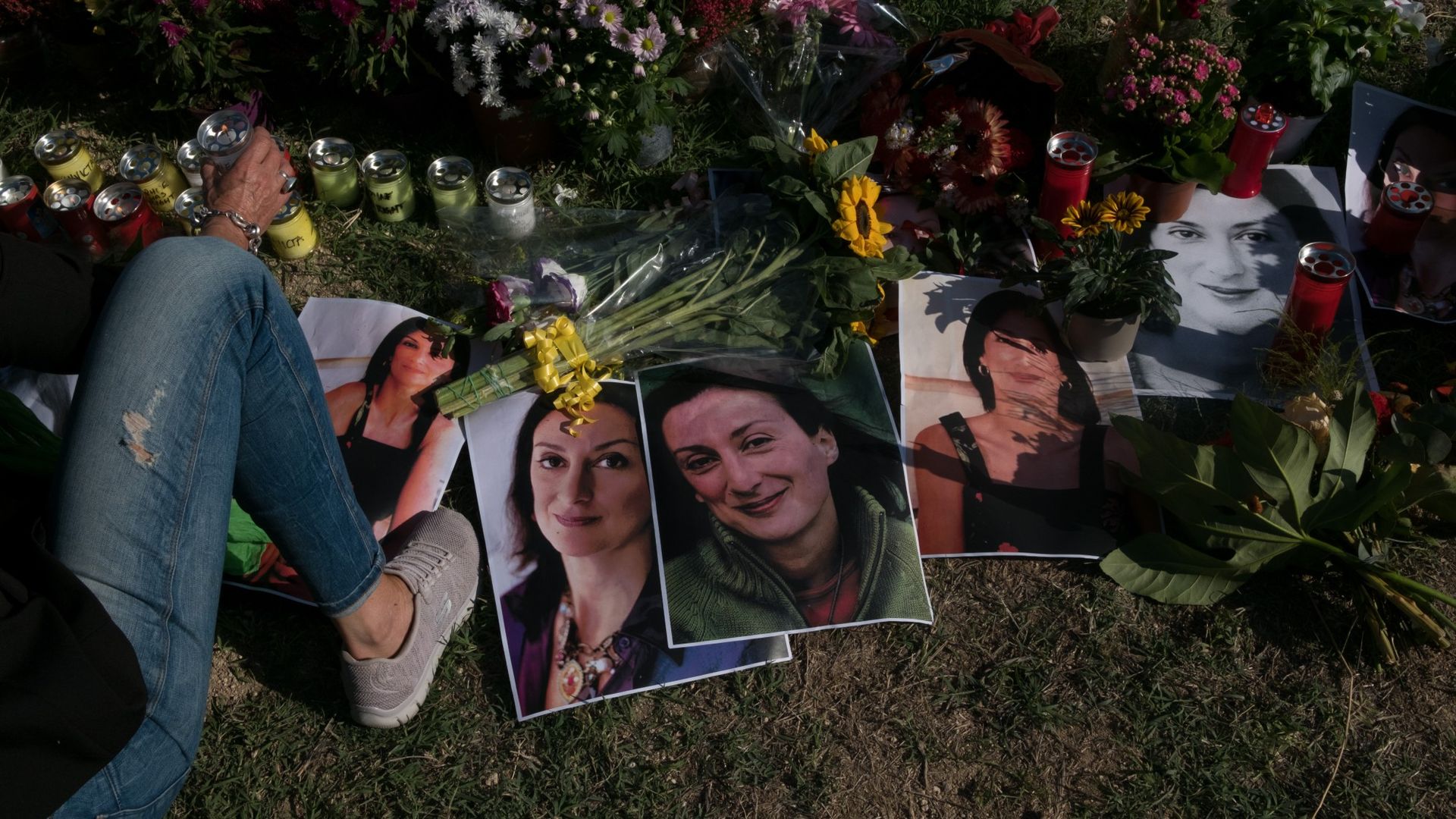
A Maltese jury acquitted millionaire businessman Yorgen Fenech last week of conspiracy to murder investigative journalist Daphne Caruana Galizia, who was killed by a car bomb near her home in October 2016 — a verdict that has sent shockwaves through Malta, the European Union, and international press-freedom organisations. The eight-to-one majority decision came at the close of a two-month trial, nine years after the assassination, and despite Fenech’s own admission during police interrogation that he had transferred €50,000 to the middleman who recruited the killers.
The three men who physically carried out the bombing have long since been convicted and imprisoned. Fenech, a close associate of Keith Schembri — then chief of staff to Prime Minister Joseph Muscat — had stood as the prosecution’s central figure in a case that many observers considered the clearest available path to accountability for those who commissioned the killing. That path has now closed.
The acquittal has drawn immediate and pointed criticism from media organisations and legal analysts across Europe. The Observer described the verdict as a “hammer blow to justice, press freedom and the EU,” noting that Fenech’s confession was never seriously rebutted during proceedings. The rule of law in the EU’s smallest member state, the newspaper concluded, is “hanging by a thread.”
Speculation about the jury’s reasoning has proliferated rapidly in Malta. Malta Today reported that questions are circulating as to whether the jurors were motivated by fear, or alternatively by a principled distrust of an investigation widely criticised for its leaks, missing evidence, and procedural delays — including what the defence characterised as a failure to properly examine Schembri as an alternative suspect. These questions remain unanswered and, absent any obligation on jurors to explain their reasoning, may never be resolved.
Structural Corruption and Unrealised Reform
The murder did not occur in a vacuum. Caruana Galizia had spent years documenting what she described as a “suffocating intimacy” between big business and political power in Malta — a relationship that deepened sharply after the Labour Party came to power in 2013. Between that year and 2024, Malta’s stock of foreign direct investment expanded from €9.6 billion to €460 billion, and GDP grew by approximately 70%, driven by an aggressive courting of international capital with minimal regulatory friction. At the time of her death, she was investigating alleged corruption at a power plant operated by Electrogas, a company whose shareholders included the Azerbaijani state energy firm Socar and Yorgen Fenech himself.
A public inquiry commissioned by the Labour government in 2021 concluded that the Maltese state had fostered “a climate of impunity, generated from the highest levels at the core of the administration” — conditions in which the journalist’s murder became possible.
None of these measures have been enacted. The current Labour government has offered explanations for its inaction without implementing the reforms, and no legislative timeline has been announced. The gap between the inquiry’s findings and the government’s response represents, in itself, a form of institutional accountability failure that Caruana Galizia’s own reporting would likely have scrutinised.
Joseph Muscat, whose administration oversaw the period in which the murder was planned and executed, resigned in 2020 amid the political turmoil that followed the assassination. He has not faced criminal conviction. Schembri, whom the defence in the Fenech trial named as the potential true architect of the killing, has also not been charged in connection with the murder. The acquittal of Fenech leaves no remaining defendant before the courts on the question of who commissioned the crime.
What endures, nine years on, is the body of work Caruana Galizia produced — and the structural conditions she identified. The public inquiry confirmed her central argument. The government has acknowledged the inquiry’s conclusions. The reforms it demanded remain unimplemented. The man the prosecution identified as the murder’s financier has been acquitted. In Malta, the record of accountability is, at this point, a record of its absence.