
A U.S. Immigration and Customs Enforcement officer shot and wounded a Venezuelan man working as a food delivery driver in Austin, Texas, on Sunday afternoon, triggering immediate protests and demands for an independent inquiry into what is now the second fatal or near-fatal ICE shooting in the state in under three months.
The victim, Wilber Rafael Garces Perez, 28, was struck once in the torso while seated inside his car. He was transported to Dell Seton Medical Center in Austin, where he was listed in serious but stable condition. The Department of Homeland Security, which oversees ICE, confirmed he was “in federal custody pending removal.” More than a day after the shooting, Perez reported he had not received adequate treatment for the gunshot wound or been given pain medication — a claim that, if accurate, raises questions about the standard of medical care owed to individuals in federal detention.
His attorney, Kate Lincoln-Goldfinch, identified him publicly and provided key context that challenges the official account. Perez was working a DoorDash shift at the time of the shooting. He is married to a woman who holds legal status in the United States. His first act after being shot was to call his wife. He was, by his attorney’s account, yelling in pain inside his vehicle.
The sequence of events leading to the shooting remains disputed. According to Sheridan Nolen, a spokesperson for the Texas Department of Public Safety, state troopers received a call at approximately 12:50 p.m. from ICE officials requesting assistance in pursuing a blue Toyota Corolla. The ICE agent discharged his weapon before troopers arrived on scene; upon arrival, DPS officers assisted in providing medical treatment to Perez. Austin Police Chief Lisa Davis suggested there may have been a foot chase prior to the shooting, while explicitly cautioning that the information was preliminary. Lincoln-Goldfinch flatly rejected that characterisation, telling CNN: “There was not a foot chase as they said that there was.”
Access was denied. Perez’s family and legal representative were turned away at the hospital. Lincoln-Goldfinch stated: “We have been informed that if he’s in ICE custody, they will decline to confirm that he’s here. And no one has updated her about his status.” The denial of access to legal counsel and next of kin by federal authorities warrants scrutiny under both domestic constitutional standards and applicable international human rights norms governing detention.
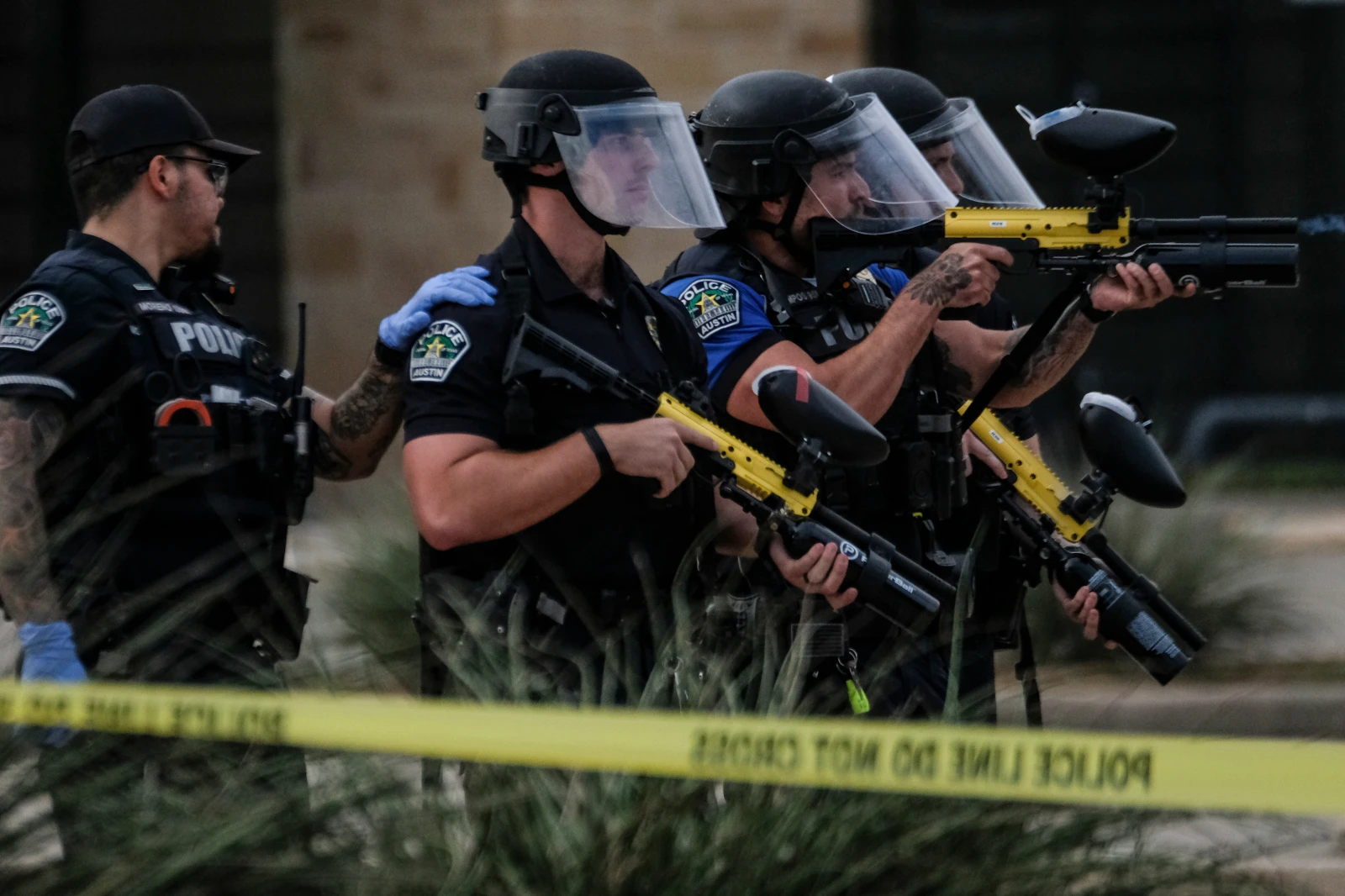
The shooting drew dozens of demonstrators to the North Austin scene, who remained into the evening carrying signs and flags. Austin Mayor Kirk Watson described himself as angry and upset, but said he was “not surprised at all,” citing comparable incidents in Chicago and Minneapolis during large-scale immigration enforcement operations. His framing — anger without surprise — speaks to a normalisation of enforcement violence that itself demands examination.
U.S. Representative Greg Casar, a Democrat representing part of Austin, called for an independent investigation. “It is appropriate for this community to ask for independence, to ask for transparency, and to ask for accountability,” he said. “This is a pattern. It’s a disturbing pattern, and it’s got to stop.” Homeland Security Investigations, with FBI assistance, is conducting the inquiry into the officer-involved shooting — an arrangement that raises legitimate questions about institutional independence, given that both agencies fall within the same federal enforcement apparatus.
The shooting is not an isolated incident. It follows the fatal shooting of Lorenzo Salgado Araujo by an ICE officer in Houston more than two months ago. The Texas Department of Public Safety has operated in close coordination with ICE since President Trump took office, a partnership that has expanded the reach and tempo of federal immigration enforcement across the state. The accumulation of incidents — one fatal, one near-fatal — now forms a documented pattern of lethal force used during immigration enforcement operations in Texas alone.