
What happened at Tumbler Ridge, and why is a government suing a tech company?
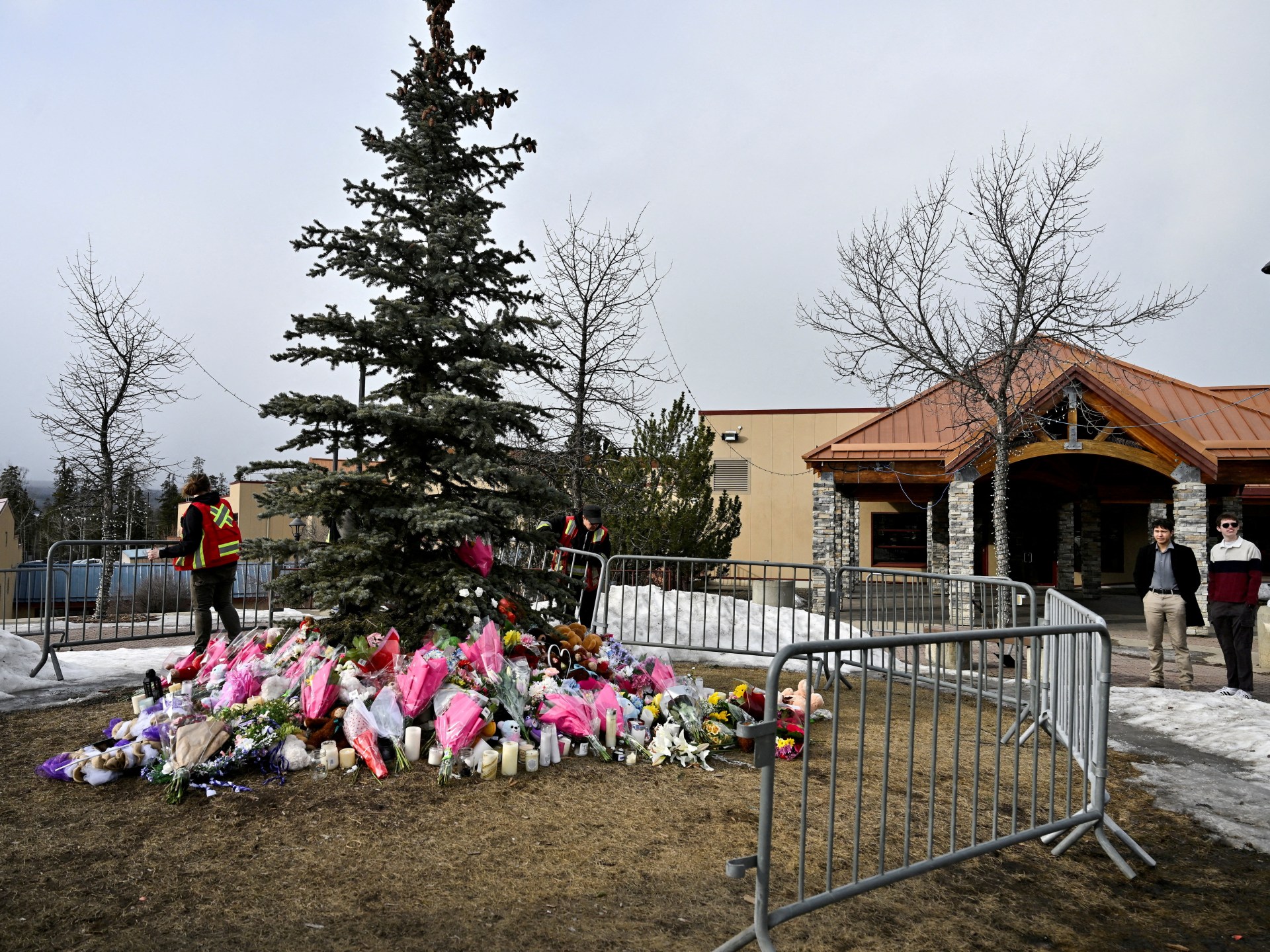
On 10 February 2026, an 18-year-old named Jesse Van Rootselaar killed eight people in and around a secondary school in Tumbler Ridge, a small town in northern British Columbia. She first shot her mother and half-brother at their home before travelling to the school, where she killed five children and one educator, then died by suicide at the scene. Canadian officials have described the attack as one of the country’s worst mass shootings. In the weeks that followed, it emerged that Van Rootselaar had engaged in conversations about gun violence on OpenAI’s ChatGPT platform — and that the company’s own safety team had flagged those conversations before the attack took place.
That disclosure sits at the heart of a lawsuit filed on Monday in federal court in San Francisco by the Canadian province of British Columbia against OpenAI and its chief executive, Sam Altman. The province’s central allegation is straightforward: ChatGPT’s internal systems identified credible warning signs, OpenAI did not alert law enforcement, and eight people died. The legal action seeks both financial compensation — to cover emergency response costs and long-term community recovery — and a court order compelling the company to fundamentally redesign how it detects and responds to violent threats made through its platform.
What did OpenAI know, and when did it know it?
According to the lawsuit, ChatGPT’s safety team had flagged Van Rootselaar’s conversations prior to the attack. The precise content of those conversations has not been fully disclosed in public filings, but the province’s legal complaint asserts that the material was sufficiently alarming to trigger internal review. The core question the litigation poses is not whether OpenAI had imperfect foresight — it is whether the company, having been alerted by its own systems, bore a legal and moral duty to contact authorities. The lawsuit argues it did, and that it failed to act.
OpenAI’s chief executive acknowledged as much, at least in part. In April, Altman published an open letter to the Tumbler Ridge community expressing that he was “deeply sorry” the company had not contacted law enforcement. He outlined a series of promised reforms. The British Columbia government’s lawsuit, however, contends that those commitments were never implemented — and that despite efforts by Attorney General Niki Sharma to engage directly with the company, no substantive changes followed. The gap between Altman’s public apology and the company’s subsequent inaction forms a significant strand of the province’s argument.
What is the province actually demanding?
British Columbia is pursuing two distinct categories of relief through this litigation. First, it is seeking monetary damages to cover both the immediate costs of emergency response to the February attack and the longer-term expenditures associated with community recovery — costs that, the province argues, flowed directly from OpenAI’s failure to act on information it possessed. Second, and perhaps more consequentially, the lawsuit asks the court to issue an injunction requiring OpenAI to overhaul its safety architecture: specifically, the mechanisms by which the platform identifies user conversations that contain credible threats of violence and determines when to escalate those threats to law enforcement.
Attorney General Sharma framed the action in terms that extend well beyond the immediate case. “This action is an important step toward seeking justice for the families, students, educators and community members whose lives were forever changed,” she said in a written statement. She also pressed for broader structural change, arguing that the case “highlights the urgent need for strong national safeguards for artificial intelligence technologies and online platforms.” The lawsuit thus operates simultaneously as a specific accountability claim and as a challenge to the regulatory vacuum in which large AI systems currently operate.
How does this fit into the wider legal landscape?
British Columbia’s suit is not the first legal action to emerge from the Tumbler Ridge attack, but it is the most institutionally significant. More than thirty separate lawsuits have already been filed in the same California federal court by victims’ families, survivors, and others affected by the shooting. Those cases, brought by private plaintiffs, centre on allegations of negligence — the argument that OpenAI owed a duty of care to foreseeable victims and breached it by failing to intervene. The province’s action layers a governmental dimension onto that existing body of litigation, raising questions about state standing, public cost recovery, and the scope of corporate liability when a private platform becomes aware of an imminent threat to public safety.
The choice of a California federal court is legally significant. OpenAI is incorporated in California, and the jurisdiction allows plaintiffs to invoke both federal and state law. It also places the litigation within a legal system that has, in recent years, grappled repeatedly with questions of platform liability — though primarily under statutes such as Section 230 of the Communications Decency Act, which historically shielded online platforms from responsibility for third-party content. Whether that protection extends to a company’s failure to act on its own internally generated safety alerts — as distinct from user-generated content — is a question that this litigation may force courts to address with new precision.
What does this case reveal about AI accountability more broadly?
The Tumbler Ridge litigation exposes a structural tension that regulators in multiple jurisdictions have so far failed to resolve. AI systems are now sophisticated enough to detect patterns that may indicate imminent violence; OpenAI’s own safety infrastructure demonstrated this. Yet no binding legal framework currently specifies what a company must do when that detection occurs. The obligation to report credible threats to law enforcement — well-established in contexts such as mental health care and certain financial services — has not been systematically extended to AI platforms, despite the scale at which those platforms now operate and the intimacy of the conversations they host.
OpenAI’s conduct in the months following the attack illustrates the problem with relying on voluntary commitments. Altman’s April letter was carefully worded and publicly visible; the reforms it promised were not, according to the province’s lawsuit, delivered. That pattern — public contrition without structural change — is familiar from earlier episodes of corporate accountability failure in other sectors. Whether litigation, legislation, or some combination of the two will ultimately close the gap remains genuinely uncertain. What the British Columbia lawsuit makes unmistakably clear is that governments are no longer prepared to treat that gap as someone else’s problem.