
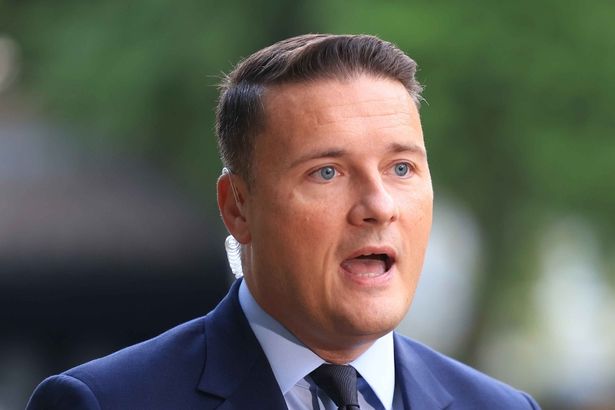
A false audio clip circulated widely across British social media in the weeks before the 2024 general election. In it, a voice unmistakably resembling Wes Streeting — then a senior opposition figure, now the UK’s Defence Secretary — could be heard using crude language about Gaza. The clip was fabricated. It spread anyway. For Streeting, that episode is no longer merely an anecdote about personal embarrassment; it has become the clearest illustration he can offer of why the British government believes it can no longer treat foreign information warfare as a background nuisance.
The announcement came from Prime Minister Keir Starmer on Tuesday, delivered from the floor of the United Nations General Assembly in New York. Britain, he said, would establish a dedicated unit to counter what he described as an “industrial-scale assault” on the country by Russia and other hostile states — an assault conducted through coordinated networks of bots, fabricated news articles, counterfeit websites, and increasingly sophisticated deepfake audio and video. The Kremlin, Starmer alleged, spends approximately £1.3 billion annually on these operations. The figure, if accurate, represents a state investment in deception that dwarfs most national public broadcasters.
The Architecture of Denial
The announcement did not arrive without friction. Nigel Farage, leader of Reform UK, moved quickly to characterise the new unit as a vehicle for suppressing domestic political dissent — a framing that resonated with segments of the British right already suspicious of government involvement in content moderation. Streeting’s response was direct and deliberately unambiguous. “We’re not interested in policing domestic political dissent,” he told broadcasters on Wednesday. “One of the great things about Britain, and one of the things that I have a responsibility to defend, is the freedom and democracy that we all enjoy.” He went further, explicitly listing the freedoms he said the unit would protect rather than curtail — the freedom to disagree, to challenge government policy, to criticise robustly, and ultimately to vote a government out of office.
Whether that reassurance will satisfy critics depends heavily on institutional design — specifically, on what legal authorities the new unit will hold, what oversight mechanisms will govern it, and whether its mandate will be confined to foreign-origin operations or extend, even inadvertently, to domestic political speech. None of those details have yet been made public. The government has announced an intent and a rationale; the architecture remains unspecified, which is precisely where accountability gaps tend to form.
Streeting’s justification for the unit’s timing rested on a claim of qualitative change. Asked why such a body was necessary now rather than at any earlier point in the post-Cold War era, he argued that the threats materialise “of a different order of magnitude than the historic challenges of propaganda that have existed over many decades and many conflicts.” The distinction he drew was technological. Artificial intelligence has compressed the cost and expanded the scale of fabrication to a degree that makes previous disinformation campaigns — however damaging — look artisanal by comparison. “Come the next general election,” he warned, “it will be hard to discern the real versions of politicians and BBC presenters from the artificial versions.”
War Crimes and the Security Council’s Permanent Contradiction
Starmer’s UN address moved between the information warfare announcement and a sharper condemnation of Russian military conduct in Ukraine. He accused Moscow of deliberate attacks on civilian infrastructure — hospitals, energy grids, water systems — and invoked international humanitarian law with notable directness. “Everyone in this room knows that strikes on civilian infrastructure are explicitly forbidden by international law,” he said, addressing an assembly that includes Russia as a permanent member of the Security Council. The statement carried an embedded irony that Starmer made explicit: the United Kingdom was, in the same breath, announcing funding to help Ukraine survive attacks that Britain “reliably expects to be perpetrated — yet again” by a state that holds a veto over Security Council resolutions condemning those very attacks.
That structural contradiction — a body constituted to enforce international law, paralysed by the veto power of a state accused of violating it — sits at the centre of the current international order’s most visible failure. Starmer did not propose a remedy for that structural problem. He called on Russia to accept a ceasefire and come to the negotiating table, and pledged British support for Ukraine “stronger than ever, for as long as it takes.” The language was resolute. It was also, in the context of the Security Council’s design, somewhat beside the point.
Parliamentary Backing, and the Questions It Does Not Answer
Dame Emily Thornberry, who chairs the House of Commons Foreign Affairs Select Committee, welcomed the announcement with unconcealed enthusiasm. Her committee had previously called for precisely such a unit, and she said she was “absolutely delighted” by the government’s decision to act. The committee had, she noted, been “extremely worried about what seemed to be a complacency of the British establishment at the disinformation being promoted from abroad, particularly from Russia.” That complacency — if it existed — was not merely a matter of inattention. It reflected, in part, a political reluctance to establish state-level counter-disinformation infrastructure that could too easily be turned toward domestic ends.
That reluctance has not disappeared. It has simply been overridden by what the government now characterises as an escalating and technologically transformed threat environment. The question is not whether foreign disinformation campaigns pose a genuine danger to democratic processes — the evidence that they do is substantial and well-documented across multiple countries and electoral cycles. The question is whether the institutional response the UK government is building will be designed with sufficient transparency, independence, and legal constraint to prevent the cure from becoming a version of the disease it claims to treat. On that question, the government has offered reassurances. It has not yet offered architecture. And in accountability journalism, as in law, reassurances without structure are the beginning of the problem, not the end of it.