
The United States is simultaneously threatening Cuba with military intervention, predicting a diplomatic deal, and maintaining an oil blockade that Cuban officials say is driving the country toward humanitarian collapse. The contradiction is not accidental — it is the architecture of coercion.
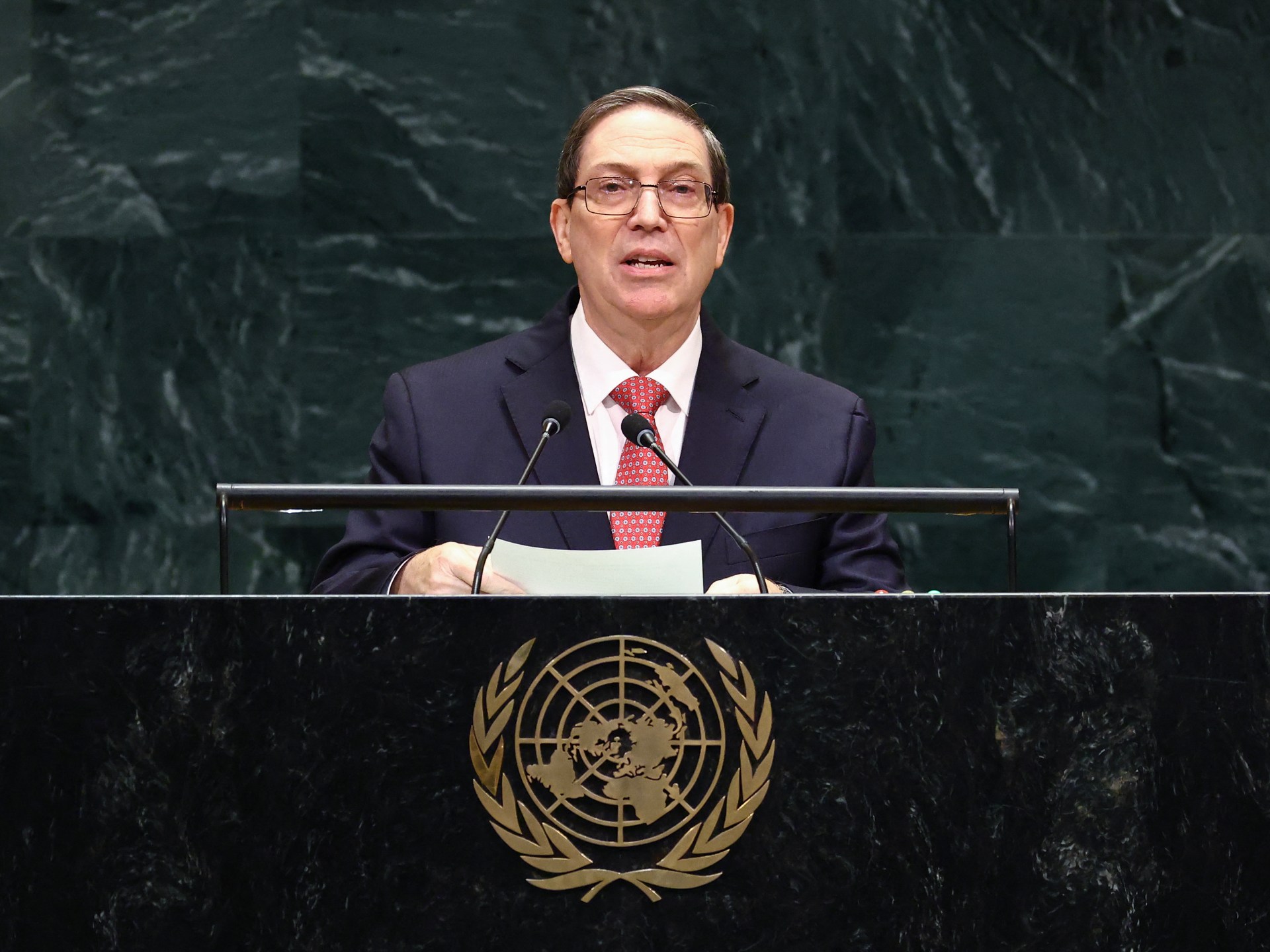
Speaking at the United Nations General Assembly on Saturday, Cuban Foreign Minister Bruno Rodriguez delivered a direct indictment of Washington’s posture toward Havana, describing the US oil blockade as an “act of collective punishment” designed to manufacture a humanitarian crisis. His remarks came only days after President Donald Trump told the General Assembly that “freedom will be coming” to Cuba — prompting the Cuban delegation to walk out — and hours after Trump told reporters at the White House that “Cuba and us will make a deal” and that he did not believe military force would be necessary. “Cuba is failing very badly,” Trump said. “We want to help Cuba.” The claim that a blockade constitutes help deserves scrutiny.
Rodriguez, for his part, did not close the door on negotiations. Havana has “always been and will always be prepared for dialogue,” he said, while insisting that any talks must rest on “sovereign equality” and proceed “without preconditions.” The phrase is legally precise: it invokes the foundational norm of the United Nations Charter, which prohibits coercive interference in the internal affairs of states. The Trump administration has stated explicitly that it seeks a change in Cuba’s government — a demand that, if treated as a precondition, would render any dialogue structurally impossible before it begins.
A Blockade Layered onto an Embargo
The US economic embargo on Cuba has been in place for more than sixty years, making it one of the longest-running unilateral economic sanctions regimes in modern history. Since 1992, the UN General Assembly has voted annually — and overwhelmingly — to call for its end. That vote has never translated into policy change in Washington. What changed in 2025 was the addition of a targeted oil blockade, imposed by the Trump administration earlier this year, which Cuban officials say has compounded fuel shortages, extended nationwide blackouts, and disrupted access to food and other basic goods. The population absorbing these consequences is not the Cuban government — it is the Cuban people.
The international response has been notable. Brazil, Mexico, and Pakistan have each called for an end to both the embargo and the oil blockade, framing their opposition in terms of the illegitimacy of unilateral economic coercion. Their criticism reflects a broader consensus visible in the annual UN resolution, one that Washington has consistently disregarded. The administration’s framing — that it acts out of concern for Cubans — sits uncomfortably alongside a policy instrument whose explicit purpose, as Rodriguez noted, is to intensify economic pressure on the civilian population until political conditions change.
Rodriguez also addressed the prospect of military action directly, calling it a path toward “huge destruction” and expressing the hope that “this never happens.” The statement was measured, but its weight should not be understated: a foreign minister is publicly calculating, before the international community, the odds of an armed attack on his country by the world’s most powerful military. That this has become a routine diplomatic calculation for Havana is itself a measure of the asymmetry at work.
What emerges from this week’s exchanges at the General Assembly is not a picture of two governments edging toward resolution, but of a coercive framework dressed in the language of concern. The United States holds the instruments of pressure — the embargo, the oil blockade, the implicit military threat — and offers dialogue on terms that preclude it. Cuba signals openness to negotiation while absorbing consequences that fall, as they always do in such arrangements, most heavily on those with the least power to influence either government’s decisions. Whether Trump’s prediction of a deal reflects genuine intent or tactical ambiguity, the structure of collective punishment remains in place.