
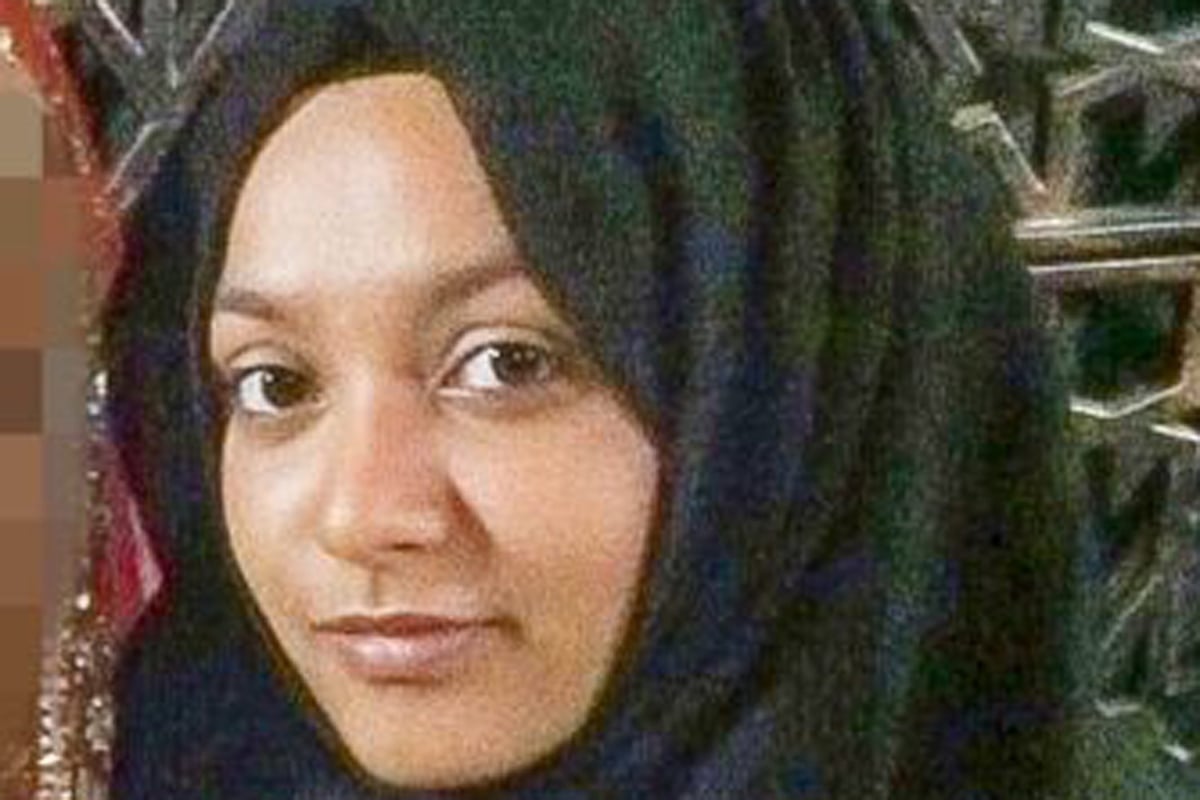
In December 2014, a teenage girl slipped out of east London and crossed into territory held by the Islamic State. She was among the first British schoolgirls to do so, and her departure would reverberate through the lives of several classmates at Bethnal Green Academy in Tower Hamlets. Nearly a decade later, according to reports published by The Mail on Sunday, Sharmeena Begum — now 27 — has been located and arrested in Syria, her existence confirmed not by a family reunion or a diplomatic intervention, but by the digital trail left behind by a terrorist attack in Berlin.
The sequence of events that reportedly led to her arrest began on a summer day in July 2025, when a man named Abdul Ballout drove a van into crowds attending Berlin Pride before attacking bystanders with a machete. One woman was killed and dozens more were injured. Ballout was subsequently shot dead by police following a manhunt. What emerged in the investigation’s aftermath was a thread of communications linking him to Sharmeena Begum: according to German authorities, Ballout had sent her a video pledging allegiance to ISIS before launching his assault.
German investigators passed Begum’s phone number to a Western intelligence agency, which reportedly traced her to a hideout in Syria, leading to her detention. The precise nature of that detention — by whom, under what legal framework, and subject to what conditions — remains unclear from available reporting. The evidentiary basis for the communications link has not been independently verified.
Sharmeena Begum’s significance in the broader story of British ISIS recruitment is difficult to overstate. She left the United Kingdom months before three of her Bethnal Green Academy classmates — Shamima Begum, Amira Abase, and Kadiza Sultana — made the same journey in February 2015. Investigators and journalists have long identified Sharmeena Begum as a key figure in the radicalisation of those girls, a conduit between the world they knew in Tower Hamlets and the ideological infrastructure of the so-called caliphate. Her early departure, and the influence she apparently exercised over her peers, placed her at the origin of one of the most publicly scrutinised cases of ISIS recruitment in British history.
While Shamima Begum has, since the territorial collapse of ISIS, publicly sought to distance herself from the group and has pursued legal challenges against the removal of her British citizenship, Sharmeena Begum was reported to have maintained her ideological allegiance. Earlier reports suggested she had criticised her former classmate’s public recantations and continued to express sympathy for ISIS years after its defeat on the ground. Whether those reports accurately characterise her position, or the full complexity of her circumstances inside the caliphate and its aftermath, cannot be confirmed from available evidence.
Her father, Mohammed Nizam Uddin, told The Mail on Sunday that he had believed his daughter to be dead, killed somewhere in Syria, and that he had not been informed of her reported arrest. His account is a reminder that the consequences of this history extend beyond the women themselves, into families left in a state of suspended grief, denied even the certainty of loss.
Following the territorial defeat of ISIS, thousands of women and children associated with the group were interned in camps administered by Kurdish authorities in northern Syria — facilities operating under enormous strain, with limited legal oversight and contested jurisdictional status under international law. Sharmeena Begum is reported to have escaped from one such camp. Subsequent investigations allegedly found that she had raised funds online, with investigators concluding the money was intended to support ISIS-linked women and children still held in those facilities.
She is now expected to face terrorism-related proceedings in Syria. Crucially, reports indicate she was stripped of her British citizenship several years ago — a measure the UK government has applied to a significant number of individuals who joined ISIS — which means London carries no formal consular obligation toward her. The legal and moral questions that citizenship deprivation raises under international human rights law remain fiercely contested; the practice has been challenged before British courts on grounds ranging from statelessness to due process, with outcomes that have varied depending on individual circumstances.
The reported arrest closes, at least geographically, the file on all four Bethnal Green Academy girls. Kadiza Sultana and Amira Abase are believed to have died in Syria. Shamima Begum remains in detention and continues to contest the removal of her citizenship through British courts. And Sharmeena Begum, long rumoured dead, has now been confirmed alive — located not through diplomatic channels or family contact, but through the forensic reconstruction of a terrorist’s final communications before an attack on a crowd celebrating who they were.
That detail carries its own weight. A woman whose trajectory began in a London classroom and passed through the infrastructure of a genocidal proto-state is now reportedly linked to the incitement of violence against a community defined by its refusal to be erased. The arc is not redemptive. It is a record of choices, networks, and institutional failures — in safeguarding, in counter-extremism, in the governance of post-conflict detention — that no single arrest resolves.