
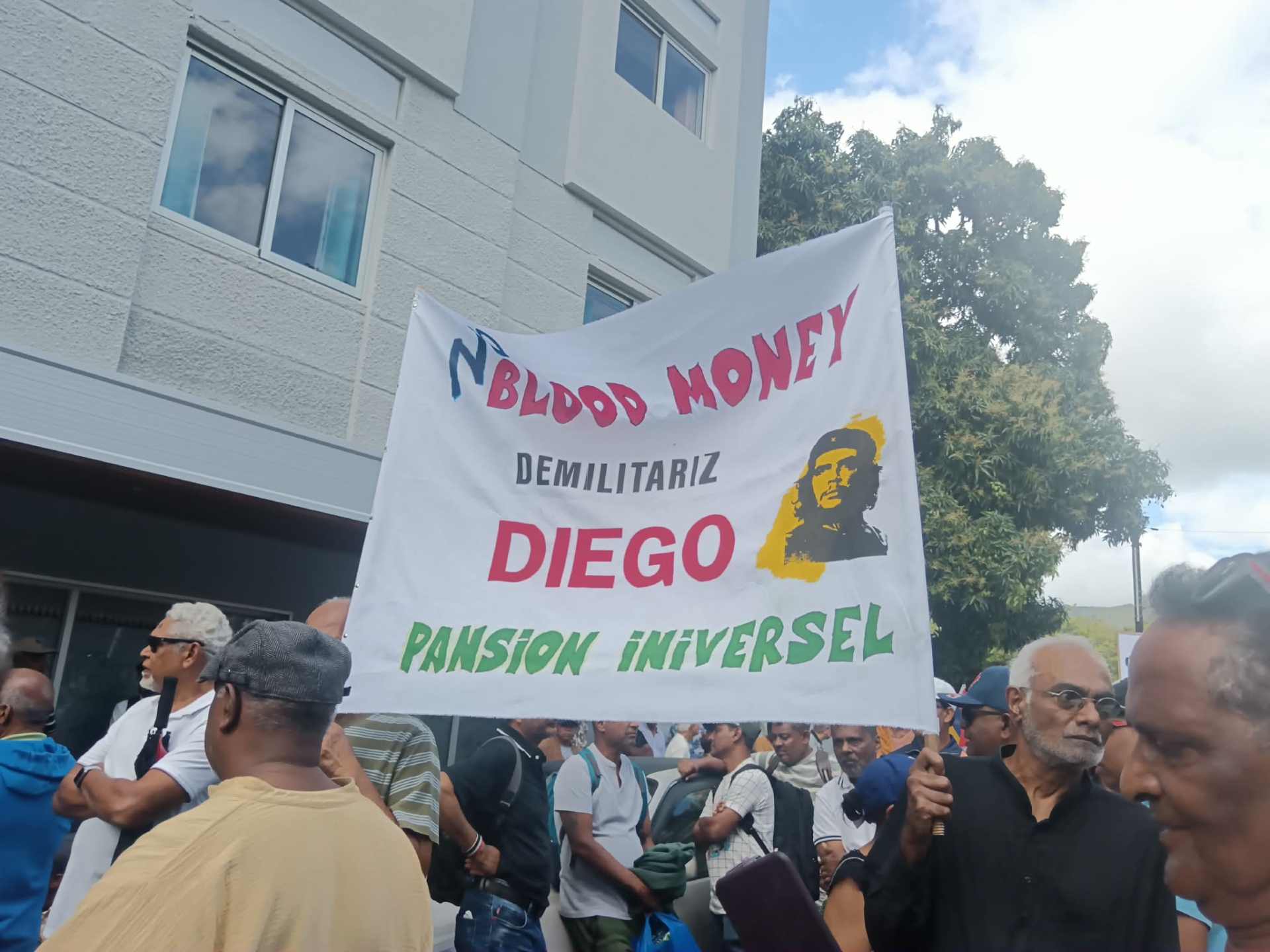
In 1965, three years before Mauritius achieved independence from Britain, London detached the Chagos archipelago from the territory it was about to relinquish. The separation was administrative in form, but its consequences were to prove catastrophic in human terms. Britain needed the islands — or rather, it needed Diego Garcia, the largest of them — as the site of a military base to be shared with the United States. What stood in the way were the people who lived there.
Between 1968 and 1973, British authorities removed an estimated 1,400 to 1,700 Chagossians from their homes across the Indian Ocean archipelago. Most were resettled in Mauritius or the Seychelles; some eventually made their way to the United Kingdom. The right to return was not offered. It was, in fact, made illegal: British regulations prohibited anyone from remaining on or travelling to the islands without explicit government permission. A community was erased, quietly, from a place that the world had barely registered.
Decades of legal struggle followed. In 2019, the International Court of Justice issued an advisory opinion concluding that the separation of Chagos from Mauritius had violated international law and that the United Kingdom was obliged to bring its administration of the archipelago to an end as rapidly as possible. Two years later, the International Tribunal for the Law of the Sea reinforced that position. The legal architecture, built slowly through international institutions, pointed unmistakably toward Mauritian sovereignty and Chagossian return.
By May 2025, that architecture appeared to have produced a concrete result. On May 22, Britain and Mauritius signed a treaty under which Mauritius would exercise sovereignty over the Chagos archipelago, while the United Kingdom would retain operational rights over the Diego Garcia military base for an initial period of ninety-nine years. Crucially for the displaced community, the agreement made provision for the resettlement of Chagossians on islands other than Diego Garcia. For Olivier Bancoult, who leads the Chagos Refugees Group, and for the elderly exiles he represents, the treaty seemed to mark the beginning of a long-deferred return.
The treaty has not entered into force. In January 2025, before the agreement was even finalised, US President Donald Trump had publicly denounced earlier drafts as an “act of great stupidity,” questioning whether the arrangement adequately secured the Diego Garcia base, which Washington regards as indispensable to its military posture across the Indo-Pacific and beyond. Trump’s intervention reframed the bilateral negotiation as something more complicated — a trilateral problem in which American strategic interests, never formally part of the talks, had become the dominant constraint.
By April, the British government informed Parliament that the legislation required to implement the treaty could not complete its passage during the 2024–26 parliamentary session. The session closed on April 29. The bill went no further. What had been presented as a historic resolution was now suspended in a legal and political limbo, with no clear timetable for resolution.
The diplomatic calendar began to move again in September. On September 21, British Prime Minister Andy Burnham stated publicly that the United Kingdom would work with Mauritius and the United States to find a path forward that secured the operation of Diego Garcia while protecting British national security — language that signalled renewed engagement but committed to nothing specific. Five days later, Mauritian Prime Minister Navin Ramgoolam travelled to London for talks with British National Security Adviser Jonathan Powell and other senior officials. The Mauritian government described the discussions as covering “recent developments” concerning the archipelago, a formulation that disclosed almost nothing about the substance of what was being negotiated.
At the United Nations General Assembly that same month, Mauritius’s Foreign Minister Dhananjay Ramful reiterated that his country’s sovereignty over Chagos was “non-negotiable” and described the 2025 agreement as a vindication of international law. Beyond such official statements, however, the Mauritian government has kept the content of the current negotiations largely private. International relations consultant Bruno Donat, who has previously worked at the UN, argues that public positioning at diplomatic forums matters less than sustained, targeted engagement. What Mauritius needs, he says, is not visibility in “New York corridors for a photo” but consistent pressure applied through the African Union, small island developing states, the Commonwealth Secretariat, and sympathetic legislators within the United States Congress — the kind of coalition-building that can shift Washington’s calculus incrementally, even when the White House remains hostile.
The Chagos Refugees Group has pursued a parallel strategy. In June, two months after the treaty stalled in Parliament, members of the group travelled to the United Kingdom to lobby representatives of British political parties — all of them, with the deliberate exception of Reform UK, whose political alignment with the Chagossian faction that favours resettlement under British rather than Mauritian sovereignty has placed it outside the group’s coalition. That internal division is itself a complicating factor. Misley Mandarin, a UK-based second-generation Chagossian, and his supporters oppose the treaty’s sovereignty provisions and have received backing from Reform UK, creating a fracture within the diaspora that both governments must navigate.
Chrisyl Wong-Hang-Sun, a PhD researcher in anthropology at the University of Edinburgh who is herself a descendant of Chagossians, has documented those divisions through fieldwork across the diaspora. She describes a community whose political opinions are “very nuanced and differing” across Mauritius, the Seychelles, and the United Kingdom — shaped by decades of displacement, different patterns of migration, and distinct relationships to the question of sovereignty. She also records a quieter, more intimate form of loss: words in Chagossian Creole that are fading from use, recipes that cannot be properly recreated in exile, a material culture slowly dissolving across generations. “Descendants of Chagossians, myself included, long to know the islands of their relatives and ancestors,” she says. Both governments, she argues, must find ways to engage meaningfully with the Chagossian diaspora as a whole, rather than with whichever faction is most politically convenient at a given moment.
The question of Diego Garcia itself remains the hardest knot in the negotiations. Lalit, a Mauritian political organisation that has campaigned for decades for the closure of the base, opposes its continued military use under any sovereignty arrangement. Lindsey Collen of Lalit argues that the treaty, as it stood in April, would have locked Mauritius into a structural relationship with the US military presence on the island — a presence she views as both morally objectionable and strategically dangerous. “We might become a target for self-defence if our land is used this way,” she says. Her concerns extend beyond Diego Garcia itself: she points to a new partnership between the Mauritius Police Force and the New Mexico National Guard, and to what she describes as the “enormous military-looking buildings” of the new US embassy in Mauritius, as signs of a deepening military entanglement that the treaty would formalise rather than constrain.
Donat reads the treaty differently. He argues that sovereignty, once established, gives Mauritius leverage it currently lacks — the ability to contest how the base is used, rather than simply to protest from the outside. He notes that Mauritius has already publicly stated that strikes launched from Diego Garcia against Iran constituted a breach of international law. “That is not the position of a government staying silent to protect a lease payment,” he observes. The treaty, in his reading, is not an instrument of subordination but a platform from which Mauritius can exercise genuine influence over a base it would formally own.
For Bancoult, those strategic arguments, however serious, are secondary to a more urgent and irreversible arithmetic. Chagossians born on the archipelago are now aged between 58 and 100. Several elders have died this year alone. At one funeral, Bancoult recalls, mourners scattered sand from Chagos into the grave — an act of proxy return for someone who had spent decades waiting for the real thing. The Chagos Refugees Group is preparing to celebrate the 101st birthday of one of its members. “God willing, he’ll stay with us for more years,” Bancoult says. The treaty’s promises remain unfulfilled. The negotiations continue. And time, for those who were there before the removal, is not a diplomatic abstraction. “We are opposed to war, ethically,” Bancoult says, “but we are also running out of time.”