
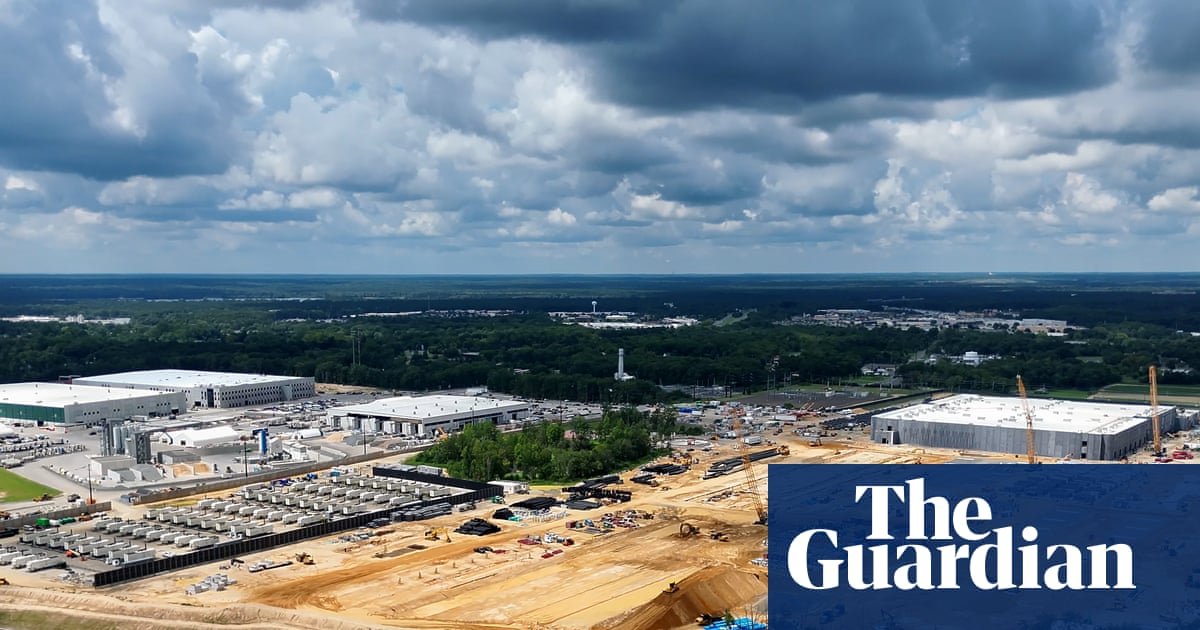
A data centre in Vineland, New Jersey, linked to a major Microsoft infrastructure deal operated 62 gas-fired generators without the required environmental permits for close to a year, releasing what independent experts estimate to be approximately 140 tons of nitrogen oxide pollution into a community that sits near homes, farmland and two schools. The findings emerge from public records obtained by Floodlight, which partnered with The Guardian on the investigation.
The facility, operated by DataOne, became the subject of a $1.07 million state fine last week — described by New Jersey’s Department of Environmental Protection as the largest enforcement action ever taken against a data centre in the state. Yet the penalty, critics argue, obscures as much as it resolves. State regulators did not disclose how long the generators had been running, nor how much pollution had been released into the surrounding area before inspectors identified the fleet in July 2026.
Floodlight submitted technical data on the generators to two independent experts. Their findings are striking in scope and carry direct implications for public health accountability.
NOx pollution is causally linked to asthma, cardiovascular disease and premature death — harms that fall disproportionately on communities with limited political leverage to contest industrial siting decisions. The permit process that DataOne bypassed exists precisely to force disclosure and mitigation of those harms before a facility becomes operational.
DataOne disputes the state’s determination that permits were required but says it now intends to apply for them, adding that it is transitioning to “low-emission, quiet fuel cells” as a permanent power solution. Microsoft, for its part, issued a statement saying it expects suppliers and partners to comply with applicable laws and regulations — a formulation that assigns responsibility elsewhere while the pollution has already occurred. The gap between that expectation and the documented reality in Vineland is where the accountability question remains unresolved.