
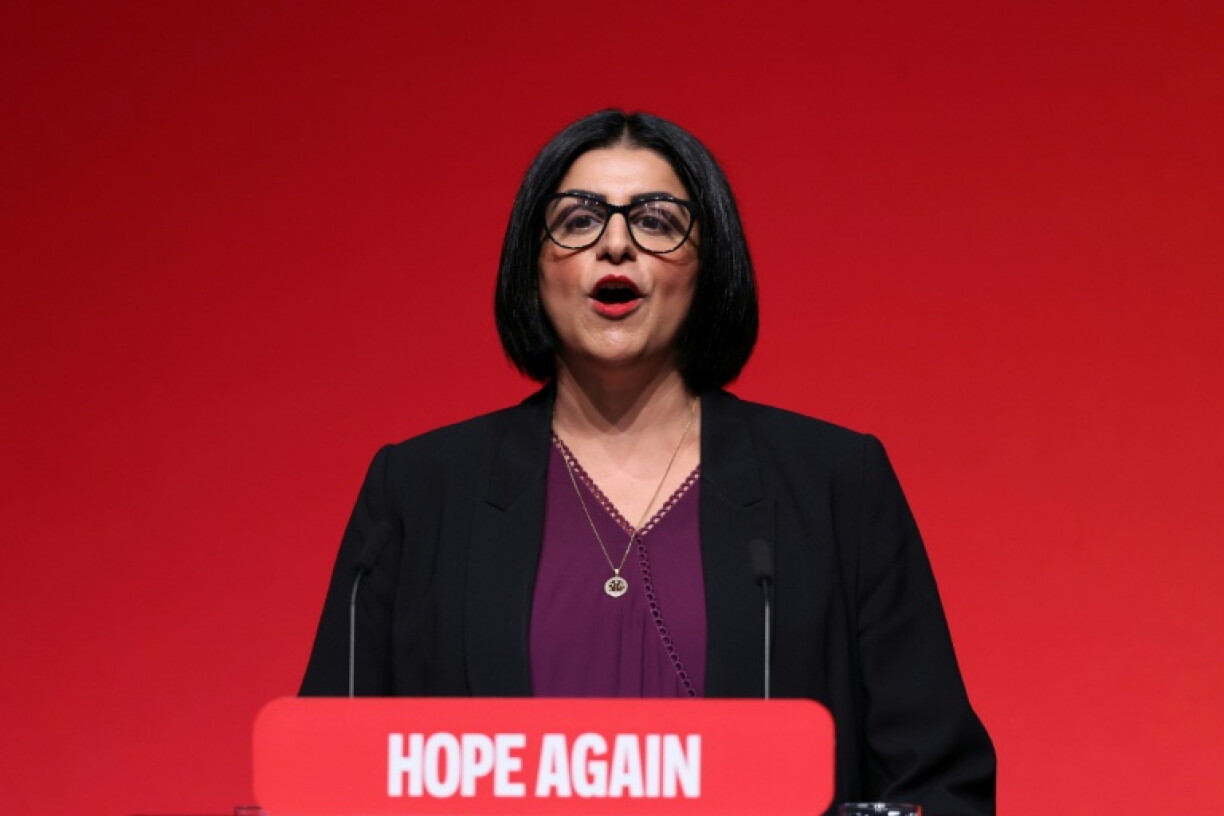
The British government’s announcement of new refugee resettlement routes for Afghan women and girls, unveiled in late September, has been received in some quarters as a belated act of conscience. It is, on closer examination, something rather more troubling: a rhetorical performance of duty that obscures a record of institutional failure and, more recently, deliberate policy retrenchment.
The thesis is straightforward. When Home Secretary Shabana Mahmood invokes the language of “compassion” and “international obligations” toward Afghan women, she does so as the same Labour government that, on 1 July 2025, abruptly closed both the Afghan Relocations and Assistance Policy and the Afghan Citizens Resettlement Scheme — with almost no prior notice to the thousands of people whose lives depended on those channels. The timing of the new announcement does not repair that damage. It raises questions about what the language of protection is actually doing here, and for whom.
Ed Miliband’s own admission at the Labour Party conference — that the party had not done enough to support the Palestinian people — established a pattern of retrospective acknowledgement that substitutes for structural accountability. The same logic now appears to govern Labour’s approach to Afghan refugees: recognise the failure, reframe the policy, and present the reframing as evidence of moral seriousness. It is not.
What the Research Actually Shows
The empirical record is damning, and it predates the current administration’s decisions. Research conducted with Afghan women living in so-called “refugee hotels” — temporary accommodation facilities that became a defining and largely unexamined feature of post-2021 resettlement — documents a consistent pattern of harm. A significant proportion of Afghan women and girls who arrived in British hotels following the fall of Kabul in August 2021 experienced violence within those settings, were systematically isolated from essential support services, and were ultimately evicted by the Home Office with little more than guidance to seek permanent housing through Rightmove, the commercial property platform.
This is not an incidental failure. It is the operational consequence of a resettlement architecture that prioritised numerical intake over the conditions of reception, and that treated Afghan women not as rights-bearing individuals under international refugee law but as administrative categories to be processed and dispersed.
Scholars including Louise Ryan, Caroline Oliver, and their network of Afghan peer researchers have applied rigorous, evidence-based methodologies to document precisely these experiences. Their work represents the kind of transnational, community-embedded inquiry that government policy should be shaped by — and demonstrably has not been.
There is a further dimension that demands careful attention. The far right across Europe has increasingly weaponised the discourse of protecting “vulnerable women and girls” as a vehicle for anti-migrant politics, constructing a rhetorical framework in which the protection of women functions as justification for the exclusion of men coded as dangerous outsiders. Mahmood’s sudden rediscovery of duty toward Afghan women does not exist outside that political context. It exists within it, and the government appears either unaware of this proximity or indifferent to it.
The question is not whether Afghan women and girls deserve protection — they unambiguously do, and international human rights and humanitarian law frameworks are unambiguous on this point. The question is whether a government that closed the primary legal routes for their arrival, failed to protect those already in its care, and now announces a new resettlement scheme without accounting for its own prior conduct deserves to be taken at its word. The evidence, precisely weighed, suggests it does not.